

Canadians reassured to see military helping during local emergencies, Blair says
Advertisement
Read this article for free:
or
Already have an account? Log in here »
To continue reading, please subscribe:

Digital Subscription
One year of digital access for only $205*
- Enjoy unlimited reading on winnipegfreepress.com
- Read the E-Edition, our digital replica newspaper
- Access News Break, our award-winning app
- Play interactive puzzles
*First annual payment billed as $205.00 + GST for one year. This annual subscription will automatically renew at $233.00 + GST every 52 weeks (10% off the regular annual price of $259.35). Offer available to new and qualified returning subscribers only. Cancel any time.
To continue reading, please subscribe:
Add Free Press access to your Brandon Sun subscription for only an additional
$1 for the first 4 weeks*
- Enjoy unlimited reading on winnipegfreepress.com
- Read the E-Edition, our digital replica newspaper
- Access News Break, our award-winning app
- Play interactive puzzles
*Your next Brandon Sun subscription payment will increase by $1.00 and you will be charged $17.95 plus GST for four weeks. After four weeks, your payment will increase to $24.95 plus GST every four weeks.
Read unlimited articles for free today:
or
Already have an account? Log in here »
Hey there, time traveller!
This article was published 08/08/2023 (1135 days ago), so information in it may no longer be current.
OTTAWA – Defence Minister Bill Blair says Canadians want to see the military come to their aid during natural disasters, and the Armed Forces will remain a key part of the government’s response.
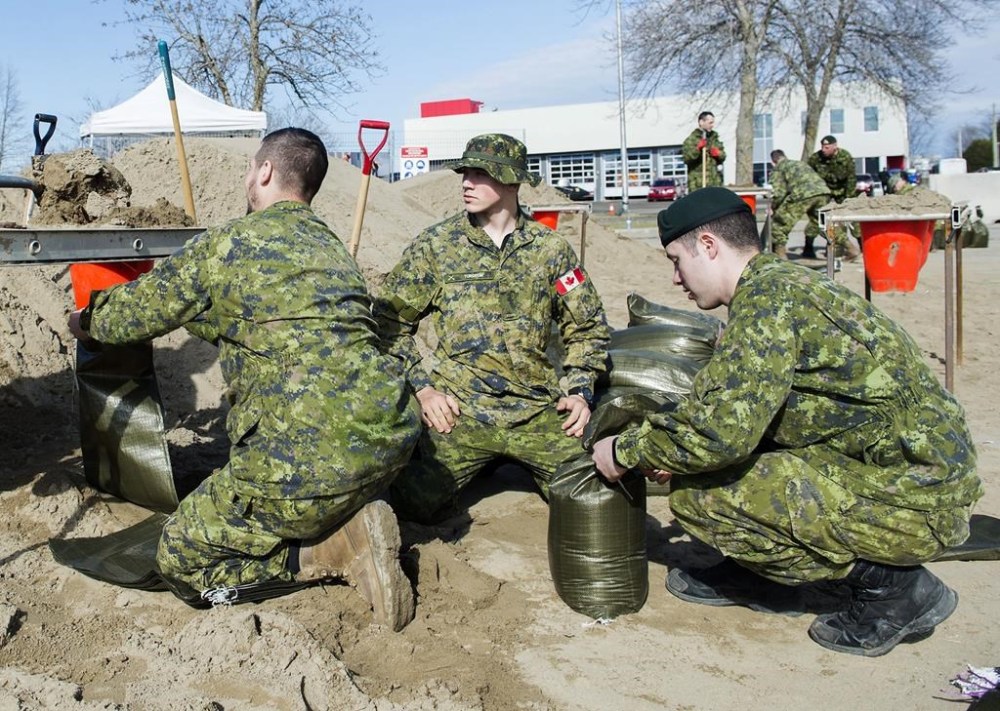
“There is just something, I think, incredibly reassuring to Canadians when the Canadian Armed Forces show up and men and women in uniform are out in their communities and they’re sandbagging and helping people evacuate and get to safety,” he said in a recent interview.
Blair, who was moved from the Emergency Preparedness portfolio to head up Defence in last month’s cabinet shuffle, has been involved in co-ordinating the federal government’s response to various disasters. Those included floods caused by an atmospheric river in British Columbia in 2021, wildfires that have raged across the country each summer and the devastation caused by Hurricane Fiona in Atlantic Canada last year.
And the number of calls for help is rising.
There used to be between five and 10 formal requests for assistance from the provinces and territories each year. Between March 2020 and October 2022, there were more than 200 requests for federal help, the majority of which were related to the COVID-19 pandemic. About 157 involved the military.
The Canadian Armed Forces has immediate response units that are activated to address disasters, where their main role is often to help local officials with logistics, planning and manpower.
Speaking to a parliamentary committee last October, chief of the defence staff Gen. Wayne Eyre said the military is being called upon too often to respond to such disasters, and those requests are putting a strain on the Armed Forces at a time when it is dealing with a personnel shortage.
“With the increasing frequency and intensity of these natural disasters, we’re being called upon more and more to respond not necessarily as a force of last resort, but in some cases the force of first choice,” he said on Oct. 6.
Around 16,000 positions are unfilled across the military, a situation that senior commanders have called a crisis.
Blair acknowledged the military has at times been the federal government’s first call, rather than a last resort.
“I listened very carefully to the chief of the defence staff and the concerns that he’s expressed – quite legitimate concerns – about the impact that has on their training and capacity-building,” Blair said.
That led to discussions earlier this year about creating a national disaster-assistance organization or another mechanism to provide help when it’s needed.
The Canadian Press first reported in July that those discussions include analyzing models such as the Federal Emergency Management Agency in the United States.

“We’ve been looking at, how do we build out what we call a humanitarian work force,” Blair said.
“We’re working with the Canadian Red Cross, for example, the Salvation Army, the Search and Rescue Volunteers Association of Canada and other groups in civil society that we can call upon.”
Still, he said the military is the best option to respond to certain situations, such as instances where specialized search equipment is needed.
“It is part of their mandate and and one of their responsibilities,” he said.
This report by The Canadian Press was first published Aug. 8, 2023.