

Ontario elementary, secondary teachers to hold strike votes
Advertisement
Read this article for free:
or
Already have an account? Log in here »
To continue reading, please subscribe:

Digital Subscription
One year of digital access for only $205*
- Enjoy unlimited reading on winnipegfreepress.com
- Read the E-Edition, our digital replica newspaper
- Access News Break, our award-winning app
- Play interactive puzzles
*First annual payment billed as $205.00 + GST for one year. This annual subscription will automatically renew at $233.00 + GST every 52 weeks (10% off the regular annual price of $259.35). Offer available to new and qualified returning subscribers only. Cancel any time.
To continue reading, please subscribe:
Add Free Press access to your Brandon Sun subscription for only an additional
$1 for the first 4 weeks*
- Enjoy unlimited reading on winnipegfreepress.com
- Read the E-Edition, our digital replica newspaper
- Access News Break, our award-winning app
- Play interactive puzzles
*Your next Brandon Sun subscription payment will increase by $1.00 and you will be charged $17.95 plus GST for four weeks. After four weeks, your payment will increase to $24.95 plus GST every four weeks.
Read unlimited articles for free today:
or
Already have an account? Log in here »
Hey there, time traveller!
This article was published 14/08/2023 (1118 days ago), so information in it may no longer be current.
TORONTO – Public elementary and high school teachers in Ontario are taking a step toward a strike, with their unions announcing Monday that they will be asking members to vote in favour of walkouts.
The president of the Elementary Teachers’ Federation of Ontario told members at the union’s annual general meeting that the union has come to the bargaining table with proposals on special education, class sizes, violence in schools and wages that keep up with inflation.
In response, she said, the government has “refused to meaningfully engage” and has put forward proposals that are tantamount to cuts to salaries, benefits and working conditions.
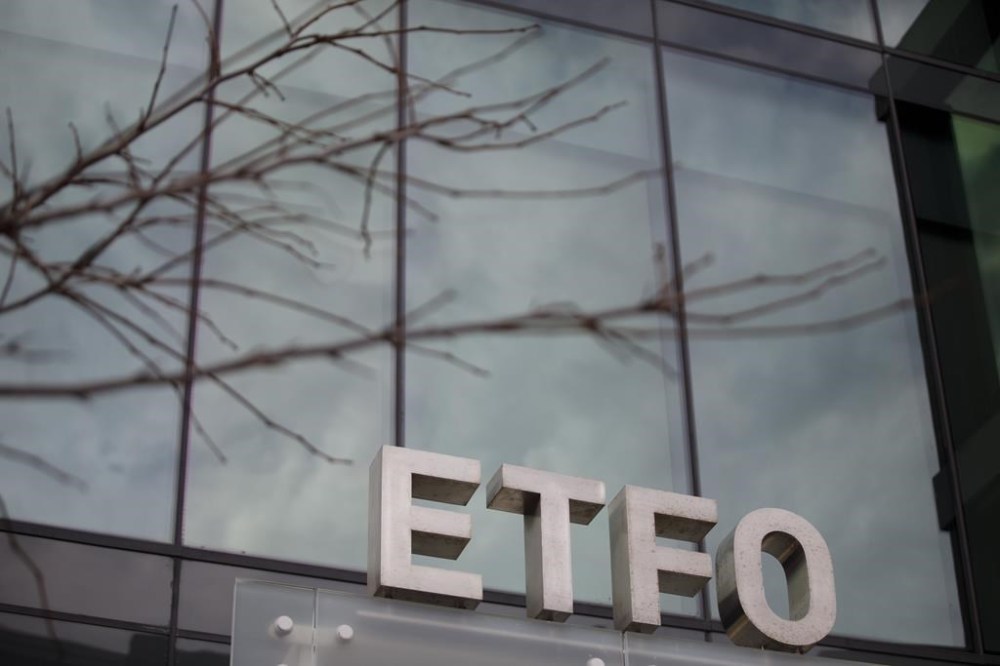
“We have reached a tipping point,” Karen Brown said in a speech.
“ETFO’s patience has run out. Our members’ patience has run out. We now need to pressure this government to come to the table and start to bargain with us seriously.”
Brown said ETFO will be holding meetings starting mid-September for central strike votes and that the union will be asking members for a strike mandate.
“Based on what I have been hearing from members across the province recently, there is no doubt in my mind that the delegates at this annual meeting and that our 83,000 members want to send this government a strong and united message – enough is enough,” Brown said.
The Ontario Secondary School Teachers’ Federation said it, too, will hold strike votes this fall.
The union told its members in a memo obtained Monday by The Canadian Press that the government has shown “little interest in engaging in substantive negotiations” and little progress has been made.
“It is well past time for this government to come to the table willing to conclude a deal to ensure students in Ontario can learn and grow in a world-renowned public education system,” the union wrote in a memo.
“A strong strike mandate will demonstrate our unity and determination to achieve fair and favourable terms for our members and students.”
Education Minister Stephen Lecce criticized the steps taken by the unions, saying they rejected private mediation in order to reach deals.
“Threatening another strike and creating anxiety for parents and students just weeks before the start of the school year is unnecessary and unfair,” he wrote in a statement.
The union representing teachers in the French public system said it is focused on negotiations to get the best possible deal, but also expressed frustration with the process.
“Like our colleagues in other teaching unions, we find it unacceptable that the pace of negotiations is so slow and that our members are starting the new school year without a work contract,” AEFO president Anne Vinet-Roy wrote in a statement.
“We are therefore constantly evaluating all possible options to move negotiations forward more quickly. AEFO members and our school communities deserve no less.”
ETFO filed a complaint last week with the Ontario Labour Relations Board accusing the province of failing to act in good faith during bargaining because of new requirements for student early reading screenings the government announced this summer.
ETFO argues that a memo requiring elementary school teachers to conduct mandatory early reading screenings twice a year for students in year two of Kindergarten through Grade 2 violates good faith duties because early reading screening is a subject of central bargaining.
The Ministry of Education has said the new instructions were developed with feedback from all unions and the education sector.
Brown said members are asking questions such as: what does the screener look like, who created it, how and when will training happen, and who will input the data?
All four major teachers’ unions have been in bargaining with the government and school boards since last summer, and now with just a few weeks before the start of a new school year, none have indicated they are close to a deal.
OSSTF has just one more day of talks scheduled so far.
President Karen Littlewood has said it seems like Lecce just wants the teachers to sign the same deal that education workers represented by the Canadian Union of Public Employees received last year.
CUPE said the deal came with a $1-per-hour raise each year, or about 3.59 per cent annually, for the average worker.
The government’s original offer to CUPE contained raises of two per cent a year for workers making less than $40,000 and 1.25 per cent for all others.
This will be the first contract for teachers since being subject to a wage restraint law for three years known as Bill 124. That law capped salary increases for teachers and other public sector workers to one per cent a year for three years.
It was ruled unconstitutional by an Ontario court, but the government has appealed.
This report by The Canadian Press was first published Aug. 14, 2023.
Note to readers: This is a corrected story. An earlier version suggested the elementary teachers’ union was urging a strike. In fact, they are urging votes in favour of a strike mandate.