

French-language university heads criticize tuition hike for non-Quebec students
Advertisement
Read this article for free:
or
Already have an account? Log in here »
To continue reading, please subscribe:
Monthly Digital Subscription
$1 per week for 24 weeks*
- Enjoy unlimited reading on winnipegfreepress.com
- Read the E-Edition, our digital replica newspaper
- Access News Break, our award-winning app
- Play interactive puzzles
*Billed as $4.00 plus GST every four weeks. After 24 weeks, price increases to the regular rate of $19.95 plus GST every four weeks. Offer available to new and qualified returning subscribers only. Cancel any time.
Monthly Digital Subscription
$4.99/week*
- Enjoy unlimited reading on winnipegfreepress.com
- Read the E-Edition, our digital replica newspaper
- Access News Break, our award-winning app
- Play interactive puzzles
*Billed as $19.95 plus GST every four weeks. Cancel any time.
To continue reading, please subscribe:
Add Free Press access to your Brandon Sun subscription for only an additional
$1 for the first 4 weeks*
*Your next subscription payment will increase by $1.00 and you will be charged $16.99 plus GST for four weeks. After four weeks, your payment will increase to $23.99 plus GST every four weeks.
Read unlimited articles for free today:
or
Already have an account? Log in here »
Hey there, time traveller!
This article was published 25/10/2023 (891 days ago), so information in it may no longer be current.
MONTREAL – A group of French-language university leaders in Quebec is coming to the defence of English schools who say a planned tuition hike for out-of-province students could devastate their finances.
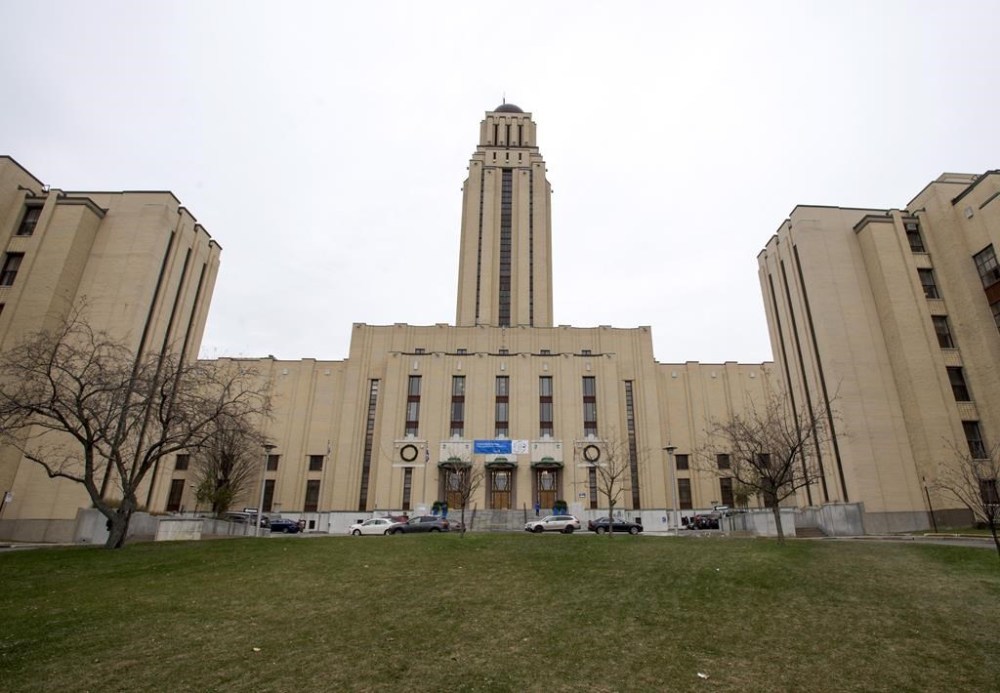
“Any measure that would put the very existence of a university at risk, or weaken it to the point of impairing it, must be excluded from the discussion,” the heads of Université de Montréal, Université Laval, Université de Sherbrooke, Polytechnique Montréal and HEC Montréal wrote in an open letter published in La Presse Wednesday.
Tuition for new students from other provinces and territories would increase from about $9,000 to around $17,000 starting next fall under the Quebec government plan announced earlier this month. That would be among the highest undergraduate tuitions for domestic students in the country, raising fears that the measure would gut attendance at the province’s three English universities, McGill, Concordia and Bishop’s, which welcome more non-Quebec students than French universities.
Provincial government officials say the tuition hike would help correct an imbalance between the French and English university networks, and end subsidies for Canadians who come to Quebec for university and leave when they complete their studies. The province would also charge universities $20,000 for every international student they admit and reinvest those sums in French-language institutions.
The government also hopes to halt what it claims is a decline of the French language in Quebec. “It’s nothing against anglophones, it’s for the survival of the French language that we must stop this trend and then reverse it,” Premier François Legault said last week. “When I look at the number of English-speaking students in Quebec, well, it threatens the survival of French.”
The five university leaders, however, rejected that argument and other characterizations of non-Quebec students by proponents of the tuition increase.
Students from outside Quebec have been portrayed as “threats to the prosperity of the French language, freeloaders and cash cows,” they wrote. “They should rather be seen as players who, like Quebec students, contribute to the excellence, quality, diversity and relevance of our institutions.”
The letter followed a Monday letter in support of the increase from the heads of the 10 schools that compose the Université du Québec network. That letter evoked a “chronic underfunding of our francophone universities” and a need to increase access to higher education for French speakers.
The academics who penned Wednesday’s letter said they understand the desire to better balance resources between schools, but underlined that the tuition increase would amount to a redistribution of funds, rather than a new investment in local universities.
“The real issues — the place our universities, both French and English, should occupy in Quebec’s development and its positioning in the great concert of nations, and the resources we want to devote to this grand project — remain unresolved,” the university leaders concluded.

Several student unions, including groups representing students at French-language universities, have also opposed the tuition increase.
“As of right now, we don’t think this policy will reach its goal of protecting the French language, and we’re angered that (…) Canadian students are the victims of it,” Alecsandre Sauvé-Lacoursière, secretary-general of the Fédération des associations étudiantes du campus de l’Université de Montréal, said in a recent interview.
Catherine Bibeau-Lorrain, president of the Quebec Student Union — a network of 11 student associations across the province — said the organization opposes all tuition increases. But Bibeau-Lorrain took particular issue with what she said is a lack of clarity in the latest plan.
“For us, this announcement was a bit of a muddle, a bit of an improvisation,” she said in an interview. Both Sauvé-Lacoursière and Bibeau-Lorrain said student groups plan to campaign against the tuition hike.
This report by The Canadian Press was first published Oct. 25, 2023.