

RCMP fails to submit plan on how it will respond to Nova Scotia mass shooting inquiry
Advertisement
Read this article for free:
or
Already have an account? Log in here »
To continue reading, please subscribe:

Digital Subscription
One year of digital access for only $205*
- Enjoy unlimited reading on winnipegfreepress.com
- Read the E-Edition, our digital replica newspaper
- Access News Break, our award-winning app
- Play interactive puzzles
*First annual payment billed as $205.00 + GST for one year. This annual subscription will automatically renew at $233.00 + GST every 52 weeks (10% off the regular annual price of $259.35). Offer available to new and qualified returning subscribers only. Cancel any time.
To continue reading, please subscribe:
Add Free Press access to your Brandon Sun subscription for only an additional
$1 for the first 4 weeks*
- Enjoy unlimited reading on winnipegfreepress.com
- Read the E-Edition, our digital replica newspaper
- Access News Break, our award-winning app
- Play interactive puzzles
*Your next Brandon Sun subscription payment will increase by $1.00 and you will be charged $17.95 plus GST for four weeks. After four weeks, your payment will increase to $24.95 plus GST every four weeks.
Read unlimited articles for free today:
or
Already have an account? Log in here »
Hey there, time traveller!
This article was published 09/01/2024 (998 days ago), so information in it may no longer be current.
HALIFAX – The RCMP have failed to meet a self-imposed deadline to detail how they plan to implement recommendations from the inquiry into the 2020 Nova Scotia mass shooting.
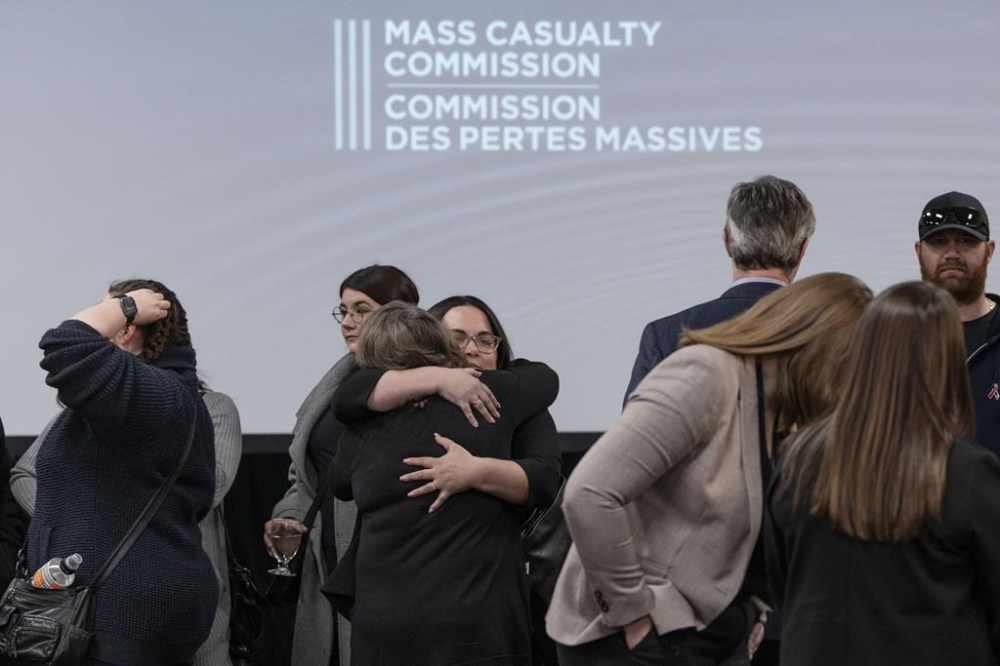
When the Mass Casualty Commission last March released its final report into the worst mass shooting in modern Canadian history, complete with 130 recommendations, the Mounties said they planned to release an “implementation strategy” and “action plan” before the end of 2023.
The national police force also said the RCMP commissioner would provide a progress report.
On Tuesday, the RCMP issued a brief statement confirming it “was not in a position to release its action plan and strategy by the end of the calendar year as it had previously intended.”
The statement went on to say the plan would be released as soon as possible, though a deadline was not specified.
“The (Mass Casualty Commission) made it clear that the RCMP needs to take its time to get this right and properly address the recommendations,” the statement said. “To this end, the organization has been working diligently at advancing both documents, working with subject matter experts throughout the organization and across the policing community, as well as government of Canada partners.”
The public inquiry’s final report offered a blistering critique of the RCMP’s actions in April 2020, when a man disguised as a Mountie and driving a replica RCMP cruiser fatally shot 22 people during a 13-hour rampage through northern and central Nova Scotia.
Most of the recommendations in the 3,000-page report were aimed at improving public safety, addressing the root causes of gender-based violence and reforming the RCMP.
The inquiry found widespread failures in how the Mounties responded to the mass killing, saying the federal government should rethink the RCMP’s central role in Canadian policing.
The seven-volume report said the RCMP missed warning signs about the killer, including reports of domestic violence, possession of illegal firearms and repeated run-ins with the law.
And when the shooting started in Portapique, N.S., on the night of April 18, 2020, the inquiry found that the Mounties were quick to discount witness statements and were so poorly managed that officers were always one step behind the killer.
As well, the inquiry found the RCMP failed to promptly send out alerts to the public until it was too late for some of his victims.
Among other things, the commission’s final report recommended eliminating the RCMP academy in Regina and replacing its 26-week training course with a three-year post-secondary degree, based on an approach used in Finland.
And the inquiry recommended that the federal public safety minister establish priorities for the RCMP, “retaining the tasks that are suitable to a federal policing agency,” an approach that could see the police force relinquish its role in contract-policing at the community level.
During public hearings in September 2022, the inquiry heard from a former assistant commissioner of the RCMP who said the police force has a history of ignoring calls for change. Cal Corley cited a 2017 study that included a 41-page list of recommendations for change that he said were largely ignored by the RCMP.
Meanwhile, an independent committee is overseeing how the RCMP and governments are responding to the inquiry’s recommendations. Last month, the chairwoman of the committee, Linda Lee Oland, said she had not received any complaints about lack of progress, saying no one was “dragging their feet.”
The committee, which has a three-year mandate, is expected to submit a report on its progress later this month.
The committee, appointed by the federal and Nova Scotia governments, includes victims’ family members, community representatives, RCMP and government officials.
Oland said the committee’s report will provide a yardstick for the public to measure how much progress has been made. She stressed that the committee is not in charge of implementing recommendations, only monitoring them and providing accountability.
This report by The Canadian Press was first published Jan. 9, 2024.

Advertisement Advertise With Us
Advertisement Advertise With Us