

RCMP have draft response to N.S. mass shooting inquiry, but no deadline to release it
Advertisement
Read this article for free:
or
Already have an account? Log in here »
To continue reading, please subscribe:

Digital Subscription
One year of digital access for only $205*
- Enjoy unlimited reading on winnipegfreepress.com
- Read the E-Edition, our digital replica newspaper
- Access News Break, our award-winning app
- Play interactive puzzles
*First annual payment billed as $205.00 + GST for one year. This annual subscription will automatically renew at $233.00 + GST every 52 weeks (10% off the regular annual price of $259.35). Offer available to new and qualified returning subscribers only. Cancel any time.
To continue reading, please subscribe:
Add Free Press access to your Brandon Sun subscription for only an additional
$1 for the first 4 weeks*
- Enjoy unlimited reading on winnipegfreepress.com
- Read the E-Edition, our digital replica newspaper
- Access News Break, our award-winning app
- Play interactive puzzles
*Your next Brandon Sun subscription payment will increase by $1.00 and you will be charged $17.95 plus GST for four weeks. After four weeks, your payment will increase to $24.95 plus GST every four weeks.
Read unlimited articles for free today:
or
Already have an account? Log in here »
Hey there, time traveller!
This article was published 23/01/2024 (984 days ago), so information in it may no longer be current.
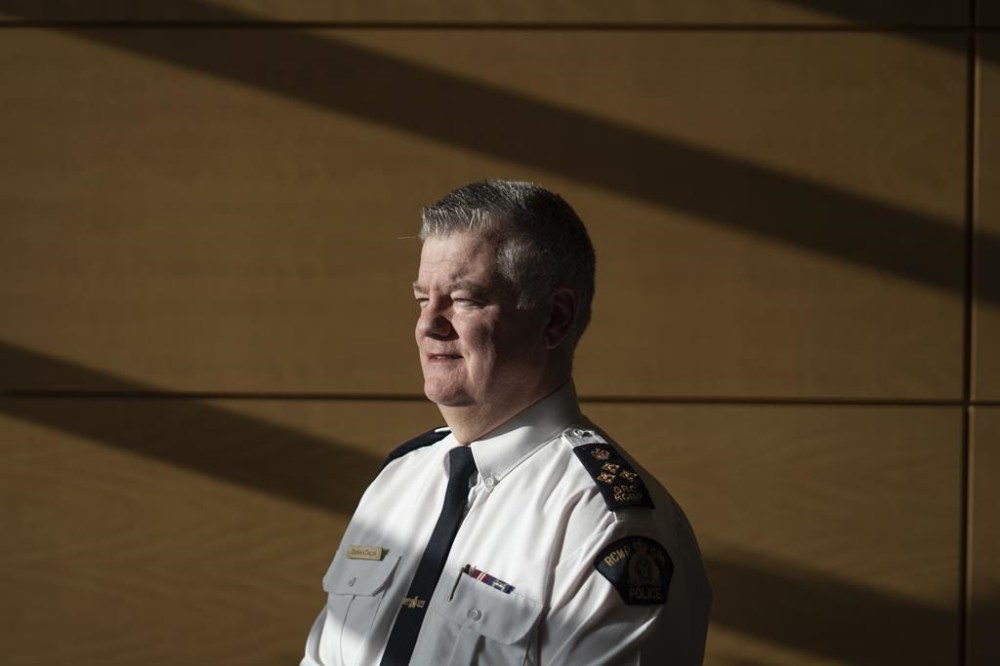
HALIFAX – The head of the Nova Scotia RCMP said Tuesday he’s seen a draft plan on how the Mounties will respond to the inquiry into the 2020 mass shooting that started in Portapique, N.S., but Dennis Daley couldn’t say when it will be released.
The RCMP had announced the plan would be released by the end of last year, but when that deadline came and went, the Mounties issued a statement two weeks ago saying they were still working on the document.
“I don’t want to make any promises because we weren’t able to deliver on that self-imposed deadline,” the assistant commissioner said in an interview with The Canadian Press. “It’s presenting a significant challenge for us, but we feel it’s not insurmountable.”
Christopher Schneider, a sociology professor at Brandon University in Manitoba, said it appears the Mounties are stalling for time.
“The RCMP have been saying over and over that they have to do a better job in responding to calls for change,” said Schneider, who has published extensively on policing issues. “It’s not just this (inquiry), it’s every call for change. This is another example of the RCMP kicking the can down the road.”
Daley said he is aware the police force has faced withering criticism for repeatedly ignoring recommendations from previous inquiries and reviews.
“It’s a difficult question to respond to,” he said. “We have to take responsibility for those things within our control that we didn’t implement or communicate as fully as we needed to … We don’t turn a blind eye, though I do acknowledge that we have to get better at either the implementation or the communication.”
To that end, Daley confirmed RCMP Commissioner Michael Duheme has established a new “sector” to ensure recommendations from reports and inquiries are implemented, though the assistant commissioner did not provide details.
“(Duheme) has dedicated resources to ensure that the implementation has the necessary oversight from this level on down,” said Daley, who has served as a Mountie for 35 years.
Schneider questioned the need for a new level of police bureaucracy.
“That sounds like a vague deflection to me,” the professor said. “If the commanding officers can download these (recommendations) on to the sector, whatever that means, who is it that the Canadian public is to hold accountable for the implementation?”
Christian Leuprecht, a professor at Queen’s University in Kingston, Ont., disagrees. He said the creation of an oversight body within the RCMP is a good idea because nothing will be accomplished unless the Mounties have dedicated resources to get the job done.
“The problem in these bureaucracies is that the urgent always overtake the important,” said Leuprecht, who specializes in police and security issues. “The recommendations never get implemented because there’s always a lack of resources or a more urgent issue.”
With 17,000 members, the RCMP is a big ship to steer, he said.
As well, Leuprecht said the Mounties won’t be able to respond to some recommendations without receiving resources and direction from Public Safety Minister Dominic LeBlanc.
“What’s interpreted as the Mounties stalling is actually the Mounties saying, ‘We need political direction,’ and that includes where the resources are going to go,” the professor said. “Some of these decisions are beyond the RCMP to make.”
Daley cited a long list of recent changes within the RCMP, which include decisions to expand their full-time emergency response team; equip officers with encrypted radios; and implement the Alert Ready system, which allows the RCMP to send alerts to the public via intrusive radio, TV and wireless signals.
The RCMP have also developed a “critical incident playbook,” he said, which provides officers with a checklist on how to respond to dangerous calls, including active shooter cases.
“There has been a significant amount of work put forward in Nova Scotia and throughout Canada,” Daley said, noting that of 130 recommendations from the Mass Casualty Commission’s final report, delivered last March, about 50 apply to the RCMP.
The inquiry heard that on April 18-19, 2020, a Halifax-area denture-maker disguised as a Mountie and driving a replica RCMP cruiser fatally shot 22 people during a 13-hour rampage through northern and central Nova Scotia.
Among other things, the inquiry found widespread failures in how the Mounties responded to the worst mass shooting in modern Canadian history. Its 3,000-page final report said Ottawa should rethink the RCMP’s central role in Canadian policing.
This report by The Canadian Press was first published Jan. 23, 2024.

Advertisement Advertise With Us
Advertisement Advertise With Us