

Military ‘will be there’ for Canadians in emergencies despite resource strain: Blair
Advertisement
Read this article for free:
or
Already have an account? Log in here »
To continue reading, please subscribe:

Digital Subscription
One year of digital access for only $205*
- Enjoy unlimited reading on winnipegfreepress.com
- Read the E-Edition, our digital replica newspaper
- Access News Break, our award-winning app
- Play interactive puzzles
*First annual payment billed as $205.00 + GST for one year. This annual subscription will automatically renew at $233.00 + GST every 52 weeks (10% off the regular annual price of $259.35). Offer available to new and qualified returning subscribers only. Cancel any time.
To continue reading, please subscribe:
Add Free Press access to your Brandon Sun subscription for only an additional
$1 for the first 4 weeks*
- Enjoy unlimited reading on winnipegfreepress.com
- Read the E-Edition, our digital replica newspaper
- Access News Break, our award-winning app
- Play interactive puzzles
*Your next Brandon Sun subscription payment will increase by $1.00 and you will be charged $17.95 plus GST for four weeks. After four weeks, your payment will increase to $24.95 plus GST every four weeks.
Read unlimited articles for free today:
or
Already have an account? Log in here »
Hey there, time traveller!
This article was published 25/01/2024 (970 days ago), so information in it may no longer be current.
OTTAWA – The military has no greater responsibility than protecting Canadians, Defence Minister Bill Blair says, and his government will continue to call in the troops to respond to emergencies when needed.
In an interview on Wednesday, Blair was asked about comments from senior military leaders who say the government is overly reliant on the Armed Forces at home, putting their training and other missions at risk.
“I think it is fair to acknowledge that that puts an awful lot of pressure on the Canadian Armed Forces and on its capability,” Blair said.
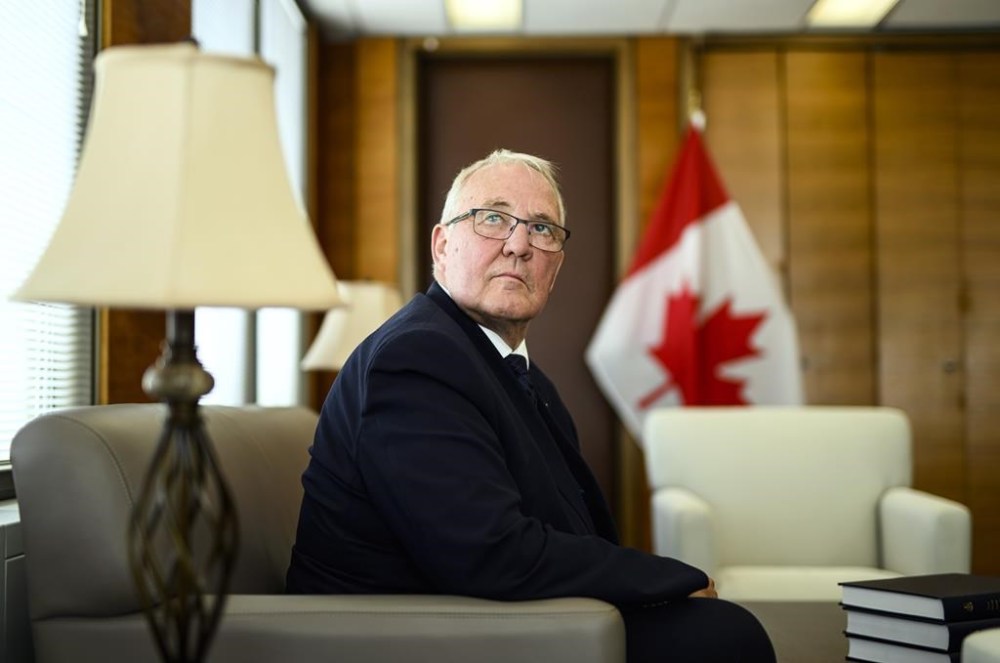
“But when Canadians need their Canadian Armed Forces, my expectation is the Canadian Armed Forces will be there for them.”
In a year-end interview in December, Vice Admiral Bob Auchterlonie, the commander of the Canadian Joint Operations Command, raised concerns about the military’s ability to respond to what he called the deteriorating security situation around the world.
“The fact is, there seems to be an increasing demand for Canadian Armed Forces presence not only at home in Canada, but within the continent and around the world,” he said.
The Armed Forces has been struggling to recruit and retain members in recent years.
Internally, reconstitution has been the military’s top priority since late 2022 as it tries to fix what senior leaders are calling a personnel crisis.
As of last fall, officials said the shortfall is still more than 16,000 people — in a force that’s around 115,000 members at full strength — and another 10,000 or so soldiers lack adequate training to be sent on missions.
Defence chief Gen. Wayne Eyre has said even with the numbers stabilizing, it will take years to solve the problem.
At the same time, there has been enormous domestic demand on the military to help with everything from flooding and firefighting to staffing long-term care homes that were ravaged by COVID-19 early in the pandemic.
Eyre has been open about the fact that he thinks the government is calling on the military too often, instead of considering it a last resort.
More than 2,000 Armed Forces members were deployed to fight wildfires across Canada in 2023 for 131 days straight.
“Sometimes you’ve got to prioritize, and there is no greater responsibility for the Canadian Armed Forces — or for the government — than the protection of its citizens,” Blair said.
Meanwhile, Canada and its allies are responding to Russia’s full-scale invasion of Ukraine, China’s aggressive stance in the Indo-Pacific, conflicts and coups in Africa and Israel’s war in Gaza.
Canada plans to double its presence on NATO’s eastern flank in Latvia in the next two years, while also sending ships to join a U.S.-led coalition operating near the Taiwan Strait.
It has sent officers to the Red Sea, where the U.S. and U.K. are leading strikes against Houthi rebels in Yemen, and pledged to continue training Ukrainian troops in Latvia and Britain.
Demand for the military’s services can’t increase forever “without giving something up,” Auchterlonie said in December.
But when asked if Canada needs to scale back its commitments abroad, Blair said: “For many, many years, Canada has a reputation as a country that says yes when asked.”
This report by The Canadian Press was first published Jan. 25, 2024.