

More humanitarian aid needed for Gaza, minister says during Egypt border visit
Advertisement
Read this article for free:
or
Already have an account? Log in here »
To continue reading, please subscribe:

Digital Subscription
One year of digital access for only $205*
- Enjoy unlimited reading on winnipegfreepress.com
- Read the E-Edition, our digital replica newspaper
- Access News Break, our award-winning app
- Play interactive puzzles
*First annual payment billed as $205.00 + GST for one year. This annual subscription will automatically renew at $233.00 + GST every 52 weeks (10% off the regular annual price of $259.35). Offer available to new and qualified returning subscribers only. Cancel any time.
To continue reading, please subscribe:
Add Free Press access to your Brandon Sun subscription for only an additional
$1 for the first 4 weeks*
- Enjoy unlimited reading on winnipegfreepress.com
- Read the E-Edition, our digital replica newspaper
- Access News Break, our award-winning app
- Play interactive puzzles
*Your next Brandon Sun subscription payment will increase by $1.00 and you will be charged $17.95 plus GST for four weeks. After four weeks, your payment will increase to $24.95 plus GST every four weeks.
Read unlimited articles for free today:
or
Already have an account? Log in here »
Hey there, time traveller!
This article was published 21/02/2024 (957 days ago), so information in it may no longer be current.
OTTAWA – The flow of humanitarian aid shipments for Palestinians in Gaza is at its lowest ebb since the start of the Israel-Hamas war, Canada’s international development minister said following a visit to the Egyptian border.
The movement of aid is nowhere near what’s needed, Ahmed Hussen said he learned during his recent trip to the Rafah border crossing, where he discussed the crisis with humanitarian workers.
‘The feedback they gave me is that the levels of aid are … lower than ever,” Hussen said Tuesday in an interview with The Canadian Press from Cairo.
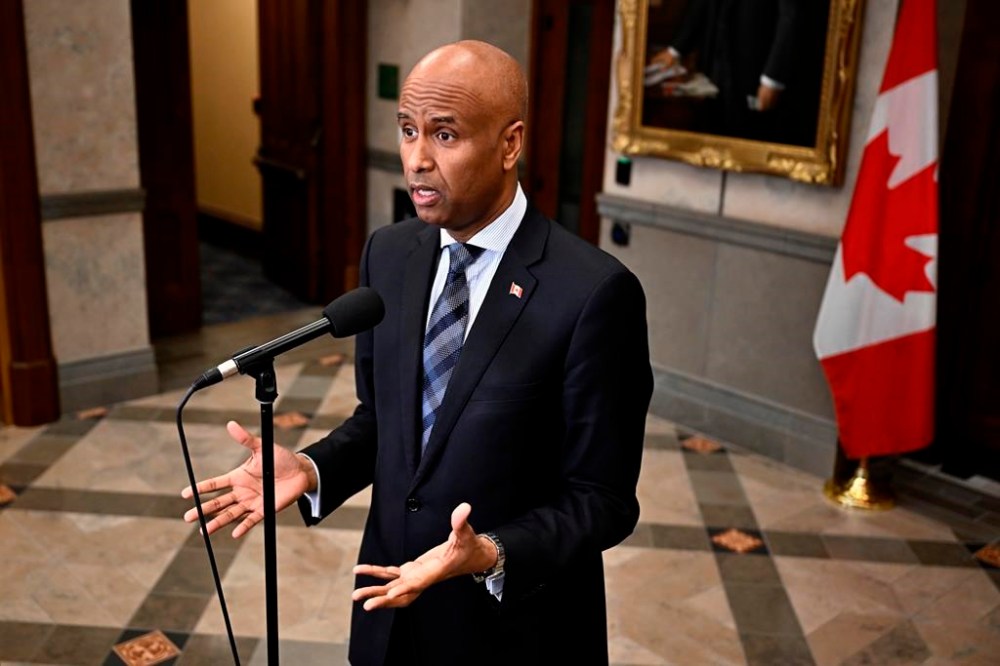
“It’s down to a trickle compared to the need out there.”
The minister, who was expected to travel to Jordan on Wednesday, called for more food and medical equipment to be sent to Gaza after speaking with representatives from the UN World Food Program, among others.
”I’ve seen the aid being brought in as well as being stored in different staging points,” Hussen said. “But the most important point in addition to that is the access to the people who need it.”
Hussen said there were hundreds of trucks parked waiting for authorization to cross the border. Some had been waiting to cross for weeks. He attributed the delay to a combination of factors, including a tedious inspection process on both sides of the border.
“More aid needs to go in and more border crossings need to be opened to allow more aid to go in together,” Hussen said.
“(We) are advocating for an immediate ceasefire because that will also help in the distribution of more aid within Gaza.”
A resolution backed by Arab countries demanding a ceasefire was blocked Tuesday by a U.S. veto in the UN Security Council. The U.S., which is working on a resolution of its own, justified its opposition by saying it fears the Algeria-sponsored proposal would harm efforts to reach a deal between the warring parties.
Apart from the absence of a ceasefire, Hussen said humanitarian organizations are also concerned about Israel’s threat to extend its offensive into the southern Gaza Strip. More than half of the 2.3 million Gazans have taken refuge in Rafah.
“We believe it would have very serious humanitarian consequences,” he said. “Unimaginable deaths and injuries will inevitably result.”
More than 29,000 Palestinians have been killed according to the local health authorities since Israel began its response to the Oct. 7 attack carried out by Hamas.
That attack led to 1,200 Israelis dead and some 250 taken hostage, of which about 100 are believed still in captivity.
In the fall, Canada committed $100 million for humanitarian aid in Gaza.
At the end of January, Canada suspended additional funding to the UN relief agency known as UNRWA in response to allegations that some staff had played a role in the Oct. 7 attack.
The decision was criticized in the House of Commons by the New Democrats and the Bloc Québécois, as well as 20 non-governmental organizations including the Norwegian Refugee Council and Oxfam.
A government official said no payments destined for the UNRWA have been withheld for now, but a $25-million payment was scheduled for the spring.
Asked about the impact of the suspended financing, Hussen said Ottawa is working with the organization and the “broader United Nations family” as the probe continues.
He said Ottawa hopes to “get the confidence necessary to a transparent comprehensive investigation which will allow us to continue to work with them in the future.”
This report by The Canadian Press was first published Feb. 21, 2024.
— with files from Laura Osman in Ottawa