

Supreme Court orders new trial for B.C. francophone who was not given French option
Advertisement
Read this article for free:
or
Already have an account? Log in here »
To continue reading, please subscribe:

Digital Subscription
One year of digital access for only $205*
- Enjoy unlimited reading on winnipegfreepress.com
- Read the E-Edition, our digital replica newspaper
- Access News Break, our award-winning app
- Play interactive puzzles
*First annual payment billed as $205.00 + GST for one year. This annual subscription will automatically renew at $233.00 + GST every 52 weeks (10% off the regular annual price of $259.35). Offer available to new and qualified returning subscribers only. Cancel any time.
To continue reading, please subscribe:
Add Free Press access to your Brandon Sun subscription for only an additional
$1 for the first 4 weeks*
- Enjoy unlimited reading on winnipegfreepress.com
- Read the E-Edition, our digital replica newspaper
- Access News Break, our award-winning app
- Play interactive puzzles
*Your next Brandon Sun subscription payment will increase by $1.00 and you will be charged $17.95 plus GST for four weeks. After four weeks, your payment will increase to $24.95 plus GST every four weeks.
Read unlimited articles for free today:
or
Already have an account? Log in here »
Hey there, time traveller!
This article was published 03/05/2024 (876 days ago), so information in it may no longer be current.
OTTAWA – A francophone man in British Columbia convicted of sexual assault will get a new trial because he was not informed of his right to be tried in French, the Supreme Court ruled Friday.
Franck Yvan Tayo Tompouba appealed his conviction on the basis that his language rights were violated because he was not told his trial could be conducted in his preferred official language.
“There may be cases in which accused persons are not duly informed of this fundamental linguistic right and of how it is to be exercised,” Chief Justice Richard Wagner wrote in the 5-2 decision.
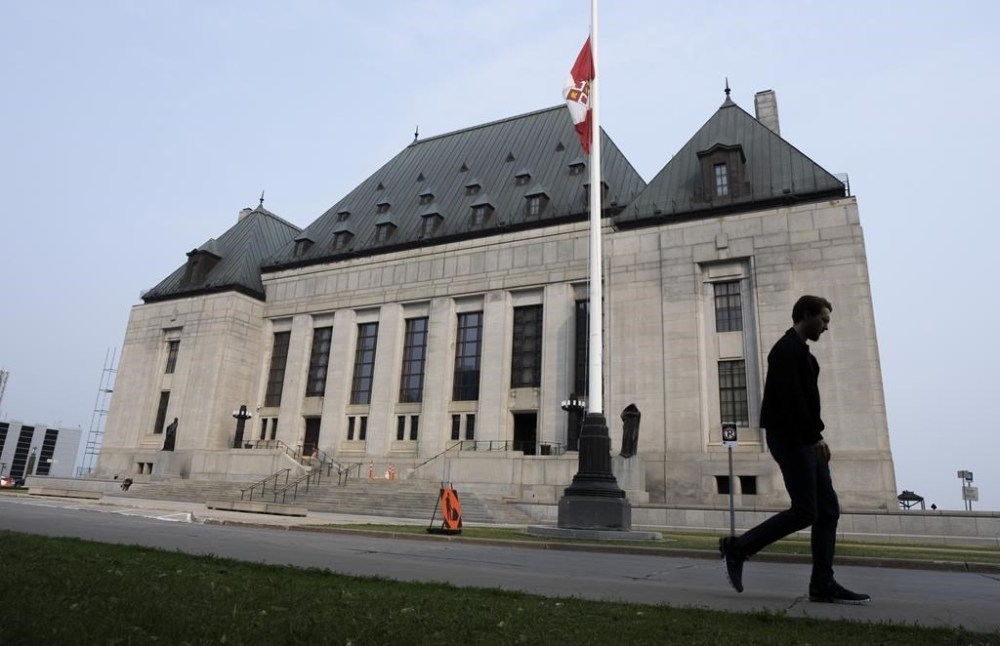
“This appeal is an example of such a situation, and it is a reminder that Canada’s linguistic minorities too often still experience difficulties in accessing justice in the official language of their choice.”
The case arrived at the Supreme Court after the B.C. Court of Appeal dismissed the matter.
The top court heard the initial judge did not ensure Tayo Tompouba had been informed of his right to have a trial in French, as is required by the Criminal Code when an accused’s language is either French and English.
The Appeal Court erred in dismissing his bid by saying it was the accused’s responsibility to prove that his language rights had been violated, Wagner wrote for the majority.
As a result, the top court quashed his conviction and ordered that a new trial be held in French.
Wagner described as “fundamental” and “absolute” the right of an accused to be tried in the official language of their choice.
The decision details how the right is so essential that an accused only has to “assert” which language “is their own language,” unless the Crown chooses to challenge that.
Judges are not to try and determine an accused’s cultural identity or wade into the issue of their personal language preferences, it added.
“In a context as intimidating as that of a criminal trial, when the accused’s freedom is at stake,” Wagner wrote, it is crucial that a judge help protect one’s language rights “by being vigilant, cautious and proactive.”
It’s the role of a judge to remove the “fear” connected to exercising such rights, and to make sure their decision is both “free” and “informed,” the decision says.
“The judge cannot presume what the accused’s choice is or assume that the accused has been or will be advised of their right,” including by their own lawyer.
In a dissenting decision, justices Andromache Karakatsanis and Sheilah Martin acknowledged the language rights of an accused, but disputed whether a failure to provide notice of such rights amounts to a “miscarriage of justice.”
They believe the appeal should have been dismissed.
The judges warn that public confidence in the system risks being undermined by granting someone a new trial who waited until after their conviction to raise their language rights.
They contend an accused must do more than simply point to how a court failed to inform them of their right.
This report by The Canadian Press was first published May 3, 2024.