

Alberta to shift the fixed election date to fall when natural disaster risk is lower
Advertisement
Read this article for free:
or
Already have an account? Log in here »
To continue reading, please subscribe:

Digital Subscription
One year of digital access for only $205*
- Enjoy unlimited reading on winnipegfreepress.com
- Read the E-Edition, our digital replica newspaper
- Access News Break, our award-winning app
- Play interactive puzzles
*First annual payment billed as $205.00 + GST for one year. This annual subscription will automatically renew at $233.00 + GST every 52 weeks (10% off the regular annual price of $259.35). Offer available to new and qualified returning subscribers only. Cancel any time.
To continue reading, please subscribe:
Add Free Press access to your Brandon Sun subscription for only an additional
$1 for the first 4 weeks*
- Enjoy unlimited reading on winnipegfreepress.com
- Read the E-Edition, our digital replica newspaper
- Access News Break, our award-winning app
- Play interactive puzzles
*Your next Brandon Sun subscription payment will increase by $1.00 and you will be charged $17.95 plus GST for four weeks. After four weeks, your payment will increase to $24.95 plus GST every four weeks.
Read unlimited articles for free today:
or
Already have an account? Log in here »
Hey there, time traveller!
This article was published 09/05/2024 (826 days ago), so information in it may no longer be current.
EDMONTON – Alberta is moving its election date from the spring to the fall to avoid clashing with major natural disasters — but the Opposition says in doing so, Premier Danielle Smith’s government is conveniently granting itself six extra months of power.
Smith’s United Conservatives introduced a bill Thursday to move the scheduled vote date from the fourth week of May every four years to the third week of October.
That would mean the next election will be Oct. 18, 2027, a time when there is less risk the province will face wildfires, droughts and floods.
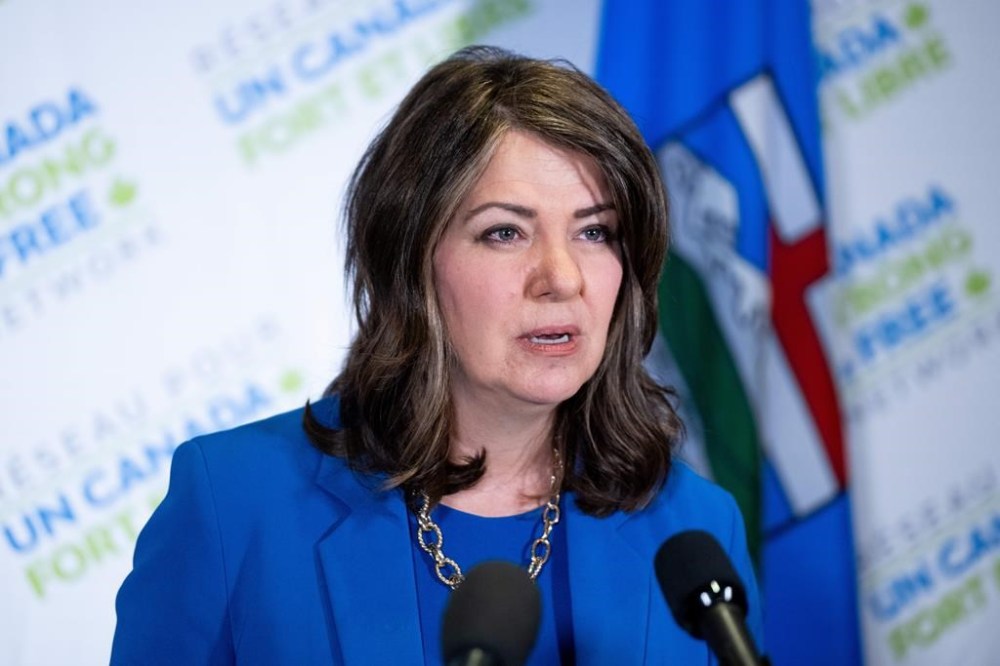
Smith told reporters last year’s election was a prime example of the dilemma as her government had to campaign while also fighting fires and organizing evacuations.
She had to be careful to not appear to be using the crisis to boost her profile while also needing to raise her profile to get the word out to Albertans on what was happening with the fires.
“Running an election parallel to this crisis made a difficult situation more challenging,” Smith said prior to the bill being introduced in the house.
She noted she and her ministers faced the threat of fines from Elections Alberta for using government resources during the campaign.
“I also found myself answering questions about the election at wildfire briefings as well as questions about wildfires at campaign events,” said Smith.
An election requires the government go into caretaker mode, while cabinet ministers are still technically in their posts.
Last year’s record-breaking wildfire season saw almost 30,000 people forced from their homes by early May, days after the spring election campaign had officially kicked off.
NDP Leader Rachel Notley said given climate change is making natural emergencies more frequent, she is not opposed to reconsidering the fixed election date.
But she said Smith could have looked at going to the polls earlier than the current date, such as February 2027 or October 2026.
“Giving themselves an extra six months seems very self-serving and opportunistic from a government that has a strong record of being very self-serving and opportunistic,” Notley told reporters.
Notley said if the problem is a need for proper communication, the government could instead have had public servants lead public emergency updates.
The bill, if passed, would also give the province the authority to quickly take over local emergency response efforts in what it considers extreme circumstances.
That includes situations where the municipality becomes overwhelmed or is working at cross purposes with the province.
Smith said if the province had that authority last season, they could have stepped in sooner to help fight jurisdictions, particularly those that threatened to stretch across local jurisdictions.
Forestry Minister Todd Loewen said the legislation is about providing clarity to powers that already exist.
“This isn’t about taking over or trying to control municipalities. They still have the right to be there, and we still respect that,” he said.
The legislation would allow cabinet, during emergencies, to direct water use and make “temporary low-risk” water transfers between major water basins.
The proposed legislation comes after two other pieces of legislation have already sparked backlash from municipalities over concerns the province is making an unnecessary power grab.
One bill would give the province gatekeeping power to veto federal funding deals with cities and towns. Another would give Smith’s cabinet the power to fire councillors and overturn local bylaws.
Tyler Gandam, the head of Alberta Municipalities, which represents Alberta towns, cities and villages, said he was still examining the bill but has concerns.
“Once again, another bill was introduced and tabled without consultation with municipalities,” said Gandam.
This report by The Canadian Press was first published May 9, 2024.