

Pro-Palestinian protesters leave UofT encampment ahead of court-ordered deadline
Advertisement
Read this article for free:
or
Already have an account? Log in here »
To continue reading, please subscribe:

Digital Subscription
One year of digital access for only $205*
- Enjoy unlimited reading on winnipegfreepress.com
- Read the E-Edition, our digital replica newspaper
- Access News Break, our award-winning app
- Play interactive puzzles
*First annual payment billed as $205.00 + GST for one year. This annual subscription will automatically renew at $233.00 + GST every 52 weeks (10% off the regular annual price of $259.35). Offer available to new and qualified returning subscribers only. Cancel any time.
To continue reading, please subscribe:
Add Free Press access to your Brandon Sun subscription for only an additional
$1 for the first 4 weeks*
- Enjoy unlimited reading on winnipegfreepress.com
- Read the E-Edition, our digital replica newspaper
- Access News Break, our award-winning app
- Play interactive puzzles
*Your next Brandon Sun subscription payment will increase by $1.00 and you will be charged $17.95 plus GST for four weeks. After four weeks, your payment will increase to $24.95 plus GST every four weeks.
Read unlimited articles for free today:
or
Already have an account? Log in here »
Hey there, time traveller!
This article was published 03/07/2024 (805 days ago), so information in it may no longer be current.
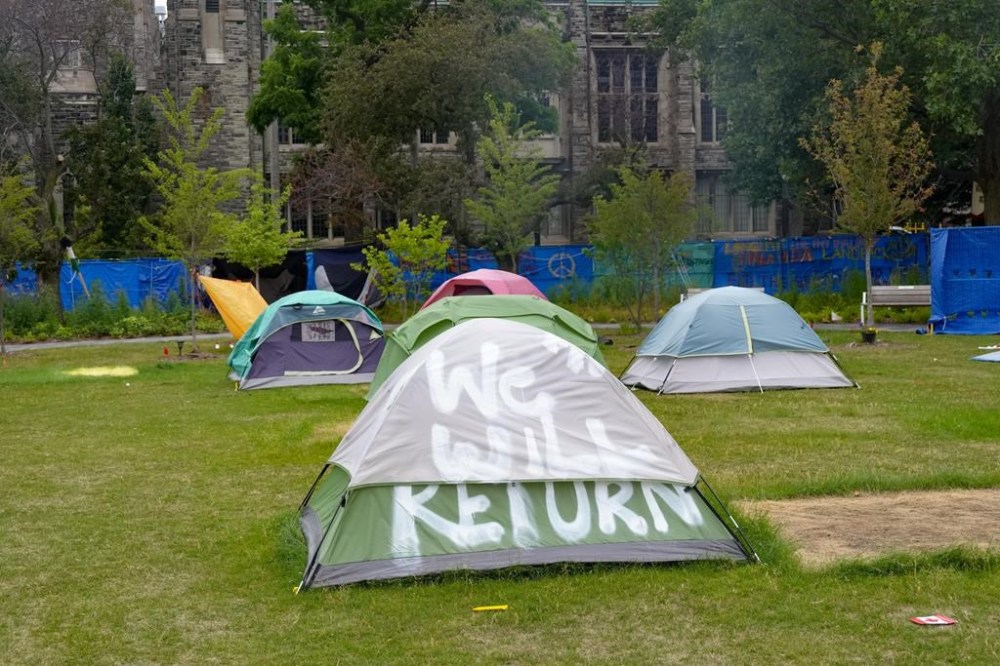
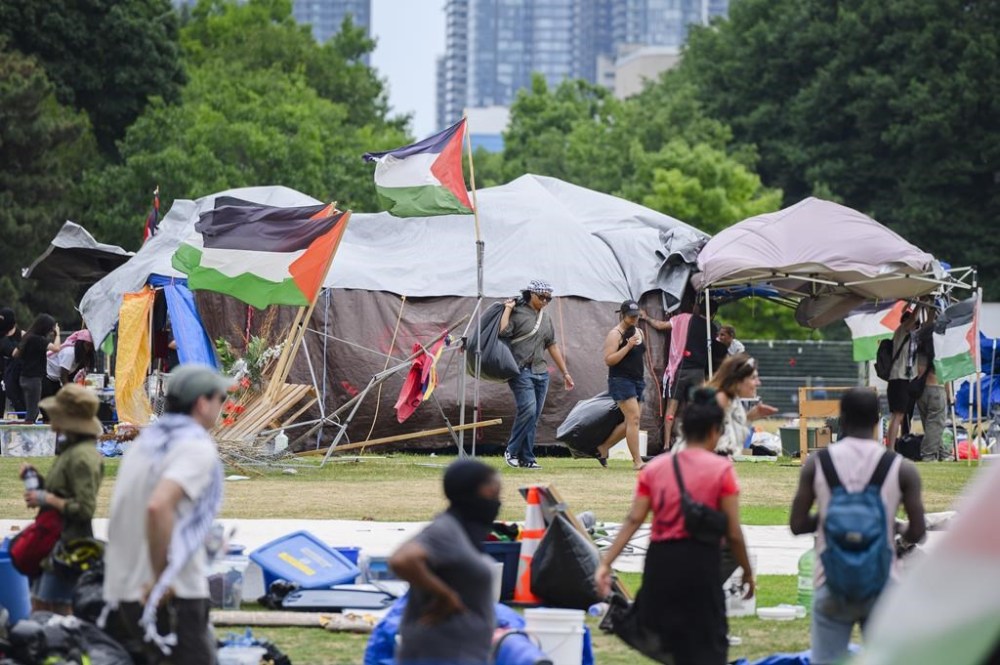
TORONTO – Pro-Palestinian protesters who had camped out on the University of Toronto’s downtown campus for two months packed up their tents and cleared the site Wednesday to comply with a court order but promised to keep putting pressure on the university until it meets their demands.
Organizers announced their decision to abide by the order about an hour before the 6 p.m. deadline, then left the area as they carried on with a rally that brought a large crowd in a show of support. The rally marched on campus and along nearby College Street, with many participants waving Palestinian flags.
Mohammad Yassin said the group decided to leave earlier than required to avoid a possible confrontation with police.
“We are leaving on our terms to protect our community,” he said.
Erin Mackey, another spokesperson for the group, said the university had failed in its duty to listen to the students, staff and faculty that make up the institution.
“But ignoring us will make us go nowhere, we will continue to show up, we continue to demand divestment,” she said. “We will continue to show up day after day.”
Demonstrators had been taking down tents and tarps throughout the day, with none left by late afternoon.
The university’s president, Meric Gertler, said he was glad the protesters complied with the order.
“I am pleased that the protesters have ended the encampment peacefully so that front campus can be restored and returned to the entire community,” he said in a statement.
“Members of our community continue to be free to exercise their right to free speech and lawful protest at the University of Toronto.”
An Ontario judge issued an order Tuesday for the protesters to take down the encampment that was set up at King’s College Circle two months ago and at one point included as many as 177 tents.
The injunction authorized police to step in if demonstrators didn’t leave the site by 6 p.m. Wednesday. Police had said they would enforce the order but would not disclose any operational plans.
Ontario Superior Court Justice Markus Koehnen’s decision said while there was no evidence the encampment participants had been violent or antisemitic, the demonstration had taken away the university’s ability to control what happens in King’s College Circle.
Koehnen said property owners generally decide what happens on their property, and if protesters can take that power for themselves, there is nothing to stop a stronger group from coming and taking over the space from the current protesters, leading to chaos.
The protesters set up camp on May 2 and previously said they would stay put until the school agrees to their demands, which include disclosing and divesting from investments in companies profiting from Israel’s offensive in Gaza.
The court ruling said the university has procedures in place to consider divestment requests and has offered the protesters an expedited process.
Protesters, however, have said they have no confidence in the process, since it rests on recommendations to the university president that he can either follow or ignore. They note Gertlerdeclined to follow a 2016 recommendation to divest from fossil fuels, only to initiate his own process years later that may result in divestment by 2030 — 16 years after the request was made.
“The protesters submit that Gaza does not have 16 years to wait,” Tuesday’s court decision read.
The university initially sought an urgent injunction against the encampment in late May because it’s near Convocation Hall, where graduation ceremonies were scheduled to take place over several weeks in June. The court ended up hearing arguments over two days last month, after most ceremonies were almost done.
No major disruptions were reported.
The judge issued his decision Tuesday, saying that, “as passionate as the protesters may be,” they had no unilateral right to decide how the campus green space can be used by their exercise of “force, occupation or intimidation.”
“If the property truly is a quasi-public space, why should one ad hoc group of people get to determine who can use that space for a period of over 50 days?
“As passionate as we may be about alleviating human suffering around the world, depriving our fellow residents of green space accomplishes nothing,” the judge wrote.
The ruling, however, dismissed allegations that the encampment demonstrators had trafficked in antisemitic hate speech and slogans, accusations routinely directed at the group by pro-Israeli organizations that had sought to undermine the protest.
While the judge noted some speech of the “exterior of the encampment” rose to the level of hate speech, none of the encampment demonstrators had been linked to those statements and they had, in fact, taken steps to take down offensive messages near the camp when they appeared.
The judge, on the other hand, cited several examples of the demonstrators themselves being subject to hateful commentary.
He concluded that the encampment was peaceful and cited testimony from demonstrators who described it as an inclusive, caring community where Muslim and Jewish people had co-led Shabbat dinners and shared in prayer.
Protesters, the decision notes, argued criticism of Israel had been conflated with antisemitism, fuelling a moral panic around the issue that had crossed into a new form of repression against those who support Palestinian rights.
“The respondents’ fears about the risk of a new form of McCarthyism are not without foundation,” the judge wrote, referring to the political repression campaign in the 1940s and 1950s to spread fear about alleged communist influence in the U.S. government.
Protesters argued an injunction would be a major infringement on their free expression rights, and underscored universities as a key forum for protest and debate. The judge, however, found there was no right to occupy property that does not belong to them.
The university, the judge wrote, has said protesters continue to have the right to protest anywhere on campus, but just can’t set up camps and block entry to university property.
-with files from Sharif Hassan
This report by The Canadian Press was first published on July 3, 2024.