

Sajjan’s office cites privacy, won’t say if he intervened for other Afghan groups
Advertisement
Read this article for free:
or
Already have an account? Log in here »
To continue reading, please subscribe:

Digital Subscription
One year of digital access for only $205*
- Enjoy unlimited reading on winnipegfreepress.com
- Read the E-Edition, our digital replica newspaper
- Access News Break, our award-winning app
- Play interactive puzzles
*First annual payment billed as $205.00 + GST for one year. This annual subscription will automatically renew at $233.00 + GST every 52 weeks (10% off the regular annual price of $259.35). Offer available to new and qualified returning subscribers only. Cancel any time.
To continue reading, please subscribe:
Add Free Press access to your Brandon Sun subscription for only an additional
$1 for the first 4 weeks*
- Enjoy unlimited reading on winnipegfreepress.com
- Read the E-Edition, our digital replica newspaper
- Access News Break, our award-winning app
- Play interactive puzzles
*Your next Brandon Sun subscription payment will increase by $1.00 and you will be charged $17.95 plus GST for four weeks. After four weeks, your payment will increase to $24.95 plus GST every four weeks.
Read unlimited articles for free today:
or
Already have an account? Log in here »
Hey there, time traveller!
This article was published 03/07/2024 (770 days ago), so information in it may no longer be current.
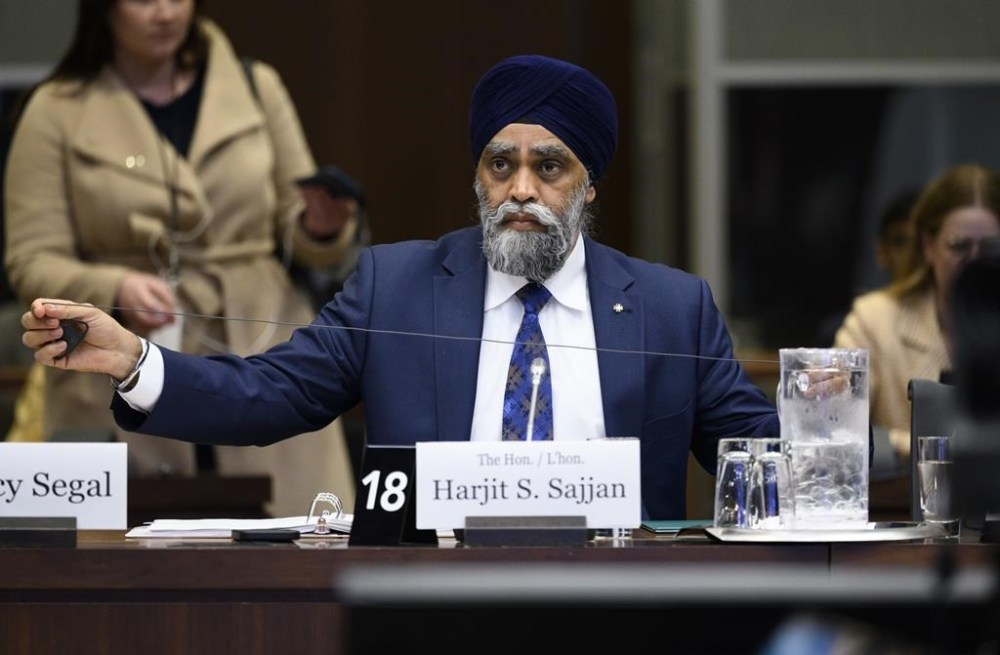
OTTAWA – As the former defence minister faces questions over his intervention for a group seeking to flee Afghanistan when the Taliban took over in 2021, federal Liberals won’t say whether he extended a helping hand to any others.
Harjit Sajjan, who is now emergency preparedness minister, has said he used “appropriate” channels to relay information to the Canadian Armed Forces about the whereabouts of a group of more than 200 Afghan Sikhs who were trapped.
His office is citing privacy as a reason why it can’t share whether other groups got similar treatment.
In the weeks leading up to the Taliban taking control of Kabul, Sajjan said Canada expanded a partnership with the Alberta-based Manmeet Singh Bhullar Foundation.
The group was trying to resettle Afghan Sikhs and Hindus who faced persecution in their home country, according to a statement last week.
After it identified about 200 people needing rescue but had trouble contacting the military directly, the group “reached out to me personally” about their whereabouts, Sajjan said.
He said he “provided direction” to the military through the “appropriate chain of command” to assist the group, which had already been deemed eligible for evacuation under Canadian government policy.
Ultimately, he said, the military wasn’t able to evacuate the group, but they found help through other means.
Asked how many times Sajjan contacted the military about the matter, a spokeswoman said he was in constant contact with the Canadian Armed Forces during that time.
“It is impossible to say how many times Minister Sajjan spoke to the CAF about rescuing any particular group of people, be it Afghan Sikhs, interpreters, women leaders, human-rights defenders, journalists, persecuted religious minorities, 2SLGBTQI+ individuals and others,” said Joanna Kanga.
Despite listing those categories of people, Kanga wouldn’t share whether Sajjan directly intervened on behalf of any specific groups like he did for the group of 200 Sikhs, as first reported by the Globe and Mail last week.
“Given that Afghans are part of a vulnerable population, for security reasons, we cannot provide any further details,” Kanga said, noting it is standard practice to protect the privacy and security of vulnerable groups.
But Sajjan’s office said that in general, at the time of Canada’s evacuation efforts, the minister, his staff and department officials were receiving many requests for assistance.
When the Taliban took over, western countries were seized with helping their own citizens leave the country, but also sought to assist groups determined to be risk of persecution by the Taliban.
That included women leaders, human-rights defenders, journalists and religious minorities.
“Some of these who reached out were journalists, representatives of minority groups, advocacy groups, family members, and others. Many Afghans also reached out to whoever they could find in government,” said Kanga.
“These messages and information were shared with the appropriate officials,” she said, including at Immigration, Refugees and Citizenship Canada, Global Affairs Canada and the Defence Department.
Sajjan insisted that at no time did he instruct the forces to prioritize their rescue over anyone else’s.
Defence chief Gen. Wayne Eyre said in a recent interview with The Canadian Press that the military was following “legal orders” when it tried rescuing the group of Afghan Sikhs after getting the information from Sajjan.
A parliamentary committee found that Canada’s evacuation efforts were poorly executed overall and the process was bogged down by bureaucracy.
It was also challenged by the fact Canada was one of the first countries to remove its embassy staff, parliamentarians found, leaving those trying to leave Afghanistan with less help.
This report by The Canadian Press was first published July 3, 2024.
Related Articles
Military was following 'legal orders' to try to rescue Afghan Sikhs, Gen. Eyre says
Advertisement Advertise With Us
Advertisement Advertise With Us