

Canada to brief foreign missions on ‘acceptable activity’ in advance of next election
Advertisement
Read this article for free:
or
Already have an account? Log in here »
To continue reading, please subscribe:

Digital Subscription
One year of digital access for only $205*
- Enjoy unlimited reading on winnipegfreepress.com
- Read the E-Edition, our digital replica newspaper
- Access News Break, our award-winning app
- Play interactive puzzles
*First annual payment billed as $205.00 + GST for one year. This annual subscription will automatically renew at $233.00 + GST every 52 weeks (10% off the regular annual price of $259.35). Offer available to new and qualified returning subscribers only. Cancel any time.
To continue reading, please subscribe:
Add Free Press access to your Brandon Sun subscription for only an additional
$1 for the first 4 weeks*
- Enjoy unlimited reading on winnipegfreepress.com
- Read the E-Edition, our digital replica newspaper
- Access News Break, our award-winning app
- Play interactive puzzles
*Your next Brandon Sun subscription payment will increase by $1.00 and you will be charged $17.95 plus GST for four weeks. After four weeks, your payment will increase to $24.95 plus GST every four weeks.
Read unlimited articles for free today:
or
Already have an account? Log in here »
Hey there, time traveller!
This article was published 04/10/2024 (682 days ago), so information in it may no longer be current.
OTTAWA – Heads of missions from around the world will be briefed on Canada’s expectations of “acceptable diplomatic activity” during the next general election, the deputy minister of foreign affairs told a federal inquiry Friday.
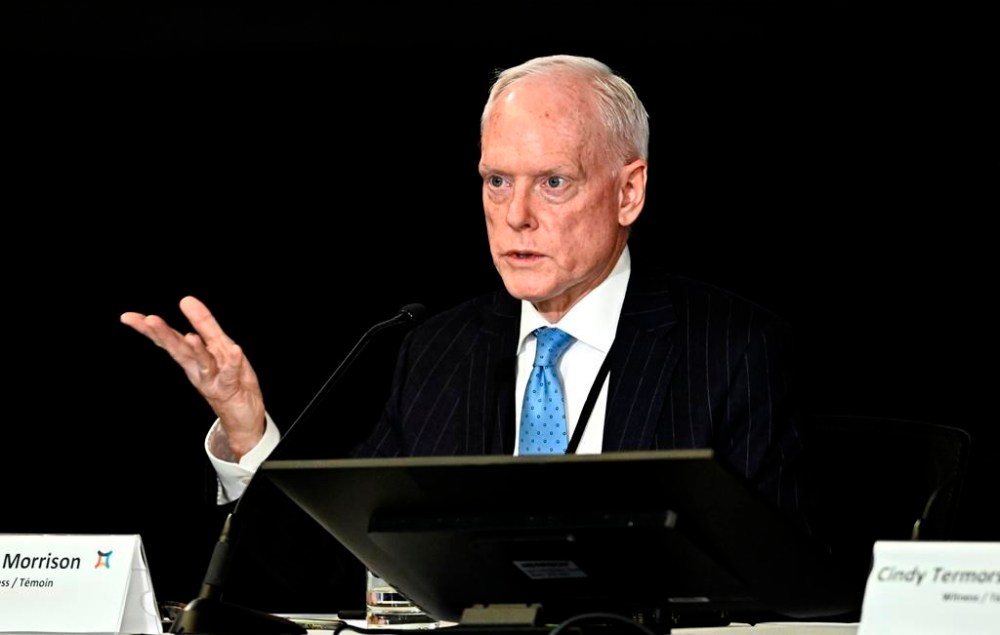
David Morrison said a meeting with foreign diplomats will be convened next month at Global Affairs Canada headquarters to go over “exactly where the lines are” between legitimate foreign influence and unwelcome meddling.
Canada will be “crystal clear” with foreign missions in Ottawa and their consulates throughout the country about what it considers appropriate diplomatic activity, he said.
Morrison said more could also be done to sensitize MPs about what it’s like to interact with foreign diplomats.
“On the social scene, most MPs aren’t from the National Capital Region, and most MPs that get elected have probably never been invited to a dinner at a diplomat’s house,” he said.
As a result, steps could be taken to alert MPs of “what is acceptable and where diplomatic behaviour might cross the line.”
A general election is expected in Canada within the next year, though one could come at almost any time as the minority Liberal government navigates an increasingly fractious Parliament.
The foreign interference inquiry’s latest hearings are focusing on the practices of key agencies in detecting and countering foreign interference.
Morrison and a panel of Global Affairs Canada colleagues provided insights Friday into how the department has navigated clashes with China and India in recent years, including episodes of meddling.
Morrison spoke of the “sometimes challenging distinction” between foreign influence, something all countries wish to have, and foreign interference, which crosses a line due to its coercive or clandestine nature.
He made it clear that some federal officials do not always see eye to eye with the Canadian Security Intelligence Service when it comes to labelling a particular activity as foreign interference.
Sometimes security services have “absolute, rock-solid information,” and other times it is inconclusive, based on a single source, Morrison said.
“I’m glad we live in a country where even inconclusive or incomplete pictures are painted because I think it makes us safer,” he said. But he added the best outcome emerges through triage and weighing, and “if you hash things out, rather than, for example, if the intelligence agencies had the automatic final say.”
Morrison offered a fresh perspective Friday on a high-profile episode that came to public attention through a leak to the media.
In May 2023, the federal government confirmed a newspaper report that Canada’s spy service had information in 2021 that the Chinese government was looking at ways to intimidate Conservative MP Michael Chong and his family.
Beijing’s actions followed Chong’s successful sponsorship of a motion in the House of Commons labelling Beijing’s treatment of Uyghur Muslims in China a genocide.
Shortly after the events became public last year, the Liberal government expelled Chinese diplomat Zhao Wei.
Under questioning Friday, Morrison told the inquiry that Zhao was not kicked out of Canada for foreign interference with respect to Chong.
He said officials had already been taking a “series of escalatory steps” with China, and had discussed as a department the possibility of expulsions months before the May 2023 publicity.
“That was the direction that it was trending. The activity we were concerned about was not ceasing. So all options were on the table.”
A May 2023 memorandum, signed by Morrison and tabled at the inquiry Friday, said that since January 2021, Canada had raised foreign interference with Chinese officials on over 30 occasions and, since the fall of 2022, via four diplomatic notes.
It said while elements of media reporting about Zhao’s activities were not accurate, there was no question that Chinese interference in Canada had continued despite repeated warnings, or that some of Zhao’s activities constituted foreign interference.
An unsuccessful effort was made to persuade Beijing to withdraw Zhao from Canada voluntarily.
Ultimately, Morrison said, the May 2023 media revelation provided the department an opportunity to make the expulsion “on terms favourable to us to achieve maximum impact, both with China and with other countries that might be watching, and we took that opportunity.”
This report by The Canadian Press was first published Oct. 4, 2024.