

‘Take these storms seriously’: Canadians in Florida advised caution post-Milton
Advertisement
Read this article for free:
or
Already have an account? Log in here »
To continue reading, please subscribe:

Digital Subscription
One year of digital access for only $205*
- Enjoy unlimited reading on winnipegfreepress.com
- Read the E-Edition, our digital replica newspaper
- Access News Break, our award-winning app
- Play interactive puzzles
*First annual payment billed as $205.00 + GST for one year. This annual subscription will automatically renew at $233.00 + GST every 52 weeks (10% off the regular annual price of $259.35). Offer available to new and qualified returning subscribers only. Cancel any time.
To continue reading, please subscribe:
Add Free Press access to your Brandon Sun subscription for only an additional
$1 for the first 4 weeks*
- Enjoy unlimited reading on winnipegfreepress.com
- Read the E-Edition, our digital replica newspaper
- Access News Break, our award-winning app
- Play interactive puzzles
*Your next Brandon Sun subscription payment will increase by $1.00 and you will be charged $17.95 plus GST for four weeks. After four weeks, your payment will increase to $24.95 plus GST every four weeks.
Read unlimited articles for free today:
or
Already have an account? Log in here »
Hey there, time traveller!
This article was published 10/10/2024 (703 days ago), so information in it may no longer be current.
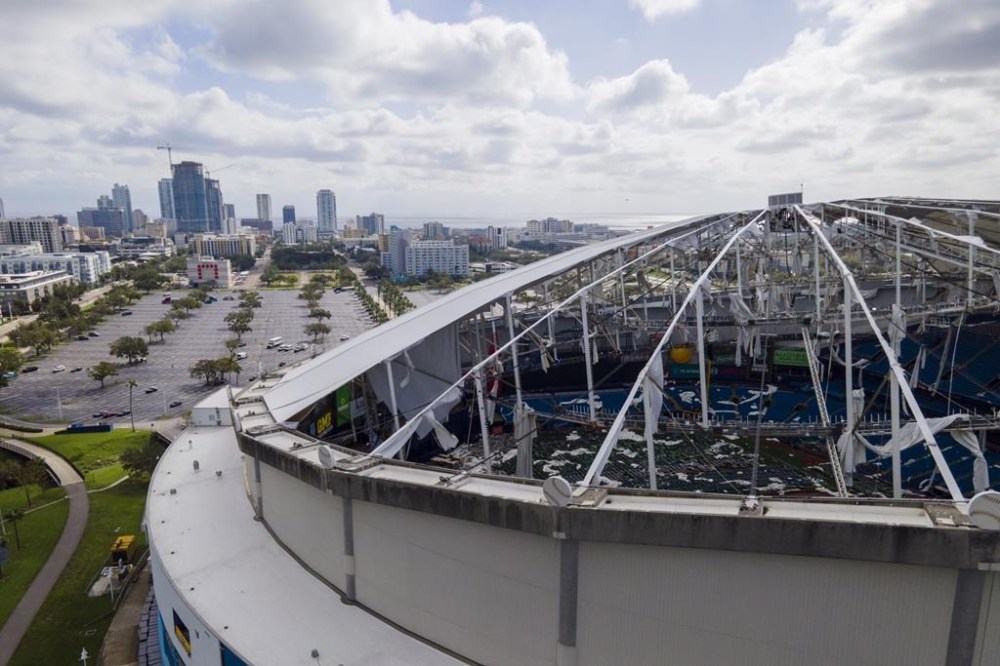
As multiple deaths were reported in the aftermath of Hurricane Milton and millions in Florida were left without power, a Canadian meteorologist in the area said it’s possible more extreme weather could come in the wake of the devastation and Canadians in the state should heed warnings about severe storms.
Mark Robinson, a meteorologist with The Weather Network who is based in Oakville, Ont., travelled to Florida on Tuesday to follow Milton’s development along the west coast. After waiting out the hurricane in the shelter of a parking garage, Robinson said Canadians need to consider severe weather when travelling to the state.
“Canadians … they might not be prepared for hurricanes, they might not be prepared for what these storms can do,” he said in a phone interview on Thursday.
“Take these storms seriously, they’re not unsurvivable.”
Robinson said he hunkered down in a parking garage in Sarasota, Fla., where the eye of the hurricane made landfall as a Category 3 storm Wednesday night, bringing with it a barrage of rain and powerful winds.
“It was hot and kind of humid, and then we just had a breath of air … that little breath became a strong breeze, then stronger and stronger, until it was an absolute roar of wind,” he said from Tampa, Fla., where he had traveled to on Thursday.
“We had to get back into our parking garage as the stronger eye wall came on shore and really wrecked Sarasota.”
Robinson said there was debris flying across streets, cars stuck on roadways, and damage to trees and the roofs of buildings. Some areas in the state saw flooding after the storm surge, he said.
Robinson said he’s spoken to several Florida residents who were bracing for the storm in local hotels after evacuating from their homes, many of whom had already gone through the same exercise just two weeks ago during Hurricane Helene.
“A lot of the feeling was exhaustion,” he said. “I think a lot of people were just resigned to the fact that they might lose their houses. And that is demoralizing.”
Robinson said Hurricane Milton’s rapid development made forecasting the exact location and landfall time challenging to predict, meaning residents in the state had little time to prepare.
“It was a bit unusual in that it blew up right on the Gulf of Mexico, and then just immediately started rocketing east,” he said.
Millions of people had been ordered to evacuate across 11 Florida counties in preparation for the storm. The storm had also spawned multiple reported tornadoes, some killing at least four people in St. Lucie County on Florida’s east coast, according to local officials.
Florida authorities are still assessing the damage across the state in Milton’s aftermath, and Gov. Ron DeSantis said Thursday that the state is also assessing the need for points of distribution for water, food and other supplies.
There are many Canadians who live in Florida seasonally, and Foreign Affairs Minister Mélanie Joly had urged them to leave Wednesday. Florida is a popular travel destination for Canadians as well, and some in the state during the hurricane said they had to take safety measures amid the storm.
Rob Westgate, a Canadian Press reporter who was on vacation in Orlando, Fla., during the hurricane, said he and other tourists at Disney World were told to shelter in their hotel rooms as the park closed and the eye passed just south of the city.
“It was pretty windy if you’re in the face of the wind,” he said.
“Everybody down here has been fantastic. A lot of hurricane veterans.”
Robinson, the meteorologist, said early computer models show there are still weather conditions developing that can produce tropical cyclones, which could lead to further hurricanes in the U.S. and up to Eastern Canada. While research on the effects of climate change on these kinds of severe weather events is ongoing, Robinson said there’s evidence it’s increasing the potential for hurricanes.
It’s part of the reason why Robinson urged Canadians who travel to Florida to consider the impact of severe weather on their time in the state.
Canadians — especially snowbirds who live in the state part time — should also consider how storms could affect their property ownership and insurance coverage, he said. He added that residents should always follow the advisories of local officials.
“A good way of looking at it is to educate yourself, realize these storms do hit Florida on a regular basis,” he said. “If you do pay attention to what the authorities are telling you, they will steer you correctly.”
— with files from the Associated Press.
This report by The Canadian Press was first published Oct. 10, 2024.
Related Articles
Hurricane Milton has caused thousands of flight cancellations. What to do if one of them was yours
Advertisement Advertise With Us
Advertisement Advertise With Us