

Canadian consensus on immigration under threat, but not gone: immigration minister
Advertisement
Read this article for free:
or
Already have an account? Log in here »
To continue reading, please subscribe:

Digital Subscription
One year of digital access for only $205*
- Enjoy unlimited reading on winnipegfreepress.com
- Read the E-Edition, our digital replica newspaper
- Access News Break, our award-winning app
- Play interactive puzzles
*First annual payment billed as $205.00 + GST for one year. This annual subscription will automatically renew at $233.00 + GST every 52 weeks (10% off the regular annual price of $259.35). Offer available to new and qualified returning subscribers only. Cancel any time.
To continue reading, please subscribe:
Add Free Press access to your Brandon Sun subscription for only an additional
$1 for the first 4 weeks*
- Enjoy unlimited reading on winnipegfreepress.com
- Read the E-Edition, our digital replica newspaper
- Access News Break, our award-winning app
- Play interactive puzzles
*Your next Brandon Sun subscription payment will increase by $1.00 and you will be charged $17.95 plus GST for four weeks. After four weeks, your payment will increase to $24.95 plus GST every four weeks.
Read unlimited articles for free today:
or
Already have an account? Log in here »
Hey there, time traveller!
This article was published 25/10/2024 (703 days ago), so information in it may no longer be current.
OTTAWA – Canada’s long-held consensus on immigration is under threat but has not disappeared, the immigration minister said in an interview after announcing a major cut to the number of newcomers to Canada.
On Thursday, Immigration Minister Marc Miller and Prime Minister Justin Trudeau announced plans to slash Canada’s immigration targets by 20 per cent next year and admitted the Liberal government did not get the balance right after the COVID-19 pandemic.
“There’s no sense in shying away from the fact that our immigration consensus is something that’s under stress and under threat,” Miller said.
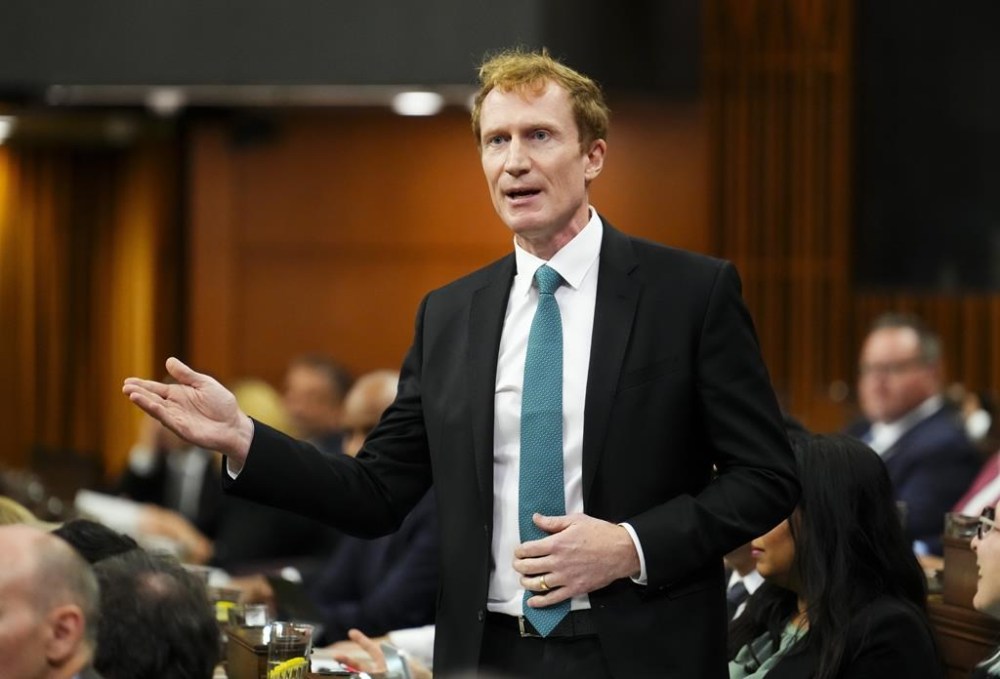
“It’s still there. It shouldn’t be confused with unanimity, which often people do.”
Last year, Miller froze the cap on new permanent residents at 500,000 for 2025 and 2026 after years of aggressive increases, as the government faced increased pressure to address the cost and availability of housing.
Canada is now in a “different place” than it was even a year ago, Miller said, and the decision to cut the targets back is a reflection of that.
“Over the course of the last year, we’ve seen attitudes shift — not to become anti-immigrant, but to be very concerned about the volume,” he said, citing the economy as one of the reasons for the change.
Conservative Leader Pierre Poilievre blamed the shift on mismanagement of the immigration file.
He pointed to the government’s decision to tighten the visa requirements for Mexicans — a reversal of a 2016 policy — irregular migration across the Canada-U.S. border at Roxham Road before the crossing was closed last year, and cases of fraud in the international student and temporary foreign worker programs.
Poilievre accused the Liberals of destroying the immigration system “that had a common-sense consensus of Conservatives and Liberals for 150 years.”
“Immigration was not even controversial before Trudeau came along,” Poilievre said at a press conference in Toronto on Thursday.
A recent poll by Abacus Data suggested half of Canadians have a negative view of immigration. The poll surveyed 1,915 adults between Oct. 3 and 9, and it cannot be assigned a margin of error because online surveys are not considered truly random samples.
Seventy-three per cent of those surveyed felt the number of immigrants had a negative effect on the cost and availability of housing, and 62 per cent felt immigration levels make access to health care more difficult.
One in five people cited issues related to social cohesion and assimilation as the reason for their concerns.
The new immigration levels won’t assuage everyone’s fears, but they do show that the government is listening, Miller said. He also said he hopes provinces, institutions and people who have benefited from immigration will speak up.
“I think my reflection is this is a country (that) perhaps has gotten lazy about how important immigration is, and we’ve just taken it for granted that is something that occurs,” Miller said.
“In this case, reacting to the concerns, it’s an opportunity for people to take agency and say immigration is good and why it’s good, and why it contributes to the economy, and why it has to be reasonable and manageable.”
Earlier this week, several Liberal MPs confronted the prime minister about his leadership in a closed-door meeting of the Liberal caucus on Parliament Hill.
On their way into that meeting, B.C. Liberal MP Ken Hardie said he hadn’t heard many concerns about Trudeau’s leadership when speaking with his constituents, but those few who did bring it up linked their complaints to immigration.
“It’s all to do with immigration,” Hardie said.
The NDP has accused Trudeau’s government of blaming immigrants for affordability problems that have put pressure on Canadian households.
“The prime minister thinks that scapegoating newcomers will somehow turn his political fortunes around,” NDP immigration critic Jenny Kwan said in a statement.
“The truth is, it won’t.”
This report by The Canadian Press was first published Oct. 25, 2024.