

Manitoba chief electoral officer calls for legislation against disinformation
Advertisement
Read this article for free:
or
Already have an account? Log in here »
To continue reading, please subscribe:

Digital Subscription
One year of digital access for only $205*
- Enjoy unlimited reading on winnipegfreepress.com
- Read the E-Edition, our digital replica newspaper
- Access News Break, our award-winning app
- Play interactive puzzles
*First annual payment billed as $205.00 + GST for one year. This annual subscription will automatically renew at $233.00 + GST every 52 weeks (10% off the regular annual price of $259.35). Offer available to new and qualified returning subscribers only. Cancel any time.
To continue reading, please subscribe:
Add Free Press access to your Brandon Sun subscription for only an additional
$1 for the first 4 weeks*
- Enjoy unlimited reading on winnipegfreepress.com
- Read the E-Edition, our digital replica newspaper
- Access News Break, our award-winning app
- Play interactive puzzles
*Your next Brandon Sun subscription payment will increase by $1.00 and you will be charged $17.95 plus GST for four weeks. After four weeks, your payment will increase to $24.95 plus GST every four weeks.
Read unlimited articles for free today:
or
Already have an account? Log in here »
Hey there, time traveller!
This article was published 28/10/2024 (656 days ago), so information in it may no longer be current.
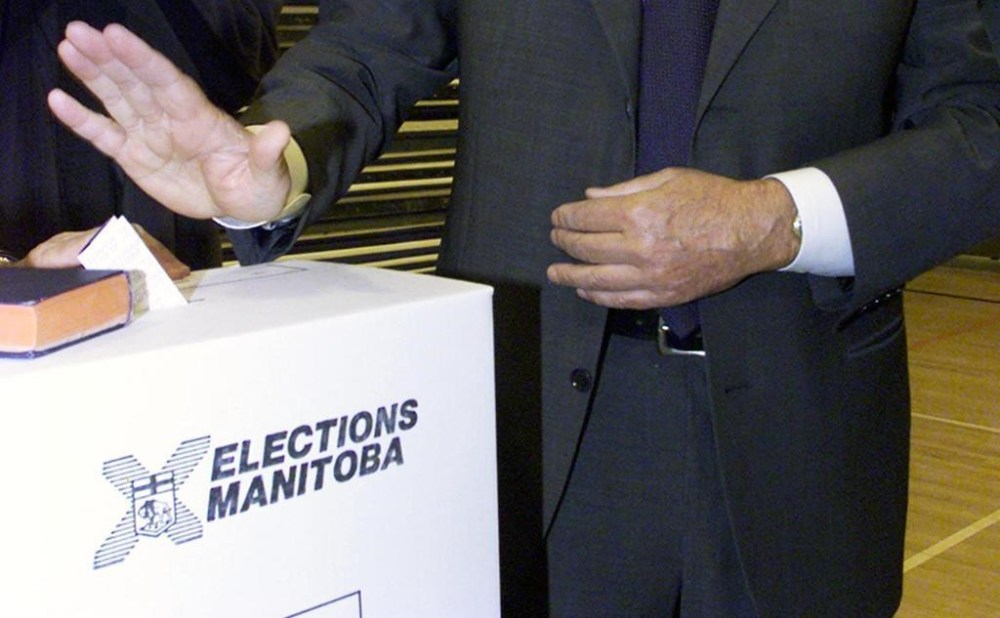
WINNIPEG – Manitoba’s chief electoral officer is calling for a legal crackdown on disinformation about provincial elections, including the spread of false information about election officials and electronic vote-counting machines.
In an annual report from Elections Manitoba, Shipra Verma says deliberate attempts to mislead voters must be dealt with.
“The deliberate spread of false information … intended to mislead voters is a threat to democracy, eroding trust in elections and interfering with voters’ ability to understand and participate in political processes,” the report reads.
“As false information spreads rapidly through digital media, it often becomes misinformation, shared by individuals unaware of its accuracy, further complicating efforts to maintain a fair electoral environment.”
The provincial Elections Act already bans people from disseminating false information about candidates, impersonating election officials and more. Penalties range up to a $10,000 fine and a year in jail.
The law should be expanded to also ban, during the period leading up to an election, objectively false information about election officials, the electoral process, the equipment used in elections and more, Verma’s report said.
“Example: During the pre-campaign or election period, individuals and organizations could not transmit false information such as elections officials have committed an offence; statements relating membership in a group or association of election officials; or anything related to the tools and equipment (Elections Manitoba) uses to administer the election.”
False information about voter eligibility and voter registration processes should also be banned, as well as any forged material that falsely claims to be from a candidate, an election official or a political party, Verma suggests.
In an interview, Verma said legislators would have to work out details that would balance freedom of expression with protections against deliberate misinformation.
“There is a judgment which does come into the picture. And we need to have a law which can be implemented, which can be defended but also doesn’t become cumbersome and has an impact on freedom of speech,” she said.

She pointed to the possible use of artificial intelligence to generate so-called “deep fake” videos that impersonate politicians.
The report was tabled in the legislature Monday afternoon and there was no immediate response from the government.
Claims of electoral wrongdoing in the United States have led to many court battles. Rudy Giuliani, a former lawyer for Donald Trump, has been disbarred in Washington, D.C. and New York for pursuing false claims about Trump’s 2020 election loss.
This report by The Canadian Press was first published Oct. 28, 2024
— with files from The Associated Press