

Feds want to censor transcripts of Abdelrazik trial over national security concerns
Advertisement
Read this article for free:
or
Already have an account? Log in here »
To continue reading, please subscribe:

Digital Subscription
One year of digital access for only $205*
- Enjoy unlimited reading on winnipegfreepress.com
- Read the E-Edition, our digital replica newspaper
- Access News Break, our award-winning app
- Play interactive puzzles
*First annual payment billed as $205.00 + GST for one year. This annual subscription will automatically renew at $233.00 + GST every 52 weeks (10% off the regular annual price of $259.35). Offer available to new and qualified returning subscribers only. Cancel any time.
To continue reading, please subscribe:
Add Free Press access to your Brandon Sun subscription for only an additional
$1 for the first 4 weeks*
- Enjoy unlimited reading on winnipegfreepress.com
- Read the E-Edition, our digital replica newspaper
- Access News Break, our award-winning app
- Play interactive puzzles
*Your next Brandon Sun subscription payment will increase by $1.00 and you will be charged $17.95 plus GST for four weeks. After four weeks, your payment will increase to $24.95 plus GST every four weeks.
Read unlimited articles for free today:
or
Already have an account? Log in here »
Hey there, time traveller!
This article was published 18/11/2024 (628 days ago), so information in it may no longer be current.
OTTAWA – The federal government is seeking to censor transcripts of a trial taking place in open court, citing a need to limit damage after sensitive national security information spilled out during testimony.
Lawyers for Abousfian Abdelrazik, the plaintiff in the civil case, reject the federal legal justification for the move and say it could prevent their client from relying on statements already made in court.
The Crown’s request comes part way through an eight-week Federal Court hearing of Abdelrazik’s lawsuit against Ottawa over his imprisonment in Sudan two decades ago.
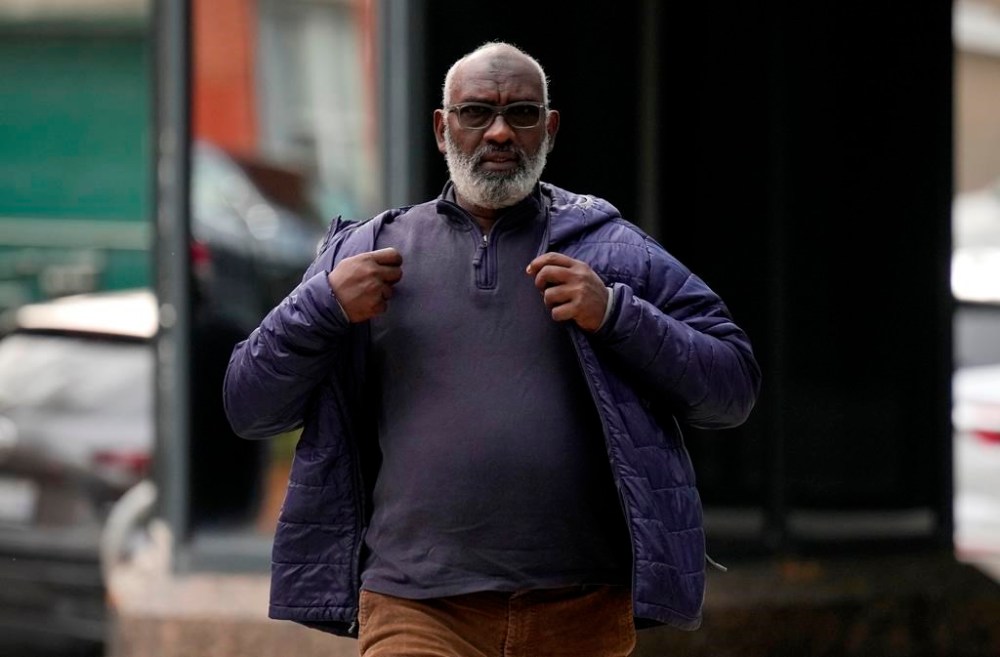
Abousfian Abdelrazik makes his way to Federal court in Ottawa, Wednesday, Oct. 30, 2024. THE CANADIAN PRESS/Adrian Wyld
Canadian officials had long eyed the Montreal man as a suspected extremist before he was arrested in Khartoum in 2003.
Abdelrazik, who denies involvement in terrorism, says he was tortured during two periods of detention by the Sudanese intelligence agency.
He claims Canadian officials arranged for his arbitrary imprisonment, encouraged his incarceration by Sudanese authorities and actively obstructed his repatriation to Canada for several years
The government argues Abdelrazik was an author of his own misfortune, saying Canada did not urge Sudan to keep him in detention or to mistreat him.
In August last year, the court issued an order under the Canada Evidence Act confirming redactions to 1,469 documents produced by the government in the case.
Federal lawyers say despite efforts to carefully prepare witnesses, there have been multiple inadvertent disclosures of information protected by the order during testimony — including statements by a former Canadian Security Intelligence Service officer.
“The parties are making extensive efforts to avoid the disclosure of protected information during these proceedings,” federal lawyer Andrew Gibbs said in a letter sent last Friday to the court for review by presiding trial judge Patrick Gleeson.
“That said, even with the utmost caution and preparation, mistakes happen.”
An accompanying affidavit from a senior official with CSIS’s litigation and disclosure branch says the fact several unintended disclosures have occurred in court “does not negate the need for further protection of that same information.”
“At the moment, information that was inadvertently disclosed during trial has been limited to oral testimony of the witnesses,” the affidavit notes.
“Allowing the protected information to be permanently recorded in public transcripts will increase the risk of further injury,” says the official, identified only as Marie-Eve.
As a result, the information “should be redacted from the public record to prevent further injury to national security.”
The affidavit includes a classified exhibit listing the inadvertent disclosures to date. The exhibit is not public.
Paul Champ, a lawyer for Abdelrazik, said transcripts from the start of the trial in late October through Nov. 4 would not be affected by the federal request. However, all subsequent ones would be reviewed with an eye to stripping them of information covered by the court order.
The letter from Gibbs sets out a suggested protocol for reviewing testimony and making possible redactions to transcripts as the trial proceeds.
Champ accused the federal attorney general of being fixated only on secrecy for secrecy’s sake, with no regard for Mr Abdelrazik’s fundamental human rights, including his right to a fair trial.
“Seeking to redact the transcripts of an open trial is a troubling continuation of this pattern.”
In his own letter for review by Gleeson, Champ expresses concern the government “intends to make a large number of redactions” to the open court record.
Some of that testimony “may be highly relevant,” and the proposed protocol set out by Gibbs could mean having to make submissions to a judge to determine if Abdelrazik can rely on it for his case, Champ added.
Champ rejects the federal argument that the Canada Evidence Act allows for the redaction of information from transcripts of testimony that has already been heard in open court.
Gleeson is expected to consider the matter this week.
This report by The Canadian Press was first published Nov. 18, 2024.