

N.S. election: Nova Scotia Premier Tim Houston’s combative style of politics
Advertisement
Read this article for free:
or
Already have an account? Log in here »
To continue reading, please subscribe:

Digital Subscription
One year of digital access for only $205*
- Enjoy unlimited reading on winnipegfreepress.com
- Read the E-Edition, our digital replica newspaper
- Access News Break, our award-winning app
- Play interactive puzzles
*First annual payment billed as $205.00 + GST for one year. This annual subscription will automatically renew at $233.00 + GST every 52 weeks (10% off the regular annual price of $259.35). Offer available to new and qualified returning subscribers only. Cancel any time.
To continue reading, please subscribe:
Add Free Press access to your Brandon Sun subscription for only an additional
$1 for the first 4 weeks*
- Enjoy unlimited reading on winnipegfreepress.com
- Read the E-Edition, our digital replica newspaper
- Access News Break, our award-winning app
- Play interactive puzzles
*Your next Brandon Sun subscription payment will increase by $1.00 and you will be charged $17.95 plus GST for four weeks. After four weeks, your payment will increase to $24.95 plus GST every four weeks.
Read unlimited articles for free today:
or
Already have an account? Log in here »
Hey there, time traveller!
This article was published 26/11/2024 (676 days ago), so information in it may no longer be current.
HALIFAX – Tim Houston gambled that Nova Scotia voters would re-elect the Progressive Conservatives with another majority — even though he ignored his government’s fixed-election-date legislation.
It was the first law his government passed in 2021, setting the next election for July 2025. Instead, he called voters to the polls on Tuesday, and he won his bet: Nova Scotians gave his party an expanded majority.
Since first being elected to the provincial legislature in 2013 representing the riding of Pictou East, the 54-year-old Houston has largely come across as a combative politician. Rising to prominence as a fierce critic of former Liberal premier Stephen McNeil, Houston seemed to relish the role of being a thorn in McNeil’s side during debates in the legislature.
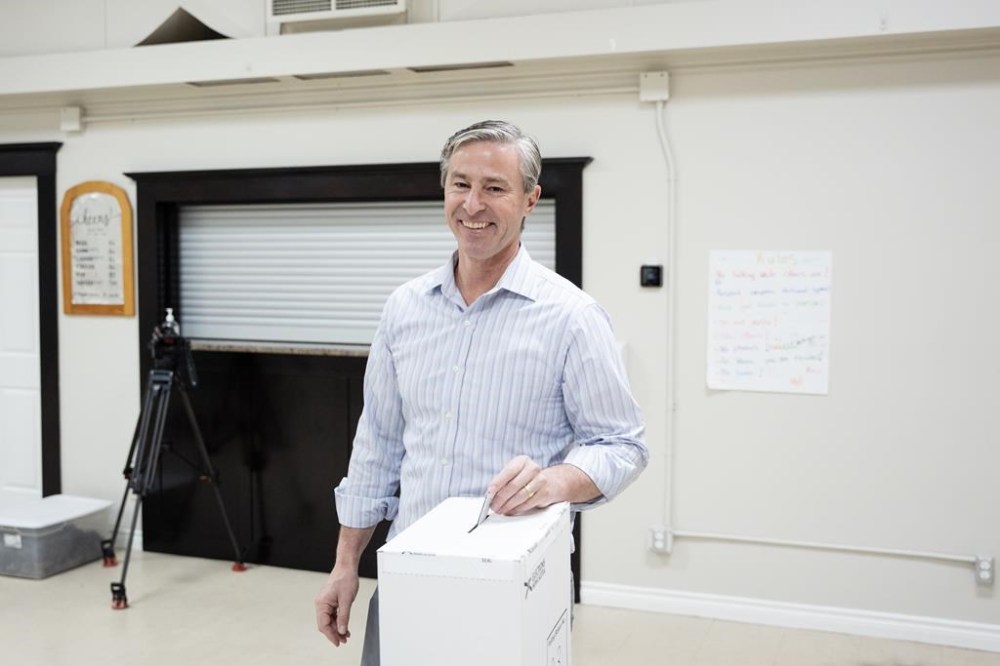
Elected party leader in 2018, Houston became premier three years later when the Tories won a majority. He has since cemented his public image as a partisan defender of his government’s record.
But the re-elected Tory premier insists he has a softer side.
“It’s interesting that when I meet people, there’s a couple of things they generally say,” he said in a recent interview with The Canadian Press.
“Number 1 thing they say is, ‘You are taller than I thought,’ and the number 2 thing is, ‘You are nicer than I thought.'”
When Houston called the election late last month, he said he needed a fresh mandate to deal with a federal government he maintains has sold Nova Scotia short. High on his list of grievances are Ottawa’s imposition of carbon pricing and its refusal to pay the entire cost of protecting the Chignecto Isthmus, the low-lying land between New Brunswick and Nova Scotia that is increasingly at risk of severe flooding.
Houston makes no apologies for his rocky relationship with the federal Liberals and says he will continue to stand up for his province if re-elected, regardless of who ends up in power after the next federal election.
“Whoever is in Ottawa, they are going to see the same Tim Houston as Prime Minister Trudeau (sees),” he said. “On issues where we can work together … then we’re going to get along great, but on issues where they try to shortchange Nova Scotians, they will hear from me on that.”
Born in Halifax, Houston grew up in a military family and spent his early years moving around various parts of the country, including Prince Edward Island, Ontario and British Columbia, before his family settled in Halifax. He said the experience of being a so-called “base brat” has played a significant role in his outlook.
“I do think growing up in a military family teaches you a lot about resilience, you are moving around a lot, you’re making new friends … it just teaches you a lot about structure and how to get along with people.”
He said he didn’t grow up in a political household and didn’t become interested in politics until he returned to Nova Scotia in 2007, after spending more than a decade living in Bermuda, where he worked as a chartered accountant in international finance.
Houston and his wife Carol have two children, Paget and Zachary.
Attracted to the give-and-take of political jousting, Houston said there have been times where he’s had to tell himself “OK, you’ve made your point.”
“I think as premier I’ve shown that I will listen,” he said. “Sometimes we get it wrong and when somebody can show you that you’re wrong, then I have an obligation to be an adult and acknowledge that.”
One of those times came during the recent fall sitting of the legislature when the government passed proposed NDP legislation declaring intimate partner violence an epidemic in the province. The swift reversal came less than an hour after Houston told reporters he didn’t think the legislation was necessary — and after a tense conversation involving four women from the private-sector union Unifor who were advocating for the bill.
During the election campaign, the main issues were health care, the lack of affordable housing and the high cost of living. Looking ahead, Houston said he recognizes the world political situation could pose challenges for the province, particularly in its relationship with the United States and president-elect Donald Trump, who has threatened to impose a 25 per cent import tariff on goods coming from Canada and Mexico.
Despite the political uncertainty, Houston pointed to Trump’s pledge to make countries such as Canada increase their NATO contribution to two per cent of GDP as a potential opportunity for Nova Scotia, which has a strong military presence. He said it’s likely there will be more defence spending in Canada.
“If we properly navigate, that could be incredibly beneficial to our economy,” Houston said. “The (political) water will get choppy, but with some vision and some clarity and strong leadership, we can do just fine.”
This report by The Canadian Press was first published Nov. 26, 2024.

Advertisement Advertise With Us
Advertisement Advertise With Us