

AFN says it’s not prepared to implement chiefs’ child welfare direction
Advertisement
Read this article for free:
or
Already have an account? Log in here »
To continue reading, please subscribe:

Digital Subscription
One year of digital access for only $205*
- Enjoy unlimited reading on winnipegfreepress.com
- Read the E-Edition, our digital replica newspaper
- Access News Break, our award-winning app
- Play interactive puzzles
*First annual payment billed as $205.00 + GST for one year. This annual subscription will automatically renew at $233.00 + GST every 52 weeks (10% off the regular annual price of $259.35). Offer available to new and qualified returning subscribers only. Cancel any time.
To continue reading, please subscribe:
Add Free Press access to your Brandon Sun subscription for only an additional
$1 for the first 4 weeks*
- Enjoy unlimited reading on winnipegfreepress.com
- Read the E-Edition, our digital replica newspaper
- Access News Break, our award-winning app
- Play interactive puzzles
*Your next Brandon Sun subscription payment will increase by $1.00 and you will be charged $17.95 plus GST for four weeks. After four weeks, your payment will increase to $24.95 plus GST every four weeks.
Read unlimited articles for free today:
or
Already have an account? Log in here »
Hey there, time traveller!
This article was published 10/12/2024 (587 days ago), so information in it may no longer be current.
OTTAWA – The Assembly of First Nations is warning it’s not equipped to implement the direction it received from chiefs at two recent assemblies on child welfare reforms, while a leading child welfare advocate is questioning its authority on the issue altogether.
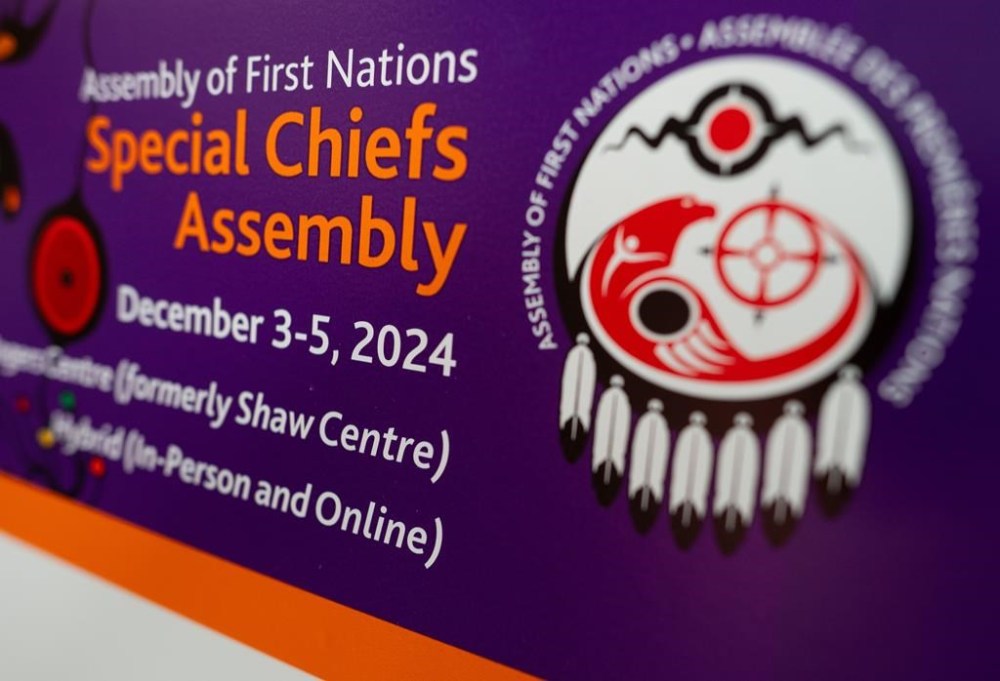
Chiefs passed resolutions in October and December saying the AFN should no longer represent the interests of First Nations when it comes to issues relating to reforming the child welfare system.
They called for the creation of a new Children’s Chiefs Commission to do that instead, after voting down a landmark child-welfare deal negotiated with Ottawa.
In the meantime, an ongoing human rights case argues Canada is failing to implement Jordan’s Principle, a legal rule that stipulates that when a First Nations child needs health, social or educational services they are to receive them from the government first approached, with questions about final jurisdiction worked out afterward.
The Canadian Human Rights Tribunal is set to hold a hearing that argues Canada is not complying with its obligations under Jordan’s Principle.
Now in a letter to the tribunal, the AFN says there is a “lack of clear source funding” to implement some of the chiefs’ directions, asking for the hearing to be postponed to late March.
“The resolutions are complex and will require significant consideration by the AFN with respect to their implementation, which includes issues relating to resourcing and staffing,” wrote Stuart Wuttke, the AFN’s general counsel.
“We would stress that this request is not being undertaken lightly, however, in light of the scope of the resolutions and their potential impacts of AFN governance, resourcing and staffing, including the potential for the appointment of new legal counsel, it is essential that the AFN be provided with sufficient time to clarify its role and mandate in these proceedings moving forward.”
The First Nations Child and Family Caring Society raised concerns that Ottawa was taking too long to process requests through Jordan’s Principle, leaving children without access to services, and filed a non-compliance motion with the human rights tribunal.
In an interim decision last month, the tribunal ordered Canada to address a backlog of requests, and to come back with a plan on how it intends to do so by Dec. 10.
Cindy Blackstock, who heads the Caring Society, called the AFN’s petition to the tribunal “concerning,” adding it’s unclear what authority it even has, given that the Children’s Chiefs Commission is now in charge of the file.
“It is clear that children can’t wait another three months,” she said in an interview, adding that chiefs did not ask for an indefinite delay of the tribunal hearings.
“In my view, the AFN can and should put its house in order and get back to make sure there’s no delays … They need to kind of regroup, follow the chiefs’ direction and be part of the solution.”
The Assembly of First Nations did not immediately respond to a request for comment.
On Tuesday morning, Indigenous Services Minister Patty Hajdu did not say whether her government would be willing to fund the Children’s Chiefs Commission, saying instead that it was still reviewing the resolutions passed by chiefs in assembly and weighing its options on the path forward.
“Of course, we’ll be listening to what the (tribunal) has to say about the AFN’s petition,” she said.
Hajdu also said her government has been “highly supportive” of all parties included in the ongoing work, and that it will continue working toward a resolution.
Blackstock, however, said that’s not entirely true.
“They haven’t been very supportive of us because they don’t even respond to our correspondences, or our willingness to sit down and meet with them,” she said.
“If their goal is to not litigate, then they need to properly support First Nations-driven negotiation processes because we don’t have to negotiate with them. We really don’t.”
This report by The Canadian Press was first published Dec. 10, 2024.