

Quebec caps international students but is hazy on numbers
Advertisement
Read this article for free:
or
Already have an account? Log in here »
To continue reading, please subscribe:
Monthly Digital Subscription
$1 per week for 24 weeks*
- Enjoy unlimited reading on winnipegfreepress.com
- Read the E-Edition, our digital replica newspaper
- Access News Break, our award-winning app
- Play interactive puzzles
*Billed as $4.00 plus GST every four weeks. After 24 weeks, price increases to the regular rate of $19.95 plus GST every four weeks. Offer available to new and qualified returning subscribers only. Cancel any time.
Monthly Digital Subscription
$4.99/week*
- Enjoy unlimited reading on winnipegfreepress.com
- Read the E-Edition, our digital replica newspaper
- Access News Break, our award-winning app
- Play interactive puzzles
*Billed as $19.95 plus GST every four weeks. Cancel any time.
To continue reading, please subscribe:
Add Free Press access to your Brandon Sun subscription for only an additional
$1 for the first 4 weeks*
*Your next subscription payment will increase by $1.00 and you will be charged $16.99 plus GST for four weeks. After four weeks, your payment will increase to $23.99 plus GST every four weeks.
Read unlimited articles for free today:
or
Already have an account? Log in here »
Hey there, time traveller!
This article was published 26/02/2025 (393 days ago), so information in it may no longer be current.
QUÉBEC – Quebec is taking steps to reduce the number of international students in the province, but can’t say by how many.
On Wednesday, the government announced it will issue 20 per cent fewer acceptance certificates to foreign students this year compared to last year. The move is part of Quebec’s plan to limit the number of non-permanent residents in the province, which it pegs around 615,000 people.
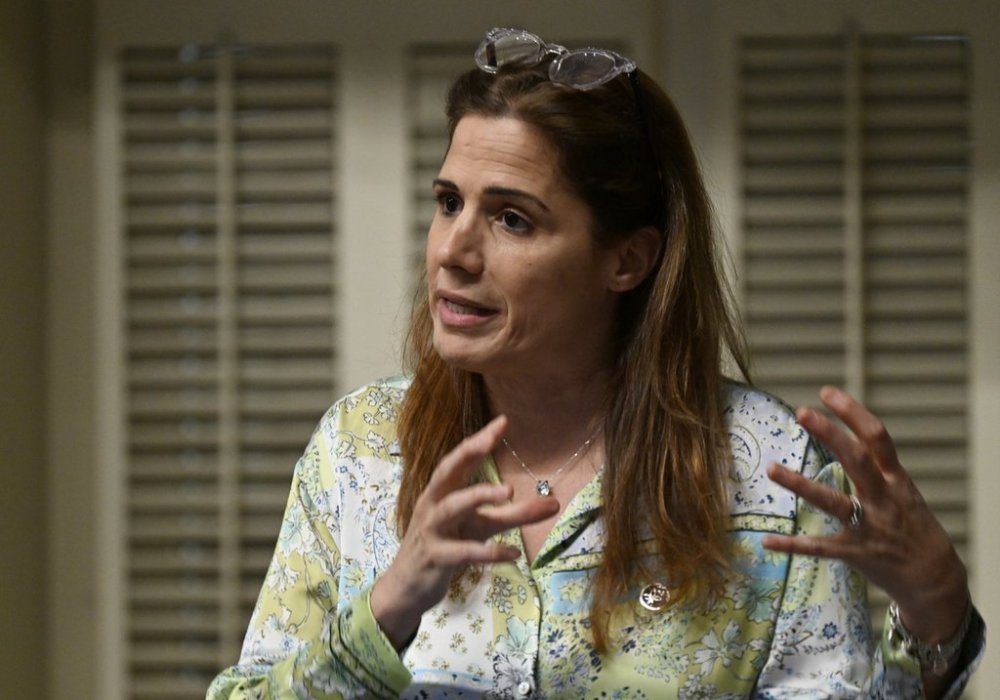
“The goal is to slow the growth,” Higher Education Minister Pascale Déry told reporters in Quebec City. “There has been substantial growth … of foreign students in recent years.”
The government says there were 120,000 international students in Quebec in 2023, up from 50,000 nearly a decade earlier.
This year, Quebec will issue a maximum of 124,760 acceptance certificates to foreign students, down from 156,647 in 2024.
The measure primarily targets private colleges that the government has said are using education as a business model to sell citizenship. Quebec will issue a maximum of about 32,000 certificates for professional training programs, down from 44,600. At the college level, the number will drop to 29,200 from nearly 49,000.
The numbers for universities and pre-university college programs will be capped at 2024 levels.
However, not everyone who receives an acceptance certificate ends up enrolling, and Déry was unable to say how the number of foreign students in Quebec will change as a result of the new limit.
“Will it eventually lead to a drop in enrolment?” she said. “We still have to wait.”
The new numbers are in place for one year, while the government comes up with a multi-year plan, Déry said.
The measure follows a new law Quebec passed in December, which gave the government broad discretion to cap international students. An order in council published Wednesday sets out individual limits for each post-secondary school in the province.
Public colleges and universities had asked to be excluded from the bill, arguing that international students make crucial contributions to Quebec. “At this point, we can only express our dismay at the fact that the government insists on maintaining this course, despite the current geopolitical context,” said McGill University in a statement Wednesday. “Rather than welcoming exceptional talent from abroad looking to study in Quebec, we’re closing our doors.”
A spokesperson for Concordia University said the school doesn’t expect to be affected by the new ceiling, as international student enrolment has declined in recent years. But Concordia is worried about the “negative message” the Quebec government is sending to international students, the spokesperson said.
This report by The Canadian Press was first published Feb. 26, 2025.
— With files from Maura Forrest in Montreal