

B.C. drug decriminalization and safer supply associated with more overdoses: study
Advertisement
Read this article for free:
or
Already have an account? Log in here »
To continue reading, please subscribe:
Monthly Digital Subscription
$1 per week for 24 weeks*
- Enjoy unlimited reading on winnipegfreepress.com
- Read the E-Edition, our digital replica newspaper
- Access News Break, our award-winning app
- Play interactive puzzles
*Billed as $4.00 plus GST every four weeks. After 24 weeks, price increases to the regular rate of $19.95 plus GST every four weeks. Offer available to new and qualified returning subscribers only. Cancel any time.
Monthly Digital Subscription
$4.99/week*
- Enjoy unlimited reading on winnipegfreepress.com
- Read the E-Edition, our digital replica newspaper
- Access News Break, our award-winning app
- Play interactive puzzles
*Billed as $19.95 plus GST every four weeks. Cancel any time.
To continue reading, please subscribe:
Add Free Press access to your Brandon Sun subscription for only an additional
$1 for the first 4 weeks*
*Your next subscription payment will increase by $1.00 and you will be charged $16.99 plus GST for four weeks. After four weeks, your payment will increase to $23.99 plus GST every four weeks.
Read unlimited articles for free today:
or
Already have an account? Log in here »
Hey there, time traveller!
This article was published 25/03/2025 (366 days ago), so information in it may no longer be current.
VANCOUVER – A study into safer supply and drug decriminalization policies in British Columbia has found that both were associated with increased opioid overdose hospitalizations.
The report says that there was no change in deaths associated with safer supply, while neither policy appeared to mitigate the opioid crisis that has claimed more than 16,000 lives in B.C. since being declared a public health emergency in 2016.
“The observed increase in opioid hospitalizations, without a corresponding increase in opioid deaths, may reflect greater willingness to seek medical assistance because decriminalization could reduce the stigma associated with drug use,” the study says.
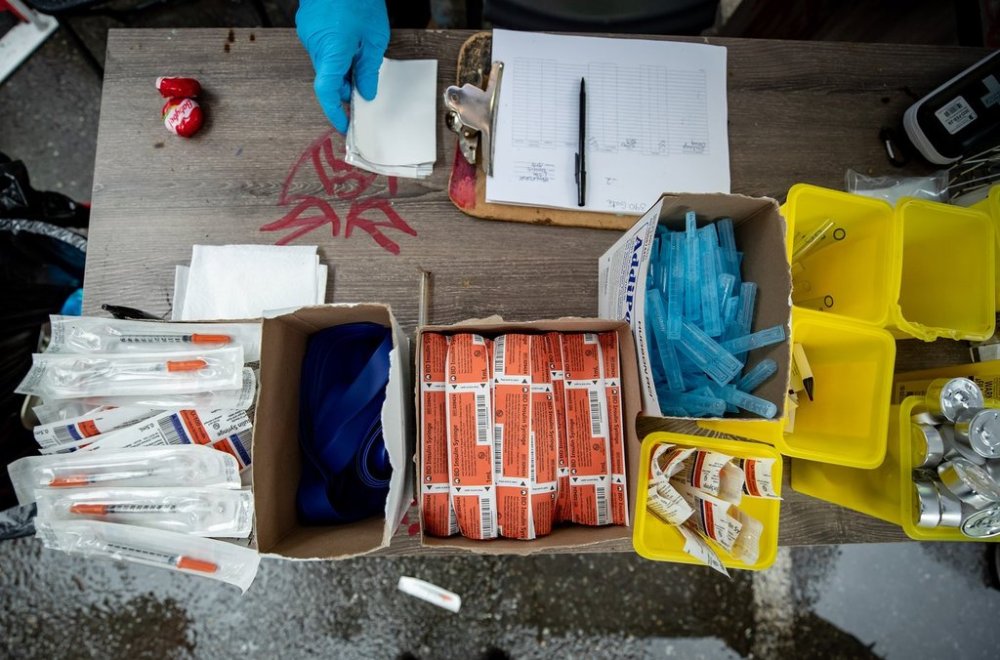
“However, it is also possible that reduced stigma and removal of criminal penalties facilitated the diversion of safer opioids, contributing to increased hospitalizations.”
The authors of the study, published in JAMA Health Forum last Friday, say it’s believed to be the first evidence on the association between overdoses and the decriminalization of drug possession in B.C., introduced in January 2023 then heavily curtailed in May 2024.
The study was by researchers from Memorial University in St. John’s, as well as the University of Manitoba and Weill Cornell Medicine in New York. Lead author Hai V. Nguyen did not respond to a request for an interview.
The research found that safer supply alone was associated with a 33 per cent increase in opioid hospitalizations, while the addition of decriminalization was associated with a further spike for an overall increase of 58 per cent, compared with before the safer supply program was introduced in 2020.
“There was insufficient evidence to conclusively attribute an increase in opioid overdose deaths to these policy changes,” it says.
The safer supply program involves providing pharmaceutical grade opioids to people at risk of overdosing, but critics say it potentially worsens the crisis if safer supply drugs are diverted onto the streets.
Last year the B.C. government got federal approval to recriminalize public drug possession, in a major rollback for the province’s first-of-its-kind decriminalization pilot project in Canada.
The study looked at data from the beginning of 2016 to the end of 2023.
It’s not the first time researchers have looked into overdose hospitalizations and safer supply. A study published in January 2024 by some of the same authors as the latest investigation found an almost 63 per cent “relative increase” in the opioid overdose hospitalization rate across B.C. after the introduction of safer supply.
At the time, the provincial government said that report “overlooks other factors that influence hospitalizations,” such as the toxicity of the illicit drug supply, as well as admitting practices and the availability of health-care services.
A separate study of people with opioid use disorder compared outcomes for those receiving safer supply drugs with those who were not. The authors of that study, also published in January 2024, concluded the policy was associated with a lower risk of overdose and deaths by all causes among those people.
B.C.’s Health Ministry did not immediately respond to a request for comment on the latest study.
The province’s coroners service said earlier this month that 152 people died of toxic drug overdoses in January, marking four consecutive months that the toll was under 160.
Deaths in B.C. in January were down more than 30 per cent from a year earlier.
There have recently been declines in drug deaths across North America, with Health Canada reporting a 12 per cent decline from January to September 2024, compared to the same period in 2023.
This report by The Canadian Press was first published March 25, 2025