

High court overturns B.C. sex assault conviction, clarifies ‘confusion’ over evidence
Advertisement
Read this article for free:
or
Already have an account? Log in here »
To continue reading, please subscribe:
Monthly Digital Subscription
$1 per week for 24 weeks*
- Enjoy unlimited reading on winnipegfreepress.com
- Read the E-Edition, our digital replica newspaper
- Access News Break, our award-winning app
- Play interactive puzzles
*Billed as $4.00 plus GST every four weeks. After 24 weeks, price increases to the regular rate of $19.95 plus GST every four weeks. Offer available to new and qualified returning subscribers only. Cancel any time.
Monthly Digital Subscription
$4.99/week*
- Enjoy unlimited reading on winnipegfreepress.com
- Read the E-Edition, our digital replica newspaper
- Access News Break, our award-winning app
- Play interactive puzzles
*Billed as $19.95 plus GST every four weeks. Cancel any time.
To continue reading, please subscribe:
Add Free Press access to your Brandon Sun subscription for only an additional
$1 for the first 4 weeks*
*Your next subscription payment will increase by $1.00 and you will be charged $16.99 plus GST for four weeks. After four weeks, your payment will increase to $23.99 plus GST every four weeks.
Read unlimited articles for free today:
or
Already have an account? Log in here »
Hey there, time traveller!
This article was published 13/06/2025 (288 days ago), so information in it may no longer be current.
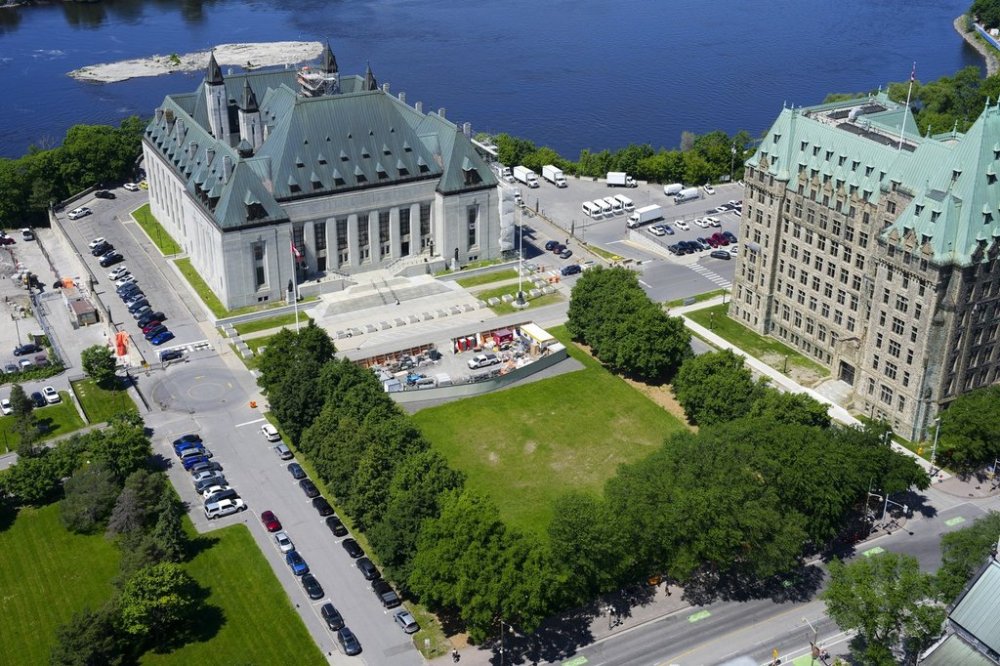
The Supreme Court of Canada says a British Columbia man convicted of sexual assault in 2022 should get a new trial because social media messages used as evidence against him were admitted to court without a proper hearing.
The court says the ruling confirms that it’s not just evidence about a sexual assault complainant’s history of sexual activity that’s inadmissible at trial without a hearing — but also their history of sexual inactivity.
The ruling released Friday says Dustin Kinamore was 22 when he met the 16-year-old complainant in May 2020, and they exchanged sexualized social media messages that became key pieces of evidence at trial.
The ruling says the messages were introduced by the Crown to show the complainant wasn’t interested in a sexual relationship with Kinamore — but the trial judge didn’t hold an admissibility hearing, highlighting “uncertainty” around rules governing evidence about a complainant’s sexual history.
The decision says the messages were evidence of sexual inactivity, and confusion about their use in the trial arose because they were introduced by the prosecution rather than the defence.
The court ruled that evidence about a complainant’s past sexual inactivity is presumed inadmissible, quashed Kinamore’s conviction and ordered a new trial because the messages were used without a hearing to precisely determine relevance.
The ruling says so-called “sexual history evidence” is presumed inadmissible because it can perpetuate “myths and stereotypes” about complainants.
“The increasing complexity of sexual offence trials in Canada poses a challenge to our overburdened criminal justice system. One source of complexity lies in the application of the rules that govern evidence of a complainant’s sexual history,” Chief Justice Wagner wrote, with the other judges agreeing.
“Although these evidentiary rules are essential to eliminate discriminatory myths and stereotypes from the fact-finding process and safeguard the dignity, privacy, and equality interests of complainants, uncertainty about their scope and procedural requirements has caused unnecessary confusion and disruption.”
This report by The Canadian Press was first published June 13, 2025.