

‘Lost Canadians’ legislation becomes law after Senate approval
Advertisement
Read this article for free:
or
Already have an account? Log in here »
To continue reading, please subscribe:

Digital Subscription
One year of digital access for only $205*
- Enjoy unlimited reading on winnipegfreepress.com
- Read the E-Edition, our digital replica newspaper
- Access News Break, our award-winning app
- Play interactive puzzles
*First annual payment billed as $205.00 + GST for one year. This annual subscription will automatically renew at $233.00 + GST every 52 weeks (10% off the regular annual price of $259.35). Offer available to new and qualified returning subscribers only. Cancel any time.
To continue reading, please subscribe:
Add Free Press access to your Brandon Sun subscription for only an additional
$1 for the first 4 weeks*
- Enjoy unlimited reading on winnipegfreepress.com
- Read the E-Edition, our digital replica newspaper
- Access News Break, our award-winning app
- Play interactive puzzles
*Your next Brandon Sun subscription payment will increase by $1.00 and you will be charged $17.95 plus GST for four weeks. After four weeks, your payment will increase to $24.95 plus GST every four weeks.
Read unlimited articles for free today:
or
Already have an account? Log in here »
Hey there, time traveller!
This article was published 20/11/2025 (278 days ago), so information in it may no longer be current.
OTTAWA – The “Lost Canadians” legislation, which aims to fix Canada’s unconstitutional citizenship, received royal assent Thursday after being approved by the Senate on Wednesday.
The term “Lost Canadians” refers to people who were born outside of the country to Canadian parents who were also born in another country.
In 2009, the Conservative federal government changed the law so that Canadians born abroad could only pass down their citizenship if their child was born in Canada.
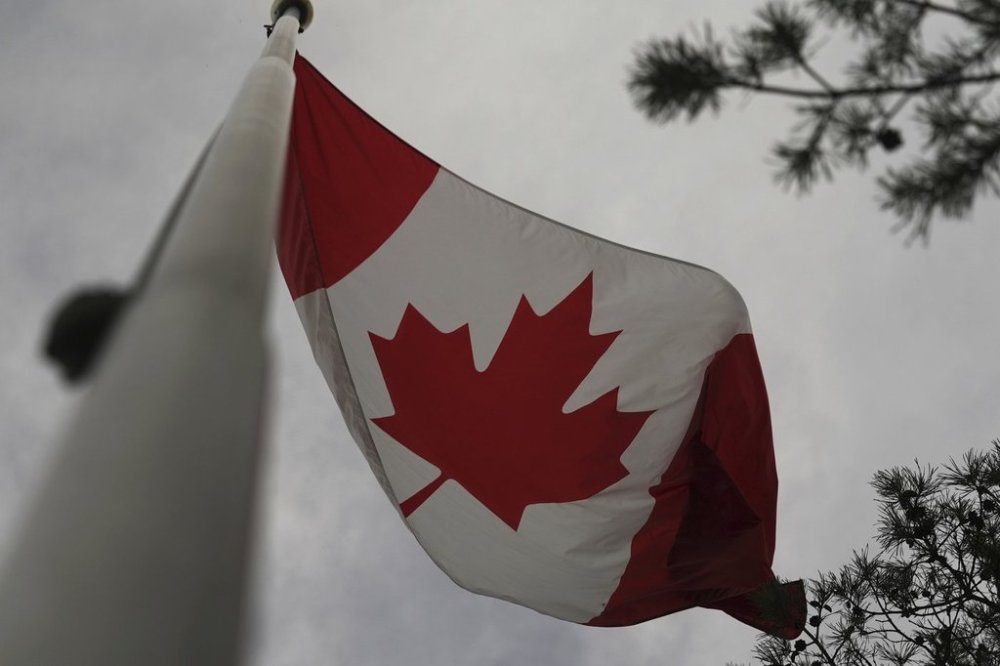
That was deemed unconstitutional by the Ontario Superior Court in December 2023.
The legislation proposes Canadian citizenship could be passed down to people born or adopted abroad, beyond the first generation, if the parents spent a cumulative three years in Canada before the child’s birth or adoption.
Saskatchewan Sen. David Arnot argued the bill unfairly applies the substantial connection test to “intercountry adoptees” when it comes to passing down citizenship. This is a legal term that applies to adopted children who were born abroad and raised in Canada by Canadian parents.
Arnot said the bill uses the general term “international adoption,” which can include intercountry adoptees. He said these children go through a rigorous immigration process before their adoption in Canada is finalized.
Arnot said that includes provincial and territorial approval, anti-trafficking screens, foreign state approval, federal citizenship reviews and other measures.
“Intercountry adoptees must be treated the same as domestic adoptees. It is a requirement of the Hague Convention that intercountry adoptees have the same rights and treatment as in-country adoptees,” Arnot said.
“Another way to say this is that, because domestic adoptees do not have a substantial connection test, neither should intercountry adoptees.”
Arnot did not try to amend the law because the court has set a deadline for the law to be enacted by Jan. 20, but he urged the immigration minister to make the change in the future.
Immigration lawyers Sujit Choudhry and Maureen Silcoff have been retained for a potential Charter challenge on behalf of intercountry adoptees, to argue they should not be treated differently than domestic adopted children.
Choudhry said that the potential rights violation exists with internationally adopted children who receive Canadian citizenship by grant when their Canadian parents are bringing them home.
“The concern is that they are required to complete the requirements for the substantial connection test if, as adults, if they are abroad and have children abroad … Whereas a domestic adoptee doesn’t need to meet that test,” Choudhry said.
“So that’s a form of discrimination that’s prohibited by Section 15 (of the Charter) and also inconsistent with Canada’s international treaty obligations under the Hague Convention.”
Choudhry said he would prefer to see a legislative solution to this issue instead of having to resort to a court challenge.
Both Ontario Liberal MP Nate Erskine-Smith and B.C. NDP MP Jenny Kwan attempted to introduce amendments to clarify the adoption rules, but both were unsuccessful.
When the bill was still before the House of Commons, Conservative and Bloc Québécois members of the immigration committee tried to amend the legislation to state that the three-year period in the substantial connection test needed to take place within five consecutive years.
However, that amendment was removed by Liberal and NDP MPs before the bill was sent to the Senate.
Quebec Conservative Sen. Leo Housakos attempted to bring that amendment back in the Senate, but it was rejected.
This report by The Canadian Press was first published Nov. 20, 2025.