

Consultations set to begin on controversial Quebec constitution bill
Advertisement
Read this article for free:
or
Already have an account? Log in here »
To continue reading, please subscribe:
Monthly Digital Subscription
$1 per week for 24 weeks*
- Enjoy unlimited reading on winnipegfreepress.com
- Read the E-Edition, our digital replica newspaper
- Access News Break, our award-winning app
- Play interactive puzzles
*Billed as $4.00 plus GST every four weeks. After 24 weeks, price increases to the regular rate of $19.95 plus GST every four weeks. Offer available to new and qualified returning subscribers only. Cancel any time.
Monthly Digital Subscription
$4.99/week*
- Enjoy unlimited reading on winnipegfreepress.com
- Read the E-Edition, our digital replica newspaper
- Access News Break, our award-winning app
- Play interactive puzzles
*Billed as $19.95 plus GST every four weeks. Cancel any time.
To continue reading, please subscribe:
Add Free Press access to your Brandon Sun subscription for only an additional
$1 for the first 4 weeks*
*Your next subscription payment will increase by $1.00 and you will be charged $16.99 plus GST for four weeks. After four weeks, your payment will increase to $23.99 plus GST every four weeks.
Read unlimited articles for free today:
or
Already have an account? Log in here »
MONTREAL – A draft constitution tabled two months ago by the Quebec government was supposed to be a unifying declaration of Quebecers’ common values, but it has instead been denounced as ill-conceived, divisive and authoritarian.
Critics say the constitution bill would erode human rights and limit dissent, and could reopen an unnecessary debate on abortion. Some civil society groups are calling for it to be withdrawn outright.
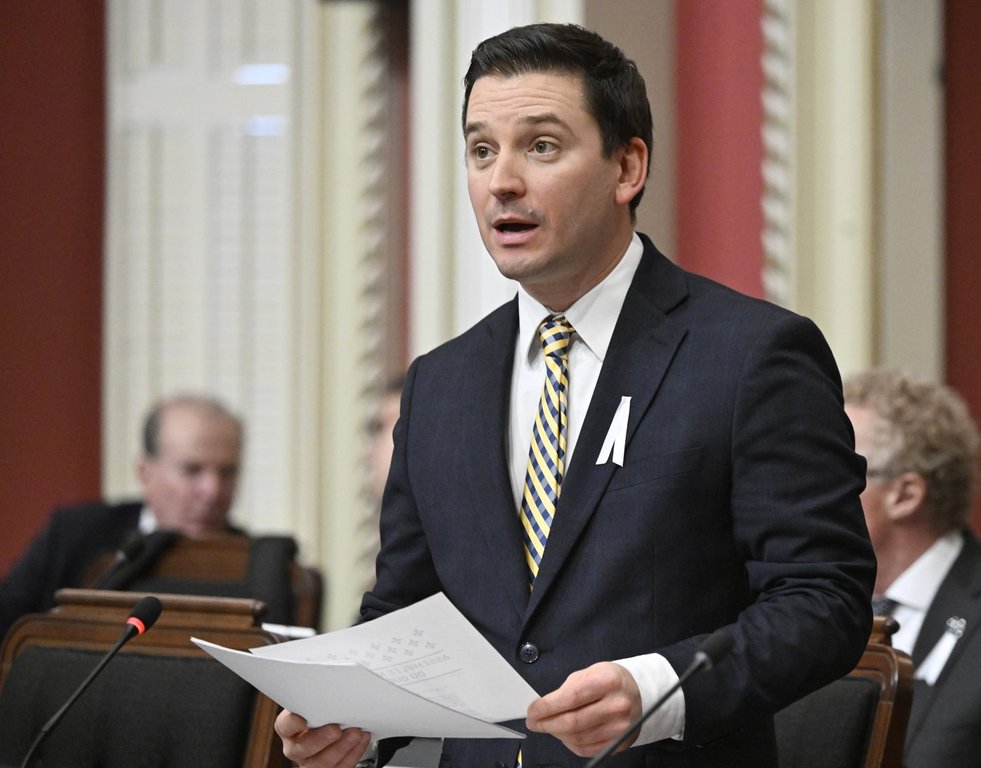
Wide-ranging consultations on the draft legislation will begin on Thursday and will continue into the new year. Justice Minister Simon Jolin-Barrette agreed to open the consultations to the general public as a gesture of goodwill, after being criticized for drafting the bill behind closed doors. More than 200 individuals and groups are scheduled to appear.
Still, the Coalition Avenir Québec majority does not need co-operation from other parties to pass the law. “I’m very pessimistic that there will be anything changed,” said Stéphane Beaulac, a constitutional law professor at Université de Montréal.
The constitution bill is intended to protect Quebec’s distinct identity and culture while boosting the province’s autonomy within Canada. It outlines a set of “founding principles,” including secularism, equality between men and women, the right to abortion and the status of French as the only common language of Quebec.
It also spells out a process for the Quebec premier to recommend candidates for Senate and Supreme Court seats, as well as for the lieutenant-governor position, which would be renamed the “officer of Quebec.”
Some of the loudest criticisms of the bill have focused on a provision that would forbid organizations that receive public funding from using that money to pay for court challenges of laws deemed to protect “the fundamental characteristics of Quebec.” The move is in part a response to legal challenges of Bill 21, Quebec’s secularism law, which is currently before the Supreme Court of Canada.
Jolin-Barrette has said such cases must now be financed “in some other way than by using Quebecers’ money.”
Marcel-Olivier Nadeau, president of the Quebec bar association, said the ban would effectively prohibit court challenges. “What money are they going to use?” he said. “Attacking those who in the past have expressed opinions contrary to our own, that is quite authoritarian.”
In a brief submitted to the national assembly, a group representing Quebec universities warned the bill could prevent challenges of laws that threaten academic freedom and could create “a climate of institutional self-censorship.”
Several groups have also raised concerns about the government’s move to enshrine the right to abortion in the new constitution, which they say would give anti-abortion groups an opportunity to challenge the provision in court and try to restrict abortion access.
In an open letter published Wednesday in Quebec newspaper Le Devoir, more than 400 doctors called on Jolin-Barrette to remove the reference to abortion from the bill.
“Any law on abortion ultimately becomes a law against abortion,” the letter reads. “What was intended as a floor becomes… a ceiling: a limit to be attacked, restricted — the dream of the anti-abortion movement.”
Jolin-Barrette told reporters on Wednesday that his goal is to protect the right to abortion, though he suggested he was open to modifying the bill to reassure critics. He said women’s rights have come under attack in Western countries, and he wants to ensure safeguards are in place.
The legislation also has proponents, including Droits collectifs Québec, a group that supports Quebecers’ linguistic and constitutional rights. “(The bill) includes numerous and significant legal and constitutional advances for Quebec,” the group said in its brief, adding that there should have been more consultation as it was being drafted.
Earlier this week, the Quebec chapter of the International Commission of Jurists Canada asked the United Nations to look into the constitution bill, claiming it infringes on universal human rights. In its submission, the group said the legislation places the collective rights of the “Quebec nation” above those of individuals, minorities and Indigenous peoples.
Beaulac, who heads the Quebec chapter, has sent the submission to 10 different UN special rapporteurs and hopes they may pressure the Quebec government to reconsider the legislation.
“It is illiberalism. It is a slippery slope,” he said, adding that the bill is destined to wind up in court if it becomes law. “We are going down a rabbit hole.”
This report by The Canadian Press was first published Dec. 4, 2025.
— With files from Patrice Bergeron in Quebec City