

Justice bill takes aim at femicide, coercive control, pornographic deepfakes
Advertisement
Read this article for free:
or
Already have an account? Log in here »
To continue reading, please subscribe:

Digital Subscription
One year of digital access for only $205*
- Enjoy unlimited reading on winnipegfreepress.com
- Read the E-Edition, our digital replica newspaper
- Access News Break, our award-winning app
- Play interactive puzzles
*First annual payment billed as $205.00 + GST for one year. This annual subscription will automatically renew at $233.00 + GST every 52 weeks (10% off the regular annual price of $259.35). Offer available to new and qualified returning subscribers only. Cancel any time.
To continue reading, please subscribe:
Add Free Press access to your Brandon Sun subscription for only an additional
$1 for the first 4 weeks*
- Enjoy unlimited reading on winnipegfreepress.com
- Read the E-Edition, our digital replica newspaper
- Access News Break, our award-winning app
- Play interactive puzzles
*Your next Brandon Sun subscription payment will increase by $1.00 and you will be charged $17.95 plus GST for four weeks. After four weeks, your payment will increase to $24.95 plus GST every four weeks.
Read unlimited articles for free today:
or
Already have an account? Log in here »
Hey there, time traveller!
This article was published 09/12/2025 (265 days ago), so information in it may no longer be current.
OTTAWA – Federal legislation introduced Tuesday proposes new measures to address hateful and controlling behaviour toward women and shield children from online predators.
The Protecting Victims Act would treat murders driven by control, hate, sexual violence or exploitation as first-degree. It would define these murders as femicide when the victim is a woman.
Currently, some murders targeting women may be classified as first-degree, while others may be second-degree, the Justice Department says.

The bill also would outlaw engaging in patterns of coercive or controlling conduct against an intimate partner. There is currently no specific Criminal Code offence prohibiting such behaviour.
“Every 48 hours, a woman or girl in Canada is killed in an act of gender-based violence,” Women and Gender Equality Minister Rechie Valdez told a news conference Tuesday. “It is happening around us, around all of you.”
The bill would expand the Criminal Code section prohibiting the non-consensual distribution of intimate images to apply to non-consensual deepfakes created using digital tools.
The legislation would prohibit threatening to distribute child sexual abuse and exploitation material. It would also ensure the offence of child luring makes specific reference to extortion, so that it applies to people who threaten to circulate intimate images unless a victim hands over money or more images.
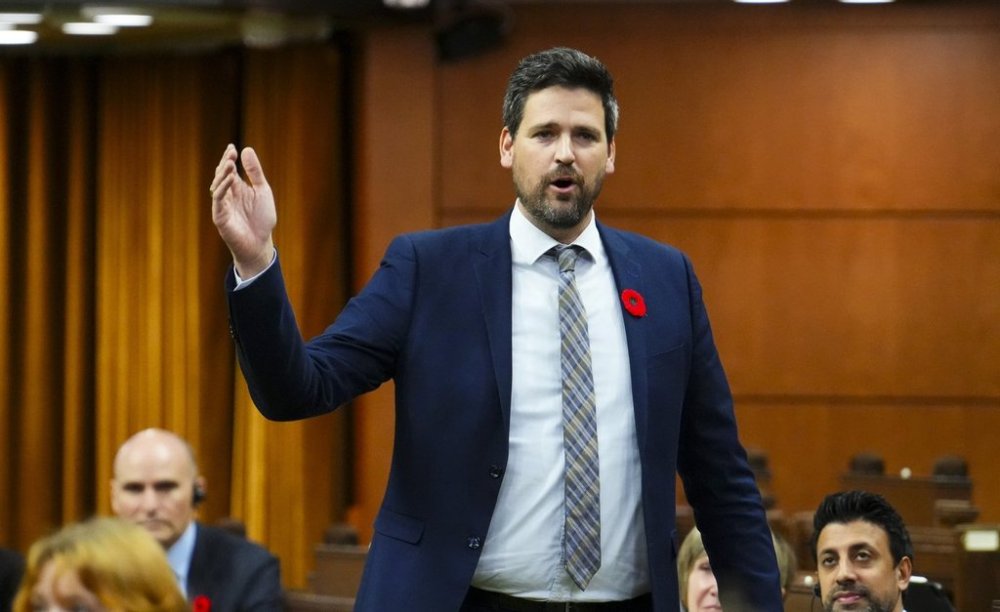
Justice Minister Sean Fraser told Tuesday’s news conference that the goal is nothing less than ending gender-based violence.
“I don’t think it’s fair or reasonable to accept that women in my life are more likely to face sexual violence than I am,” he said. “I don’t think it’s fair that kids increasingly in an online environment are being targeted by predators.”
Fraser said the proposed measures would help but called for a whole-of-society approach involving investments in police and border services, community organizations, housing and addiction counselling.
The bill would restore all mandatory minimum imprisonment penalties found unconstitutional by the courts.
It would allow courts to order a prison sentence below a mandatory minimum penalty, but only in cases where the minimum would result in grossly disproportionate punishment.
The Justice Department says this measure is meant to protect mandatory minimum penalties from being struck down by the courts in the future.
Under a framework set out by the Supreme Court of Canada, an unreasonable delay is generally presumed if criminal proceedings — from the charge to conclusion of a trial — exceed 18 months in provincial court, or 30 months in superior court.
The main remedy for a violation of the Charter right to timely justice is a halt to the proceedings.
The new justice bill would require courts to consider remedies other than a stay of proceedings to reduce the number of cases being tossed out due to delays. Courts would determine the remedy they consider appropriate and just in the circumstances, the Justice Department says.
The Canadian Civil Liberties Association strongly opposes the planned measure, saying governments have failed to ensure the justice system is properly funded to deliver timely trials.
“The solution to that is not to water down our Charter rights, but for governments to step up and do their job,” said Shakir Rahim, director of the association’s criminal justice program.
Fraser said that while the systemic issues that cause delays must be addressed, he is “not comfortable” with the idea of a possible perpetrator of sexual violence going free due to a delay.
Among other things, the bill would also:
— revise the criminal harassment offence to ensure it captures harassing conduct through modern technology, such as electronic monitoring;
— expand existing child sexual offences prohibiting invitation to sexual touching and sexual exploitation to protect children from individuals who may invite or incite them to expose their sexual organs for a sexual purpose;
— and create a new offence that prohibits involving youth in the commission of a crime.
This report by The Canadian Press was first published Dec. 9, 2025.