

Eby says extortion wave is ‘terror attack in slow motion’
Advertisement
Read this article for free:
or
Already have an account? Log in here »
To continue reading, please subscribe:
Monthly Digital Subscription
$1 per week for 24 weeks*
- Enjoy unlimited reading on winnipegfreepress.com
- Read the E-Edition, our digital replica newspaper
- Access News Break, our award-winning app
- Play interactive puzzles
*Billed as $4.00 plus GST every four weeks. After 24 weeks, price increases to the regular rate of $19.95 plus GST every four weeks. Offer available to new and qualified returning subscribers only. Cancel any time.
Monthly Digital Subscription
$4.99/week*
- Enjoy unlimited reading on winnipegfreepress.com
- Read the E-Edition, our digital replica newspaper
- Access News Break, our award-winning app
- Play interactive puzzles
*Billed as $19.95 plus GST every four weeks. Cancel any time.
To continue reading, please subscribe:
Add Free Press access to your Brandon Sun subscription for only an additional
$1 for the first 4 weeks*
*Your next subscription payment will increase by $1.00 and you will be charged $16.99 plus GST for four weeks. After four weeks, your payment will increase to $23.99 plus GST every four weeks.
Read unlimited articles for free today:
or
Already have an account? Log in here »
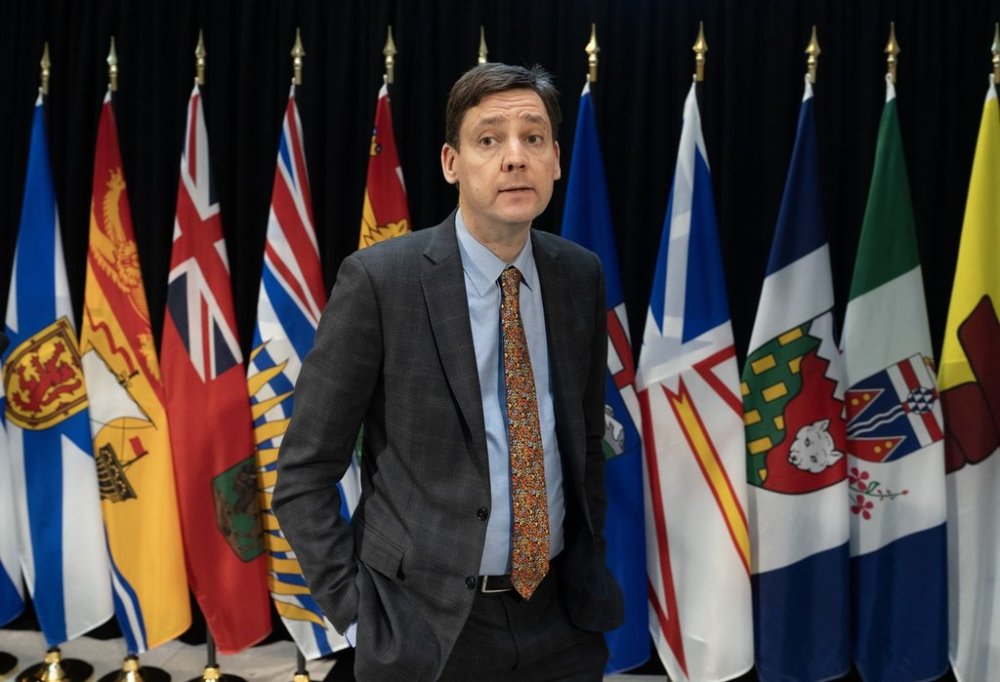
OTTAWA – B.C. Premier David Eby said a wave of extortion crime in the province is a “terror attack in slow motion.”
Eby, who was speaking in Ottawa after a premiers meeting with Prime Minister Mark Carney, said parliament needs to pass legislation to help tackle the wave of attacks that has seen homes and businesses sprayed with gunfire.
Eby calls the ability of extortion suspects to seek refugee status a “loophole that has to be closed” with the passage of Bill C-14, although his spokesman later clarified Eby meant to say Bill C-12, on immigration reform.
While extortion cases are also happening in other provinces, it is “crucial” for British Columbia to see passage of the legislation as quickly as possible, he said.
“What we are seeing in Surrey is a terror attack in slow-motion, and you would never dream of giving refugee status to somebody who has participated in a terrorist attack, but that is exactly what’s happening under our current system.”
The Canada Border Services Agency said last month that 15 foreigners facing extortion charges had applied for refugee status in Canada.
The B.C. Conservatives questioned Eby’s rhetoric, saying in a press release that the provincial government “should have surged resources” long ago.
“I have met with the business owners and families who are angry, scared, and exhausted,” Mandeep Dhaliwal, legislative member for Surrey-North, said. “I’m sick and tired of attending funerals in my community while the Premier offers excuses.”
Bill C-12 currently sits at second reading in the Senate, but has faced criticism from sections of the legal community, groups representing refugees and civil liberty proponents.
The Canadian Civil Liberties Association says in its submission that the bill will prevent many refugees from accessing a fair assessment, while granting government “wide-ranging discretion” to pre-empt, suspend or terminate immigration applications and to alter or revoke immigration documents for what the group called “undefined” reasons of public interests.
On Wednesday, the federal government announced it was sending an additional 20 RCMP officers to join anti-extortion efforts in Surrey, B.C., which has been hit hard by the crime wave, with Public Safety Minister Gary Anandasangaree saying helicopters would also be deployed.
Surrey, B.C., will also host a meeting featuring police leadership from four provinces within the next two weeks to discuss the extortions with the head of the RCMP national team handling the situation.
“The Government of Canada is committed to dismantling the criminal networks that have created a climate of fear, and intimidation amongst communities,” Anandasangaree said.
Surrey Mayor Brenda Locke, who was unavailable Thursday to respond to Eby’s comments, welcomed the additional help from the federal government in an interview Wednesday.
She added that more help is needed, after the municipality had called on the federal and provincial governments to temporarily deploy 150 officers from the RCMP and Combined Forces Special Enforcement Unit on related cases.
“I will tell you, we are seeing movement,” Locke said. “So from seeing no movement to where we are today is significant, and I do want to thank both the provincial and federal government for starting to lean in on this issue, and it’s important that we continue to see that progress.”
Locke added that she also has frequent talks with Nina Krieger, B.C.’s public safety minister and solicitor-general, on the extortion crisis.
This report by The Canadian Press was first published Jan. 29, 2026.