

Pipeline protest created safety risks, but journalists were let in, says RCMP officer
Advertisement
Read this article for free:
or
Already have an account? Log in here »
To continue reading, please subscribe:

Digital Subscription
One year of digital access for only $205*
- Enjoy unlimited reading on winnipegfreepress.com
- Read the E-Edition, our digital replica newspaper
- Access News Break, our award-winning app
- Play interactive puzzles
*First annual payment billed as $205.00 + GST for one year. This annual subscription will automatically renew at $233.00 + GST every 52 weeks (10% off the regular annual price of $259.35). Offer available to new and qualified returning subscribers only. Cancel any time.
To continue reading, please subscribe:
Add Free Press access to your Brandon Sun subscription for only an additional
$1 for the first 4 weeks*
- Enjoy unlimited reading on winnipegfreepress.com
- Read the E-Edition, our digital replica newspaper
- Access News Break, our award-winning app
- Play interactive puzzles
*Your next Brandon Sun subscription payment will increase by $1.00 and you will be charged $17.95 plus GST for four weeks. After four weeks, your payment will increase to $24.95 plus GST every four weeks.
Read unlimited articles for free today:
or
Already have an account? Log in here »
Hey there, time traveller!
This article was published 06/02/2026 (183 days ago), so information in it may no longer be current.
VANCOUVER – The senior RCMP officer co-ordinating enforcement at a British Columbia pipeline protest in 2021 says journalists were permitted to go through an “access control point” set up by police, and anyone who claimed to be media was allowed in.
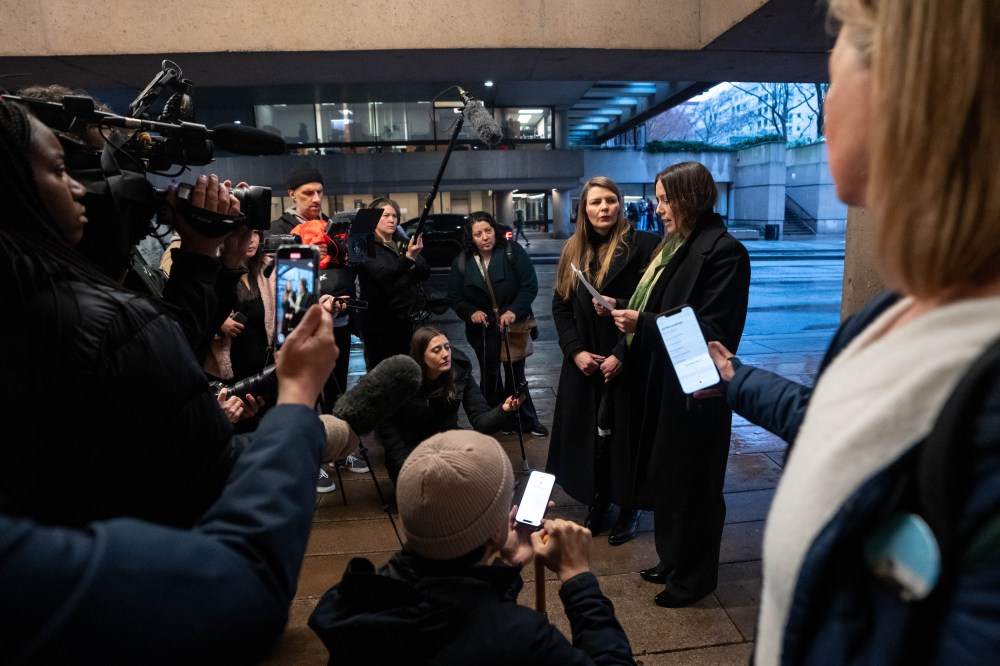
Asst. Commissioner John Brewer was testifying Friday in a case brought by news organization The Narwhal and photojournalist Amber Bracken, seeking a declaration that the arrest of Bracken at the site was unlawful.
Brewer said people claiming to be journalists at the protest against the Coastal GasLink pipeline were to be allowed through by police unless their story “beggared belief.”
He told the court he had seen several examples in the past where people who claimed to be media at protests “simply walked past us, linked arms with the protesters and sat down” after being granted access by officers.
Brewer said protesters claiming to be media at the Fairy Creek logging protest on Vancouver Island, where more than 1,000 people were eventually arrested, brought cement and other blockade materials with them, but police were still “chastised” for preventing them access.
He said police didn’t question media credentials, and only judged them by their actions.
Brewer said he’d made the determination that filmmaker Michael Toledano, who was also arrested alongside Bracken, was not media because of aggressive behaviour toward officers.
But Brewer said it was his decision to release filmmaker Melissa Cox, who was arrested during the “chaotic event,” because he thought she’d done all police had asked of journalists.
Cox received an apology for her arrest, the court heard.
He said the pipeline blockade created safety risks because there was only one way in and one way out, hundreds of workers were “trapped” by the blockade, and three days of blocked access would have created issues with food, water and sewage.
The officer said it was feared that the protest would grow and include potentially aggressive and violent protesters, but he’d hoped that the road could have been opened through negotiation rather than through enforcement action.
The court heard earlier Friday from Thomas Munro, a former Coastal GasLink security and safety employee, who testified that there were concerns about the blockade, included food, water and sewage issues, as well as potential trouble if there was a medical emergency.
He said that the company’s media team was monitoring which news outlets were reporting on the project, and “we were aware of who Ms. Bracken was.”
Munro said he didn’t have a file on Bracken, but reports prepared by contractor Forsythe Security included names, location and photographs, along with incident reports that were prepared by the company, would be shared with the RCMP.
Reports prepared by the security contractor, Munro said, would be shared with the RCMP as part of submissions of “prosecution packages or injunction packages.”
Bracken, whose work has been published by news organizations including The Canadian Press, was arrested along with protesters and held for three days.
She has said the civil lawsuit concerns the media as a whole, while The Narwhal’s acting editor-in-chief, Carol Linnitt, said in a statement before the trial started that injunction zones like the one at the protest area allow the RCMP alone to “determine what journalism is, who performs it, where and how.”
This report by The Canadian Press was first published Feb. 6, 2026.