

Poilievre says Ottawa must protect private property in wake of Cowichan Tribes ruling
Advertisement
Read this article for free:
or
Already have an account? Log in here »
To continue reading, please subscribe:

Digital Subscription
One year of digital access for only $205*
- Enjoy unlimited reading on winnipegfreepress.com
- Read the E-Edition, our digital replica newspaper
- Access News Break, our award-winning app
- Play interactive puzzles
*First annual payment billed as $205.00 + GST for one year. This annual subscription will automatically renew at $233.00 + GST every 52 weeks (10% off the regular annual price of $259.35). Offer available to new and qualified returning subscribers only. Cancel any time.
To continue reading, please subscribe:
Add Free Press access to your Brandon Sun subscription for only an additional
$1 for the first 4 weeks*
- Enjoy unlimited reading on winnipegfreepress.com
- Read the E-Edition, our digital replica newspaper
- Access News Break, our award-winning app
- Play interactive puzzles
*Your next Brandon Sun subscription payment will increase by $1.00 and you will be charged $17.95 plus GST for four weeks. After four weeks, your payment will increase to $24.95 plus GST every four weeks.
Read unlimited articles for free today:
or
Already have an account? Log in here »
RICHMOND – Conservative Leader Pierre Poilievre says the federal government must do more to protect property rights after a landmark court decision on Aboriginal title in British Columbia last year.
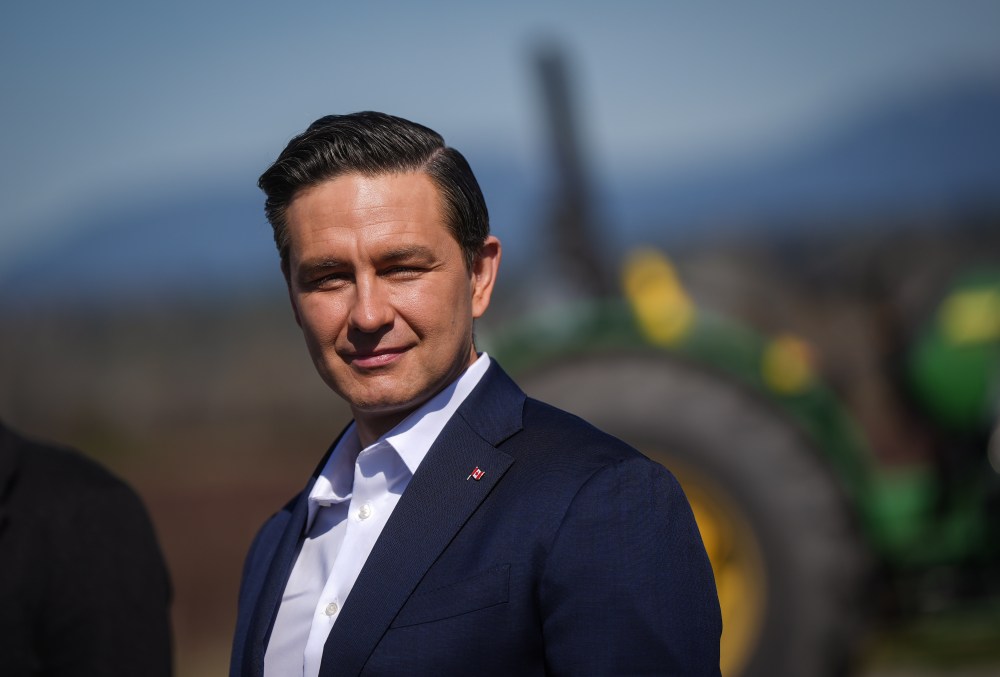
Poilievre was in Richmond, B.C., on Thursday calling on the Liberal government to change how it argues Aboriginal title claims in the courts, and to explicitly include in future agreements with First Nations that private home and property ownership “come first and cannot be overwritten.”
“This is not a claim that Indigenous Peoples have no rights. They do have rights and those rights should be upheld. At the same time, they must coexist with the rights of homeowners to keep the property that they paid for and they legitimately own,” Poilievre said.

The August 2025 ruling in B.C. Supreme Court confirmed the Cowichan Tribes hold Aboriginal title over about 300 hectares of land on the Fraser River in Richmond.
Justice Barbara Young’s ruling says Crown and city titles within the area are defective and invalid, the Crown’s granting of private titles on the land “unjustifiably” infringed on the Cowichan title, and sections of B.C.’s Land Title Act that establish fee-simple title as “indefeasible” do not apply to Aboriginal title.
The ruling has led to questions about how Aboriginal title and private property can coexist, and concerns about mortgages and loans for businesses in the area.
B.C.’s minister of Indigenous relations and the Cowichan Nation issued a joint statement last month confirming they were in negotiations after the ruling, while both sides appeal different parts of the decision.
“For transparency, neither the Cowichan Nation nor British Columbia are seeking to invalidate any privately held fee simple titles on the Cowichan Title Lands through the negotiation or appeal processes,” the statement said.
But Poilievre said public statements aren’t enough and the federal government needs “binding legal text” on the issue.
“We’re calling on the government to commit that no agreements shall be signed with any First Nation without an explicit statement that fee-simple home ownership and private property come first and cannot be overwritten,” he said, addressing media near the claim area.
Lawyers who work with First Nations have largely dismissed concerns about the ruling as unfounded, and warn that fearmongering about the decision could lead to properties losing value.
Poilievre said the federal government should change how it argues Aboriginal title claims in the courts.
“We want Mark Carney to change his legal directive to make it clear that his lawyers must argue that fee simple property ownership, your home and your business, belongs to you and you first and that no other claim can supersede that ownership,” he said.
He pointed out that Young’s decision says federal lawyers initially pleaded “extinguishment” of rights as part of their arguments in the case, but amended their response to abandon this argument in 2018.
However, the City of Richmond, which was also a defendant in the case, did persist with the extinguishment pleading and was unsuccessful.
The Conservatives also want a parliamentary committee to study “legal, constitutional and political steps to protect private property rights in Canada.”
On Thursday, Poilievre called it “regrettable” that fee-simple property rights are not enshrined in the Constitution.
“Property rights are human rights,” he said. “You need property rights protection to have a thriving property-owning democracy.”
This report by The Canadian Press was first published April 9, 2026.