

A look at news events in April 2026
Advertisement
Read this article for free:
or
Already have an account? Log in here »
To continue reading, please subscribe:
Digital Subscription
One year of digital access for only $1.44 a week*
- Enjoy unlimited reading on winnipegfreepress.com
- Read the E-Edition, our digital replica newspaper
- Access News Break, our award-winning app
- Play interactive puzzles
*Billed as $5.77 plus GST every four weeks. After 52 weeks, price increases to the regular rate of $19.95 plus GST every four weeks. Offer available to new and qualified returning subscribers only. Cancel any time.
To continue reading, please subscribe:
Add Free Press access to your Brandon Sun subscription for only an additional
$1 for the first 4 weeks*
- Enjoy unlimited reading on winnipegfreepress.com
- Read the E-Edition, our digital replica newspaper
- Access News Break, our award-winning app
- Play interactive puzzles
*Your next Brandon Sun subscription payment will increase by $1.00 and you will be charged $17.95 plus GST for four weeks. After four weeks, your payment will increase to $24.95 plus GST every four weeks.
Read unlimited articles for free today:
or
Already have an account? Log in here »
A look at news events in April 2026:
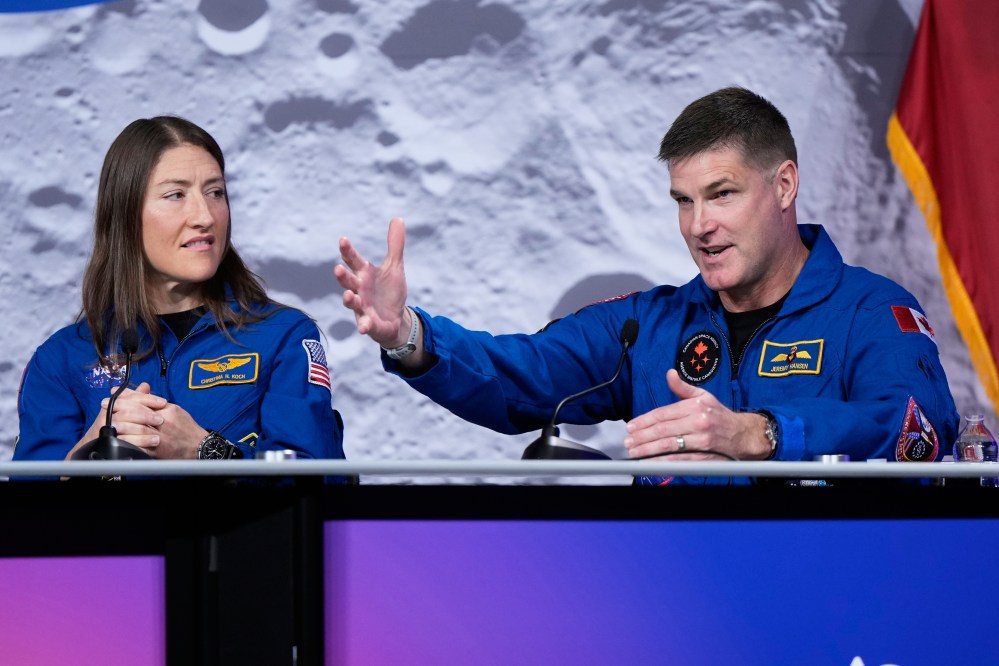
1 – A Canadian astronaut made history as part of humanity’s long-awaited return to the moon. Jeremy Hansen lifted off from Kennedy Space Center in Florida alongside three NASA crewmates aboard Artemis II. The 50-year-old from London, Ont., was serving as mission specialist. The 10-day mission marked the first lunar journey in more than 50 years and was planned to take Hansen and the crew farther from Earth than any person has travelled before. For Hansen and his family, the launch represented 16 years of preparation, personal sacrifice, and a lifelong dream realized on a global stage.
1 – British Columbia revised its zero-emission vehicle policy, lowering its 2035 sales target from 100 per cent to 75 per cent. Energy Minister Adrian Dix said the change reflected current market conditions and aligned with federal goals. The province said it was also investing in 75 new public EV charging projects to expand infrastructure. Officials said existing requirements, including a 26 per cent sales target for this year and 2027, would remain in place. The Pembina Institute says the updated plan still supports long-term climate targets.
2 – B.C. Premier David Eby said the government would suspend part of the Declaration on the Rights of Indigenous Peoples Act for up to three years. The announcement came after Eby’s virtual meeting with First Nations leaders, where he presented his plan. Eby said the province had to suspend parts of the act that pose the greatest legal risk, after last year’s court ruling on B.C.’s mineral rules. The premier didn’t identify which sections of the act would be suspended but he said others will remain in effect.
2 – Francois Legault attended his last sitting at the Quebec legislature as premier. Legault delivered his farewell speech and received a flood of tributes from fellow legislature members of all parties. Quebec’s premier announced his plan to resign once his Coalition Avenir Québec chooses a new leader. But he planned to stay on as an elected member of Quebec’s legislature until the fall general election.
3 – Two U.S. combat aircraft went down in the Middle East, including one shot down by Iran. One crew member was rescued from the shot down fighter jet F-15-E Strike Eagle. A U.S. official told The Associated Press a second U.S. air force combat aircraft went down in the Middle East although it wasn’t clear if the aircraft crashed or was shot down or whether Iran was involved. Neither the crew’s status nor where the aircraft went down were immediately known.
3 – A leaked transcript of a meeting between Indigenous leaders and British Columbia’s premier about a plan to suspend the province’s Declaration on the Rights of Indigenous Peoples Act was being characterized as a betrayal. Speaker after speaker in the 17,000 word transcript of the meeting — obtained by The Canadian Press — criticize David Eby’s handling of DRIPA — which he said needed to be suspended for up to three years. The declaration is at the centre of a legal and political storm after being cited by First Nations in two landmark court cases last year.
4 – Iran vowed to open the “gates of hell’ if the U.S. and Israel escalated their attacks. The commander of the joint military command said Iran would target all infrastructure used by the U.S. military in the region, as well as Israel’s infrastructure, if aggression against Iran escalated. The comments came a few hours after Donald Trump threatened Iran to make a deal or open up the Strait of Hormuz shipping channel by April 6, or “all Hell will reign down on them.”
4 – Taber, Alberta, was named Kraft Hockeyville 2026 winner, earning $250,000 for arena upgrades after losing its rinks in a Zamboni explosion. The announcement was made during Hockey Night in Canada, with the community celebrating the victory following a countrywide vote. Taber will also have a chance to host an NHL pre-season game in 2027, while runner-up Tumbler Ridge, B.C., receives $100,000. Tumbler Ridge continues to recover from a recent mass shooting, as both communities were recognized for their resilience and strong hockey spirit.
5 – The family of the oldest known living man in Canada and one of the oldest Second World War veterans in the world announced that he had died at the age of 110 on April 2. Burdett Sisler’s son said his father died with family members by his side after his health took a turn for the worse in recent weeks. Born in Akron, Ohio, on April 14, 1915, Sisler moved to Toronto when he was three years old and later served as a radar technician in Canada’s military during the Second World War. A statement from the Governor General’s office says that Mary Simon and her husband were saddened to learn of Sisler’s death and were sending their condolences to his friends and family.
5 – Patrick Roy was fired as coach of the New York Islanders. The move was another late-season change in the NHL, coming as the Islanders are in the middle of a spring tailspin that has put their playoff chances in jeopardy. The team has lost four in a row and seven of their past 10 games, going from comfortably in a playoff spot to needing help down the stretch. First-year general manager Mathieu Darche announced the abrupt decision to part ways with Roy and name Peter DeBoer his replacement with four games left in the season.
6 – Astronauts aboard Artemis II set a new distance record during a lunar flyby, with Canadian Jeremy Hansen saying they hoped it would soon be broken. The four-person crew surpassed the Apollo 13 record of 400,171 kilometres and was expected to exceed it by more than 6,600 kilometres. Flying aboard the Orion capsule “Integrity,” they were taking turns photographing the moon and livestreaming observations, noting its brownish tones and dimming cabin lights to improve visibility. The mission used a free-return trajectory to loop around the moon without landing before heading home. The flight marked NASA’s first crewed lunar mission since Apollo 17 and was a key step toward future landings near the moon’s south pole.
6 – A new poll suggested many Canadians were open to exploring ties with the European Union, including possible membership. The survey found one in four supported joining outright, while 58 per cent said the idea was worth considering further. Pollster Bruce Anderson said shifting views reflected concern over Canada’s reliance on the U.S. under Donald Trump. The idea had surfaced in Europe as well, though Prime Minister Mark Carney had dismissed full membership in favour of closer ties.
7 – Iran accepted a two-week ceasefire and was set to begin talks with the U.S. in Islamabad, while warning the war was not over and that it remained ready to respond. U.S. President Donald Trump pulled back his destructive threats to strike bridges and power plants, tying the pause to reopening the Strait of Hormuz and further negotiations. UN Secretary-General Antonio Guterres welcomed the ceasefire and urged all sides to protect civilians and follow international law. Israel said the pause applied only to Iran, and not its war with Hezbollah, as attacks and missile alerts continued across the region.
7 – Mark Carney defended plans for a high-speed rail corridor, pitching it as a major economic and environmental investment. He said the project would create more than 50,000 jobs and add over $35 billion to the economy. Opposition was building in rural communities, and from Conservative Leader Pierre Poilievre, with concerns about land use and cost. Questions about a potential conflict involving Finance Minister Francois-Philippe Champagne were being examined, though officials said proper steps were taken.
8 – A U.S.-Iran ceasefire looked to be holding on just barely after Tehran again closed the Strait of Hormuz following Israeli strikes in Lebanon. Washington demanded the waterway be reopened, as both sides claimed victory and pushed to salvage talks. Fresh Israeli attacks in Beirut killed at least 182 people, among the deadliest days in the Israel-Hezbollah war. U.S. Vice-President JD Vance called the deal “fragile” as Iran accused Washington of violating key conditions. Key terms remained unclear, including shipping tolls and limits on Iran’s nuclear and missile programs.
8 – Ontario MP Marilyn Gladu’s move to the Liberals from the Conservatives had some wondering how big that party’s big tent was getting. New Democrat MP Leah Gazan called Gladu a “far-right social conservative,” while Bloc Leader Yves-Francois Blanchet said the ideological gap between Liberals and Conservatives was shrinking. Gladu apologized in 2021 for sharing misinformation about the severity of COVID-19 and the safety and efficacy of vaccines during a media interview. She also supported 2022’s so-called “Freedom Convoy” that blocked the streets of downtown Ottawa with crowds and large trucks for three weeks.
9 – A British Columbia group looked to take on the U.S. social media giants with its own site. Northsocial.ca said its goal was to provide a place for Canadians to communicate and connect without the influence of foreign “big-tech algorithms.” The website was live with commenting, following and reactions, and it planned to soon add more features like a built-in marketplace. But the company’s CEO said the biggest challenge at the time was building a user-base.
9 – Canada condemned Israel for striking Lebanon hours after an apparent ceasefire was reached in the Middle East conflict. It also called on Hezbollah to disarm in favour of diplomatic solutions, after at least 203 people were killed and hundreds more injured in Lebanon a day prior. It marked the deadliest day on record since conflict broke out in the region on Feb. 28th. Meantime, Prime Minister Mark Carney told reporters that day he was not considering sanctions on Israel for its attacks on Lebanon.
10 – Economists said the latest jobs report looked like tariff softness had spilled over into the services side of the economy. The finance, insurance, real estate and leasing sector and the food and accommodations industry led March’s job losses. Statistics Canada said overall, 14-thousand jobs were added, and the unemployment rate remained unchanged at six-point-seven per cent. The jobs growth was led by a category StatCan called “other services,” which included repair and maintenance work in the economy.
10 – Canadian astronaut Jeremy Hansen and his three crewmates safely splashed down in the Pacific, ending the first human moon mission in more than 50 years. NASA said the Orion spacecraft landed off the coast of San Diego after re-entering the atmosphere at 33 times the speed of sound. Reid Wiseman, Victor Glover, Christina Koch and Hansen were to undergo medical checks aboard the USS John P. Murtha before heading to the Johnson Space Center in Houston. The 10-day Artemis II mission included a lunar flyby that took the astronauts farther from Earth than any humans before.
11 – The Liberal national convention in Montreal came to a close, with Prime Minister Mark Carney making his keynote address to the official voting base and political leadership. Carney issued a call for political unity and for Canadians to do away with “politics as usual” as the country confronted a crumbling international order it once benefited from. The speech marked Carney’s first such address to the party since winning party leadership the previous year. The convention closed just ahead of a set of byelections, with at least one of the three ridings expected to go the Liberals’ way and give the party a majority government.
11 – Jeremy Hansen and his crewmates received a standing ovation in Houston after completing the Artemis II lunar flyby. The crew returned after a 10-day mission that set a record for the farthest crewed flight from Earth since the Apollo era. Hansen thanked his family, NASA and the Canadian Space Agency, and said he looked forward to returning to Canada. The mission marked a major milestone in renewed human exploration of the moon.
12 – Christine Frechette became the new leader of the Coalition Avenir Québec. At a CAQ convention northeast of Montreal in Drummondville, members chose the former Parti Québécois staffer over former PQ minister Bernard Drainville. Frechette would replace outgoing leader François Legault, who announced in January he was stepping down.
12 – U.S. Central Command said it would begin a naval blockade of Iranian ports, enforced against vessels of all nations, while still allowing limited transit through the Strait of Hormuz. President Donald Trump ordered the move after ceasefire talks with Iran collapsed, citing concerns over Iran’s nuclear ambitions. The blockade had already driven up oil prices and raised fears of further disruption to global energy markets. Iran had warned it would respond forcefully to military action, as tensions remained high and the future of the ceasefire was uncertain.
13 – MP Tatiana Auguste returned to the House of Commons after winning the hotly contested byelection in the Quebec riding of Terrebonne. The Liberals swept three byelections, giving Prime Minister Mark Carney’s government 174 seats and a majority in the House of Commons. Danielle Martin and Doly Begum celebrated key victories in their two Toronto ridings, with Carney praising their leadership and impact. The result gave Liberals full control of legislation and committees, while Conservative Leader Pierre Poilievre criticized the shift as a “cynical power grab.”
13 – Hockey star Jonathan Quick said he would retire at age 40, closing the curtain on a stellar NHL career that spanned nearly two decades. The veteran netminder made his final appearance with the New York Rangers, marking his 921st career game including playoffs. Quick was best known for leading the Los Angeles Kings to Stanley Cup titles in 2012 and 2014, earning playoff MVP honours in the first run. He also won a third Cup as a backup with the Vegas Golden Knights in 2023, cementing his legacy as one of his era’s elite goaltenders.
14 – A B.C. First Nation moved one step closer to a fully ratified treaty about 30 years after negotiations began. The province had tabled implementation legislation to confirm K’omoks First Nation ownership of about 3,400 hectares of land scattered around Vancouver Island. The treaty included almost 1,600 additional hectares available for purchase from the province over time. It would also replace the band administration with a government authority with the ability to make laws around issues like taxation, child protective services and the administration of justice.
14 – Prime Minister Mark Carney announced Ottawa would suspend the fuel excise tax on gasoline and diesel until Labour Day. But Conservative Leader Pierre Poilievre said the Liberal government should give Canadians an even steeper break at the pumps. The Liberal plan would trim about 10 cents a litre off gas prices, but Poilievre said his plan would cut 25 cents. Carney told reporters his plan would cost the federal government about $2.4 billion, while the Conservatives put the price tag for theirs at around $5 billion.
15 – Christine Frechette was officially sworn in as Quebec’s premier. Frechette used a speech at the legislature to promise she would focus on growing the province’s economy and govern as a nationalist. She became leader of the Coalition Avenir Québec after positioning herself as a centrist economic candidate and defeated Bernard Drainville in the race to replace Francois Legault.
16 – Canadian astronaut Jeremy Hansen said his Artemis II mission changed how he saw Earth and humanity. Hansen told reporters in Houston that the crew felt small and alone, but powerful together. The four astronauts travelled beyond and around the moon, returning to Earth in about 10 days — the first such trip in more than five decades. The London, Ont., astronaut became the first non-American to go beyond low Earth orbit. The Artemis crew said the lunar mission would help prepare humanity for future trips to the moon, Mars and beyond.
16 – A growing strike across Nova Scotia care homes expanded, affecting at least 25 facilities in the province. The union said about 2,400 workers were off the job, with more expected to join them. Despite the strike, essential care services were continuing, but staffing shortages meant some care was being delivered more slowly than expected. Workers had been calling for better pay and working conditions, while the province said a deal was on the table. No new talks were scheduled, and both sides remained at a standstill.
17 – U.S. Commerce Secretary Howard Lutnick was criticizing Canada’s trade strategy, calling it “the worst approach.” He was responding to claims that Canada had time and political pressure on its side in negotiations. Lutnick said the U.S. remained “the consumer of the world” and questioned Prime Minister Mark Carney’s outreach efforts to China. Trade talks under the Canada-United States-Mexico Agreement might miss the July 1 timeline. Canadian officials said discussions were ongoing and remained optimistic about a deal.
17 – Quebec Premier Christine Fréchette said she was reassured after meeting Prime Minister Mark Carney. She had vowed to defend Quebec’s use of the notwithstanding clause, noting after the meeting that Carney expressed no desire to change or regulate the clause. Their talks covered immigration, housing and major economic priorities for Ottawa and Quebec. Frechette said she would push for gains from Ottawa ahead of the next election.
18 – A new program at the University of British Columbia used robotics and AI to analyze seized drugs and trace how they were produced and distributed. Developed with Aidos Innovations, the system creates “chemical fingerprints” that police say could transform drug intelligence, much like DNA analysis. The technology examines impurities and composition to reconstruct production methods and track drug movement, helping guide policing and public health responses. Officials say the pilot aims to address B-C’s toxic drug crisis, though it is not yet being used in criminal prosecutions.
18 – Donovan Mitchell scored 32 points as the Cleveland Cavaliers beat the Toronto Raptors 126-113 in Game 1 of their playoff series. Max Strus added 24 points off the bench, while Mitchell extended his record with 30-plus points in nine straight series openers. RJ Barrett and Scottie Barnes led Toronto with 24 and 21 points, respectively, as the team played without injured guard Immanuel Quickley. Cleveland pulled away with a dominant run spanning the second and third quarters to take a 1-0 lead in the series.
19 – British Columbia said it wouldn’t go ahead with its plan to suspend parts of the Declaration on the Rights of Indigenous Peoples Act after strong opposition and planned protests. The office of Premier David Eby confirmed it would not introduce the planned legislation this session. A draft framework obtained by The Canadian Press said the government would instead pursue collaborative talks with First Nations to develop recommendations on how to implement the law, without committing to amendments. The reversal marks the latest shift by Eby as tensions persist over Indigenous rights and legal concerns tied to recent court rulings.
19 – Vancouver’s Filipino community gathered to mark the one-year anniversary of the deadly Lapu Lapu Day festival attack that killed 11 people and left dozens injured. The remembrance event was moved to a controlled indoor venue for safety and aims to support healing, though some victims’ families opposed holding it so soon. Adam Kai-Ji Lo faces multiple murder and attempted murder charges, with no trial date yet set. Organizers said the event would balance reflection and cultural celebration while police maintain a strong security presence.
20 – A gunman opened fire on tourists at Teotihuacan, killing one Canadian and injuring at least 13 people at the historic site. The attacker, positioned on top of a pyramid, later died from a self-inflicted gunshot wound, while authorities recovered a gun, knife and ammunition. Foreign Affairs Minister Anita Anand confirmed one Canadian was killed and another was wounded, with victims from multiple countries among the injured. Mexican President Claudia Sheinbaum said the shooting would be investigated as officials respond to the violence at one of the country’s busiest tourist landmarks.
20 – Canada Post posted a $1.57-billion loss before tax in 2025, a sharp jump from the previous year. The corporation says labour uncertainty and declining mail demand worsened its financial position, with total losses now topping $5-billion since 2018. Workers are voting on a new contract after years of disputes, even as both sides avoid strikes during the ratification process. Canada Post says it must modernize through changes like community mailboxes and possible post office closures to stay viable.
21 – Mexico increased security at major tourist sites after a gunman killed a Canadian woman and injured at least 13 others at the Teotihuacan pyramids near Mexico City. Authorities said the attacker, who later killed himself, appeared to have planned the shooting and referenced the 1999 Columbine attack. Officials reported the injured were in stable condition, while investigators worked to determine the motive behind the attack. Prime Minister Mark Carney offered condolences and said Canada was working with Mexican authorities as security was heightened ahead of the 2026 FIFA World Cup.
21 – U.S. President Donald Trump announced an indefinite extension of the ceasefire with Iran, easing fears of an immediate return to conflict. Peace talks remained stalled, with Iran yet to respond and insisting the U.S. lift its blockade as a condition for negotiations. Both sides continued to issue threats, while tensions over control of key oil routes like the Strait of Hormuz kept global markets on edge. Pakistan pushed to revive negotiations as regional instability persisted, including renewed violence involving Iran-backed groups and Israel.
22 – Alberta’s premier said the province planned to move to permanent daylight time starting that fall, but it was not a done deal. Danielle Smith said the government would revisit the time-change plan if it got an earful from Albertans on how it was going. Moving to permanent daylight time meant that in the winter, it would be darker for a lot longer in the morning, but there would be more light at the end of the day. Smith said the move was forced on Alberta by provinces, including B.C., making similar moves to year-round times.
22 – Ontario Premier Doug Ford rejected any idea of putting U.S. alcohol back on store shelves in Ontario without the White House first conceding in the ongoing trade war. Ford was responding to a U.S. Senate hearing and Commerce Secretary Howard Lutnick’s remarks that Canada relied on the U.S. economy and the outrageousness of provinces keeping American liquor off their shelves. Earlier, Prime Minister Mark Carney responded to a Radio-Canada report citing officials who said the Americans were imposing an “entry fee” on trade talks with Canada and were demanding concessions before negotiations began. Carney insisted Canada would not make any more concessions to the United States ahead of negotiations.
23 – Mark Wiseman owned up to sending an English-only invite to MPs. He called the mistake unacceptable during a committee appearance in Ottawa. Mark Carney also took issue with the oversight. Wiseman faced pointed questions on supply management and stalled trade talks. He said Canada stood ready to begin negotiations, although timing was still unclear.
23 – Scottie Barnes scored a playoff career-high 33 points with 11 assists as the Toronto Raptors defeated the Cleveland Cavaliers 126-104 in Game 3. RJ Barrett also had 33 points, while rookie Collin Murray-Boyles added 22 as Toronto cut Cleveland’s series lead to 2-1. James Harden led the Cavaliers with 18 points as Cleveland struggled to contain Toronto’s surge in the second half. The Raptors pulled away late to secure the win and force at least a fifth game.
24 – The head of OpenAI said he was sorry the company did not flag troubling online behaviour before a deadly shooting in Tumbler Ridge, B.C. Sam Altman shared a letter expressing regret and acknowledging the loss felt by the community. He said an apology was necessary, even if it could not undo the harm caused. Eight people were killed in the attack earlier that year. Altman’s comments came as scrutiny grew over tech companies’ responsibility in preventing violence.
24 – Donald Trump dispatched American envoys Steve Witkoff and Jared Kushner to Pakistan for talks with Iran’s foreign minister, Abbas Araghchi. The meeting came as conflict in the region disrupted energy shipping through the Strait of Hormuz and rattled global markets. The White House said it hoped the talks would restart momentum toward a deal, with Vice President JD Vance on standby. Pakistan was trying to broker renewed negotiations between the warring sides after earlier efforts stalled. Fighting continued to increase the number of casualties across the Middle East, even as fragile ceasefires held together in some areas.
25 – Culture Minister Marc Miller said Ottawa was seriously considering a ban on social media for children, as Manitoba signalled it would move ahead with its own restrictions. Premier Wab Kinew said the province planned to block kids from social media and AI chatbots, arguing the platforms harmed development and mental health. Details remained unclear, including age limits and enforcement, but the idea was gaining traction across Canada, with similar discussions in Saskatchewan and Quebec.
25 – A suspect was in custody after a shooting prompted the evacuation of U.S. President Donald Trump and other officials from the White House Correspondents’ Association Dinner. Trump and Vice President JD Vance were reported uninjured, while authorities said the FBI was investigating and local police were assisting. Guests were told to take cover as security rushed the ballroom, with reports of multiple shots being fired before the suspect was apprehended.
26 – Both Prime Minister Mark Carney and British Columbia Premier David Eby took time to touch on what they called the senseless violence of the Vancouver Lapu Lapu Day festival attack on the incident’s anniversary. In a statement, the PM said the country remembered the victims, who included children, parents and friends. He added that the tragedy left a profound void in the hearts of families, loved ones and Filipino communities across the world. Meanwhile, Eby said the attack was an “unspeakable and unprecedented tragedy” that remained as incomprehensible a year later as it did on the day it took place.
26 – An Ontario Liberal member of provincial parliament said Premier Doug Ford had apologized to her after he hurled a personal insult at her in a legislature debate Thursday. Toronto-St. Paul’s MPP Stephanie Smyth said Ford reached out to her, and she accepted his apology. A former broadcast journalist, Smyth asked Ford why a premier who claimed to be highly accountable was making it hard to hold him to account amid a new law that restricted public access to the records. He responded by insulting her tenure as a journalist.
27 – The trial of a former Mountie accused of a security offence related to his work helping the Chinese government concluded in the B.C. Supreme Court, with his defence counsel saying the case was entirely circumstantial. The Crown accused William Majcher of preparing to coerce a Canadian resident for the benefit of Chinese authorities in 2017. Majcher pleaded not guilty to a charge under Canada’s Security of Information Act. Justice Martha Devlin was expected to deliver her ruling on May 13.
27 – Prime Minister Mark Carney announced on Monday that his government would put $25 billion into a new sovereign wealth fund to help pave the way for private investors and individual Canadians to invest directly in nation-building projects. Speaking to reporters, Carney compared the fund to a “national savings and investment account” and called it “the people’s fund.” However, Conservative Leader Pierre Poilievre was less than impressed, suggesting that the fund was nothing more than a “Liberal slush fund.”
28 – Health Canada approved the first generic version of brand-name Ozempic. The department said Canada was the first G7 country to authorize generic semaglutide. Many people without drug coverage had been eagerly waiting for generic semaglutide because Novo Nordisk’s Ozempic could cost hundreds of dollars a month. The medication was approved for diabetes treatment but was often prescribed off-label for weight loss.
28 – Ottawa’s spring economic statement included lower deficits but saw storm clouds on the horizon. The government’s mid-year fiscal update included $54.5 billion in new costs and spending since the fall budget. Prime Minister Mark Carney touted recent praise from the International Monetary Fund ranking Canada as having the strongest fiscal position in the G7. He said the government was deploying that strength for affordability. A large chunk of the new spending was for the already announced temporary boost to the GST benefit, soon to be renamed the Canada Groceries and Essentials Benefit.
29 – An American lawyer said victims of the Tumbler Ridge mass shooting would likely seek more than US$1 billion in a California lawsuit against OpenAI and founder Sam Altman. The suit alleged the company behind ChatGPT failed to alert police about troubling chatbot interactions before the attack. Eight people were killed in February when an 18-year-old shooter opened fire on students and community members, before turning a gun on herself. Plaintiffs argued that the platform enabled the shooting through inaction. OpenAI said it was improving safety measures, while B.C.’s premier said a public inquiry remained possible.
29 – Canada was chosen to host a multinational bank to provide financing for defence projects by NATO members and allies. A source with direct knowledge confirmed the decision for The Canadian Press but added that a lot was still to be discussed. The source also cautioned there was still the potential for the deal not to go ahead. Toronto, Ottawa, Vancouver and Montreal were all competing to be the home of the Defence, Security and Resilience Bank.
30 – British Columbia’s forests minister said he expected billions in additional federal help for the timber sector if future U.S. trade talks didn’t help the softwood lumber industry. Ravi Parmar said B.C. would use every opportunity to remind Ottawa renegotiation of the Canada-U.S.-Mexico Agreement on trade must include forestry. Current American duties and tariffs on softwood lumber added up to around 45 per cent. But the U.S. Department of Commerce hinted those might drop by 10 per cent later that summer.
30 – Alberta’s plan to ditch twice-annual clock changes pushed Saskatchewan to update its rules. Changes to Saskatchewan’s Time Act would ensure Lloydminster and surrounding areas could stay on the same time as Alberta. Current Saskatchewan law said the city had to change its clocks twice a year in order to match the current time rules in Alberta. If this new bill passed, Alberta and Saskatchewan clocks would be on the same time 365 days a year.