

Health concerns, event cancellations grow as wildfire smoke persists across Ontario
Advertisement
Read this article for free:
or
Already have an account? Log in here »
To continue reading, please subscribe:

Digital Subscription
One year of digital access for only $205*
- Enjoy unlimited reading on winnipegfreepress.com
- Read the E-Edition, our digital replica newspaper
- Access News Break, our award-winning app
- Play interactive puzzles
*First annual payment billed as $205.00 + GST for one year. This annual subscription will automatically renew at $233.00 + GST every 52 weeks (10% off the regular annual price of $259.35). Offer available to new and qualified returning subscribers only. Cancel any time.
To continue reading, please subscribe:
Add Free Press access to your Brandon Sun subscription for only an additional
$1 for the first 4 weeks*
- Enjoy unlimited reading on winnipegfreepress.com
- Read the E-Edition, our digital replica newspaper
- Access News Break, our award-winning app
- Play interactive puzzles
*Your next Brandon Sun subscription payment will increase by $1.00 and you will be charged $17.95 plus GST for four weeks. After four weeks, your payment will increase to $24.95 plus GST every four weeks.
Read unlimited articles for free today:
or
Already have an account? Log in here »
TORONTO – Wildfires that have devastated communities in northern Ontario are also causing health concerns and event cancellations across southern parts of the province as thick smoke plumes linger in the sky for another day.
Environment Canada has issued air quality warnings across large swaths of the province, from just south of Deer Lake near the Manitoba border down to Thunder Bay, and from Windsor to Kingston.
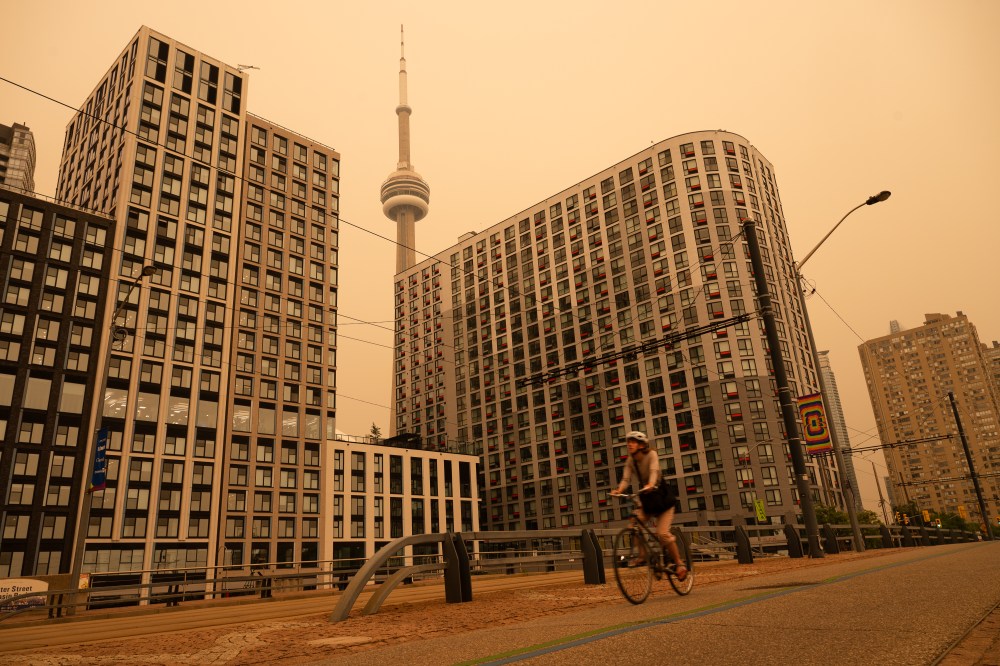
Toronto did not get much relief Thursday from the smoky, stifling air that prompted some residents to don protective face masks and stay indoors as the city shut down outdoor pools and recreational activities.
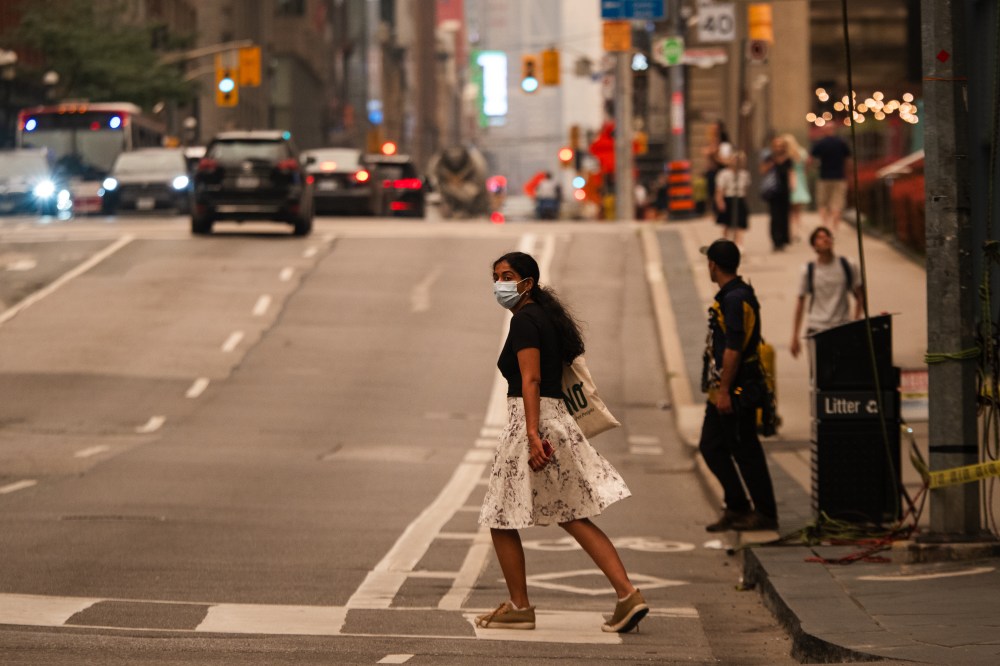
The wildfire smoke drifting from the north and across the Canada-U.S. border raises the levels of pollution known as PM2.5, fine particulate matter so small it can travel deep into lungs and pose a risk to human health.
Environment Canada’s Air Quality Health Index for Toronto was at 10-plus – or “very high risk” – earlier on Thursday, the worst possible air quality rating. A rating of 1-3 is low risk, 4-6 is moderate risk and 7-10 denotes a high risk.
Toronto’s University Health Network said its preliminary data suggests the poor air quality has led to a spike in emergency department visits.
The hospital network said it recorded 36 ER visits related to air quality and respiratory problems on Wednesday, compared to 20 such visits on July 1 – an 80 per cent increase. Those visits were primarily driven by shortness of breath, cough and congestion, and non-cardiac chest pain, it said.
The network cautioned that the data requires more analysis, but said it’s consistent with the health effects of reduced air quality.
Dr. Erin O’Connor, head of emergency medicine at UHN, said she anticipated even more ER visits on Thursday because of the cumulative effects of two days of breathing in poor air quality.
“It’s just adding pressure to an already pressured (health-care) system,” she said.
The Public Health Agency of Canada has said that wearing an N95, KN95 or KF94 mask can offer some protection from wildfire smoke. Other masks, including cloth and medical or surgical masks, don’t fit as snugly and the material isn’t as effective at filtering out the smoke particles, it said.
Environment Canada has said winds from the northwest will continue to blanket southern Ontario with smoke until at least Friday.
The weather agency said the general population should reschedule or reduce strenuous outdoor activities outdoors, especially if people have symptoms such as coughing and throat irritation. At-risk people should entirely avoid strenuous activities outdoors, while children and elderly people should avoid physical exertion outside, it said.
In Toronto, officials are keeping all outdoor pools and wading pools closed Thursday. All Camp TO field trips have been cancelled.
Events such as live racing at Toronto’s Woodbine Racetrack were also cancelled, and organizers of the outdoor music festival Rock the Park in London, Ont., also ended the event early due to safety concerns.
Premier Doug Ford has said that fire crews and aircraft are hard at work fighting the wildfires across northern Ontario, and the province will spare no expense in keeping people safe.
The province has asked the federal government to be ready to help evacuate communities by aircraft as forest fires burn out of control.
This report by The Canadian Press was first published July 16, 2026.
– With files from Hannah Alberga in Toronto

Advertisement Advertise With Us
Advertisement Advertise With Us