

Federal agency links Quebec train derailment in December to temperature swings
Advertisement
Read this article for free:
or
Already have an account? Log in here »
To continue reading, please subscribe:

Digital Subscription
One year of digital access for only $205*
- Enjoy unlimited reading on winnipegfreepress.com
- Read the E-Edition, our digital replica newspaper
- Access News Break, our award-winning app
- Play interactive puzzles
*First annual payment billed as $205.00 + GST for one year. This annual subscription will automatically renew at $233.00 + GST every 52 weeks (10% off the regular annual price of $259.35). Offer available to new and qualified returning subscribers only. Cancel any time.
To continue reading, please subscribe:
Add Free Press access to your Brandon Sun subscription for only an additional
$1 for the first 4 weeks*
- Enjoy unlimited reading on winnipegfreepress.com
- Read the E-Edition, our digital replica newspaper
- Access News Break, our award-winning app
- Play interactive puzzles
*Your next Brandon Sun subscription payment will increase by $1.00 and you will be charged $17.95 plus GST for four weeks. After four weeks, your payment will increase to $24.95 plus GST every four weeks.
Read unlimited articles for free today:
or
Already have an account? Log in here »
MONTREAL – The Transportation Safety Board of Canada says it could not determine the exact cause of a freight train derailment in northern Quebec last December.
The agency says the derailment likely happened after a rail broke under stress from sharp temperature swings and the earlier passage of another train with a wheel defect.
The train was carrying iron ore and derailed on Dec. 28 about 60 kilometres north of Sept-Îles, on Quebec’s North Shore, after an automatic emergency brake was triggered.
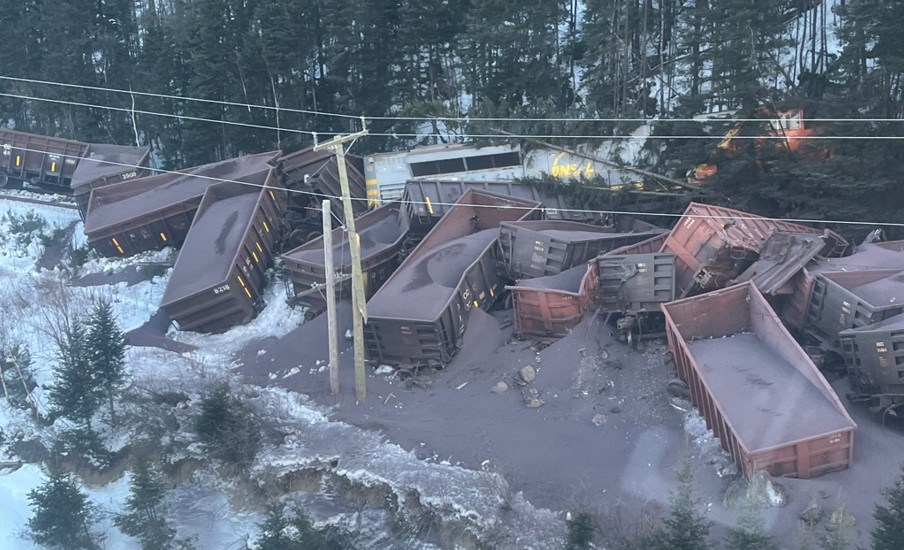
Twenty-nine railcars and one locomotive derailed, but no one was injured, and most of the spilled iron ore did not reach the frozen surface of the nearby Nipissis river.
The report says the rail line recorded 47 broken-rail incidents in 2025, with more than half occurring in January and December.
The report says the track installed in 2022 had been inspected just three days before the derailment, with no defects detected.
This report by The Canadian Press was first published July 22, 2026.