

Lakeside homes destroyed, evacuations expanded as B.C. wildfires surge
Advertisement
Read this article for free:
or
Already have an account? Log in here »
To continue reading, please subscribe:

Digital Subscription
One year of digital access for only $205*
- Enjoy unlimited reading on winnipegfreepress.com
- Read the E-Edition, our digital replica newspaper
- Access News Break, our award-winning app
- Play interactive puzzles
*First annual payment billed as $205.00 + GST for one year. This annual subscription will automatically renew at $233.00 + GST every 52 weeks (10% off the regular annual price of $259.35). Offer available to new and qualified returning subscribers only. Cancel any time.
To continue reading, please subscribe:
Add Free Press access to your Brandon Sun subscription for only an additional
$1 for the first 4 weeks*
- Enjoy unlimited reading on winnipegfreepress.com
- Read the E-Edition, our digital replica newspaper
- Access News Break, our award-winning app
- Play interactive puzzles
*Your next Brandon Sun subscription payment will increase by $1.00 and you will be charged $17.95 plus GST for four weeks. After four weeks, your payment will increase to $24.95 plus GST every four weeks.
Read unlimited articles for free today:
or
Already have an account? Log in here »
VERNON – A wildfire fanned by 115-kilometre-per-hour winds razed homes along the west side of British Columbia’s Okanagan Lake, forcing many residents to escape to safety.
Video and photos posted online showed flames in the night sky engulfing properties as residents watched from the other side of the water. Later, the charred remains of buildings could be seen along the northern end of the lake near Vernon.
The BC Wildfire Service said Sunday that winds from an intense weather system on Saturday were too much for aircraft to hold back the Bradley Creek fire.
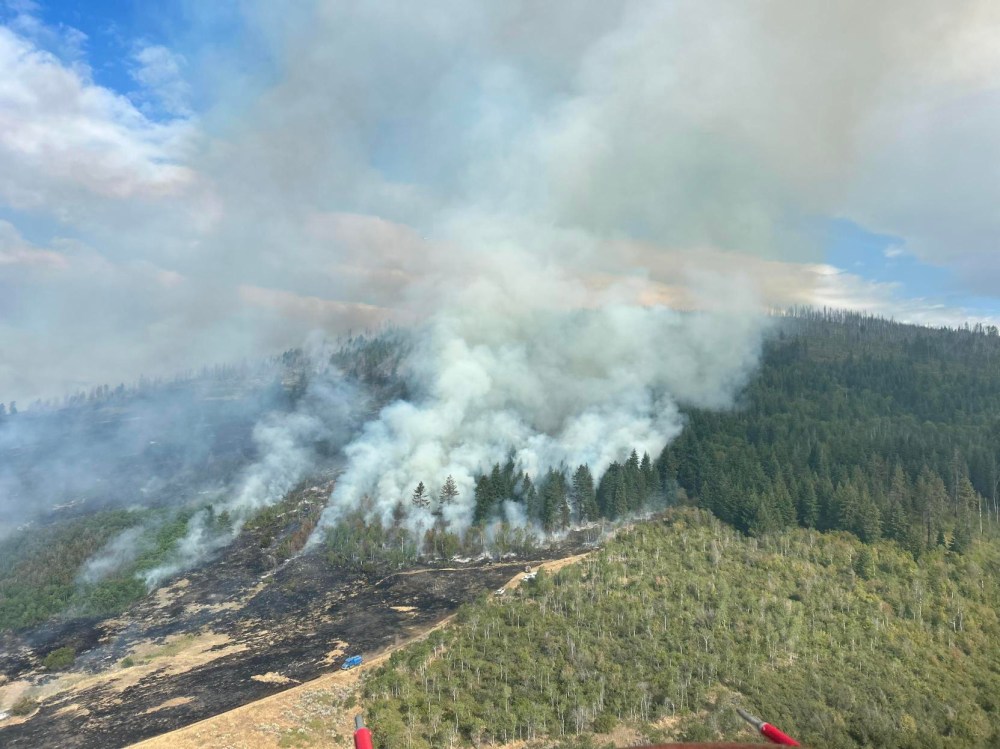
It prompted the evacuation of the Okanagan Indian Band reserve, while separate evacuation orders and alerts went up near the cities of Vernon and Armstrong.
In a video statement on Facebook, Chief Dan Wilson said the community is facing one of the most significant emergencies it has experienced since the White Rock Lake Fire in 2021.
“We still don’t know the full extent of what this wildfire has taken from us. We don’t know the condition of every home. We don’t know the full impact on families, infrastructure, or our community. Those answers will come, but they will take time.”
Wilson added that there was no timeline yet on when people will be able to return, with conditions still very dangerous. “There are damaged power lines, unsafe trees, damaged infrastructure, and water systems that still have to be looked at. Until that work is done, we cannot safely bring people home.”
The blaze was among dozens of wildfires in southern B.C. that started on Saturday, forcing more than 5,000 people from their homes in the span of 24 hours.
Kevin Dunbar, executive director of provincial response and recovery operations, called it a “complex and rapidly evolving emergency response.”
“Over the past 24 hours, strong winds and changing conditions have contributed to new evacuations orders and new evacuation alerts in several areas across the province,” Dunbar told a news conference on Sunday.
Dunbar said it isn’t safe yet for officials to go into the fire areas to assess how many properties have been lost or damaged.
Cliff Chapman, director of wildfire operations for the provincial wildfire service, told reporters that August is generally the hottest month of the year in B.C. and that crews are hoping for a few days of cooler temperatures before another ridge of high pressure brings back the heat.
“I suspect that in the next three to four days, we’re going to have a chance to try to get around these fires and hopefully have a lot of success in suppression,” he said.
“But we will be challenged with the return of a ridge pattern and the return of summer conditions.”
Volunteers with the Central Okanagan Search and Rescue were among those called in to help with the quick evacuation of properties in the Okanagan Indian Band reserve and around Okanagan Lake.
An update posted on the Bradley Creek fire said a cold front passed across the region and brought sustained 80 km/h winds over the fire and 115 km/h winds at elevation, which was beyond what had been in the forecast.
“These winds caused significant challenges and the firefighters, helicopters, airtankers and skimmers were unable to hold the fire,” the update said.
The shifting winds also pushed the fire across Highway 97, which has been closed to traffic on what would be a busy holiday travel weekend.
The wildfire service reported that dozens more fires were sparked and have expanded quickly due to high winds and lightning strikes, with almost half of the 130 wildfires burning in the province out of control.
B.C. recorded more than 2,200 lightning strikes in 24 hours, the service said on Sunday.
As of Sunday morning, there were 42 separate evacuation orders for communities across the province and another 40 alerts.
Vernon’s acting mayor Akbal Mund said in an interview Sunday that after a gusty day on Saturday, the winds calmed and the flames were moving away from the city of about 50,000 people.
“Yesterday the winds were very, very swift. We had a cold front move through, and I think some were saying winds were over 50 kilometers per hour. So, (that’s) not good when you’re trying to fight a fire,” he said.
Mund said about 250 evacuees have registered so far at an emergency services centre set up in Vernon, where they can get water and food.
There was a lineup out the door of more people arriving Sunday morning, he said.
“I will tell you, they are as prepared as you can be under these circumstances. I haven’t ever had to evacuate myself, but I can just imagine what that feels like for the people involved. So, the community is here to help,” he said.
Chapman said help is coming in the next few weeks from fire crews in Mexico, Australia, and other Canadian jurisdictions.
The Regional District of North Okanagan said if people have a recreational vehicle, and time permits, they should bring it with them as accommodations will be limited.
The wildfires and Saturday night’s storm have also knocked out power to several areas of the province, especially in the Okanagan and Kootenay regions where more than 23,000 customers were without electricity on Sunday.
The BC Wildfire Service is recommending that British Columbians be prepared for a possible quick departure, even if wildfires aren’t threatening their areas.
The service said there were five wildfires of note in the province Sunday, all of them burning near communities.
This report by The Canadian Press was first published Aug. 2, 2026
— By Ashley Joannou in Vancouver