

Foreign influence registry will build Canada’s democratic ‘resilience’: commissioner
Advertisement
Read this article for free:
or
Already have an account? Log in here »
To continue reading, please subscribe:

Digital Subscription
One year of digital access for only $205*
- Enjoy unlimited reading on winnipegfreepress.com
- Read the E-Edition, our digital replica newspaper
- Access News Break, our award-winning app
- Play interactive puzzles
*First annual payment billed as $205.00 + GST for one year. This annual subscription will automatically renew at $233.00 + GST every 52 weeks (10% off the regular annual price of $259.35). Offer available to new and qualified returning subscribers only. Cancel any time.
To continue reading, please subscribe:
Add Free Press access to your Brandon Sun subscription for only an additional
$1 for the first 4 weeks*
- Enjoy unlimited reading on winnipegfreepress.com
- Read the E-Edition, our digital replica newspaper
- Access News Break, our award-winning app
- Play interactive puzzles
*Your next Brandon Sun subscription payment will increase by $1.00 and you will be charged $17.95 plus GST for four weeks. After four weeks, your payment will increase to $24.95 plus GST every four weeks.
Read unlimited articles for free today:
or
Already have an account? Log in here »
OTTAWA – Canada’s first foreign influence transparency commissioner says the new registry his office manages will help “build resilience” against foreign meddling in Canada’s democracy.
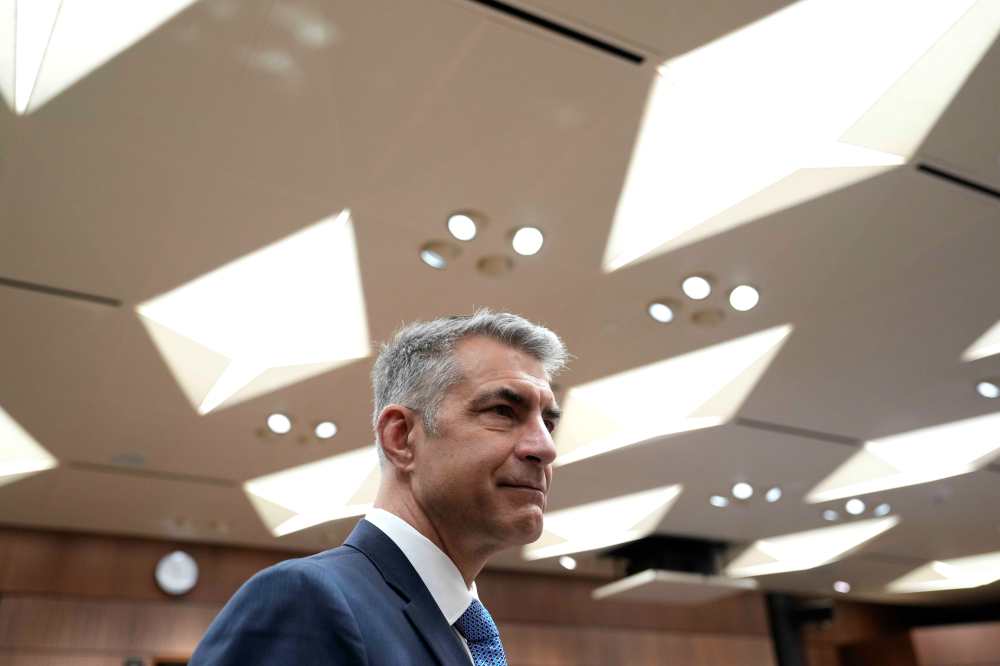
Anton Boegman said the biggest challenge he faces in the new role will be ensuring the public understands the new federal transparency framework he’s tasked with overseeing, which took effect on Tuesday.
“Our focus is really on ensuring that activities aimed at influencing political government processes are visible to people and that they’re done in this transparent way,” Boegman said in an interview after his first day on the job.
“The biggest challenge that we will have in the first year is really around public awareness.”
The new legal framework he manages took effect this week. It was passed into law in 2024 through Bill C-70 by Prime Minister Justin Trudeau’s government.
Under the new regime, anyone who has an “arrangement” to help a foreign entity influence Canadian politics must register their activities with Boegman’s office by Oct. 3.
According to his office, “influence activities” can include communications with a public office holder, an exchange of money or services, or public dissemination of information related to a “political or governmental process” like an election, a referendum or legislation.
Non-compliance could lead to fines that could range from $250 to $1 million.
The idea behind the registry is to shine a spotlight on open forms of engagement and distinguish them from covert or malicious acts of foreign interference.
“The registry is another tool that can help people build resilience to foreign interference,” Boegman said.
“Through that public disclosure, through that transparency, the new regime will really help Canadians to understand who is attempting to influence the political or government processes here in Canada and with whom are they doing that.”
Boegman, a former naval officer who served as British Columbia’s chief electoral officer from 2018 to 2025, officially started his new role this week.
He said his office already has received its first registration from a civil service group. The registry is currently active but has no listings. Those won’t be published until they’ve gone through a review.
A federal government analysis says the registry is expected eventually to list around 2,000 registrations.
Boegman said foreign influence is a “normal part of international relations” and it’s legitimate when conducted transparently under the law.
His office will not deal with more covert and nefarious efforts by foreign actors to interfere with domestic politics and will leave those matters to the intelligence and national security agencies.
“Our office doesn’t deal with other risks to Canada, such as transnational repression, covert attacks, cyberattacks, these sorts of things. They may be part of foreign interference, but the responsibility for those types of activities (rests with) all the other national security, intelligence or law enforcement agencies in Canada.”
The House of Commons and Senate both approved Boegman’s appointment as commissioner this spring. He was appointed on a seven-year term.
This report by The Canadian Press was first published Aug. 5, 2026.