

Wildfire near Summerland, B.C., declared held, but recovery just beginning says mayor
Advertisement
Read this article for free:
or
Already have an account? Log in here »
To continue reading, please subscribe:

Digital Subscription
One year of digital access for only $205*
- Enjoy unlimited reading on winnipegfreepress.com
- Read the E-Edition, our digital replica newspaper
- Access News Break, our award-winning app
- Play interactive puzzles
*First annual payment billed as $205.00 + GST for one year. This annual subscription will automatically renew at $233.00 + GST every 52 weeks (10% off the regular annual price of $259.35). Offer available to new and qualified returning subscribers only. Cancel any time.
To continue reading, please subscribe:
Add Free Press access to your Brandon Sun subscription for only an additional
$1 for the first 4 weeks*
- Enjoy unlimited reading on winnipegfreepress.com
- Read the E-Edition, our digital replica newspaper
- Access News Break, our award-winning app
- Play interactive puzzles
*Your next Brandon Sun subscription payment will increase by $1.00 and you will be charged $17.95 plus GST for four weeks. After four weeks, your payment will increase to $24.95 plus GST every four weeks.
Read unlimited articles for free today:
or
Already have an account? Log in here »
SUMMERLAND – The mayor of the Summerland, B.C., says the work of recovering from the fire that forced the entire community to evacuate is just beginning, despite the blaze being declared held by firefighters.
Doug Holmes says residents pulled together when they were forced to flee as the fire bore down on the Okanagan lakeside community on the night of Aug. 7.
Holmes says a key focus now that residents have returned and the immediate fire threat is over will be securing Summerland’s drinking water source that was damaged by the fire.
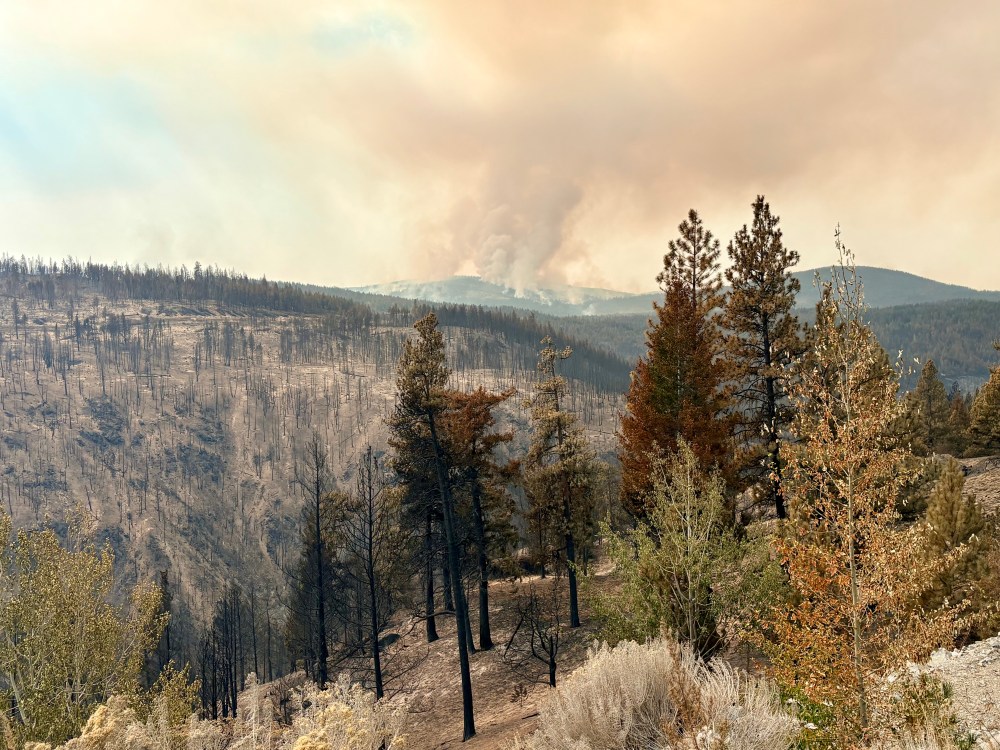
The BC Wildfire Service said in an update late Thursday that the Bald Range fire was held, and was expected to remain within its current perimeter of about 252 square kilometres west of Summerland.
It’s also no longer classified as a wildfire of note, leaving two such fires in the province — one near Boston Bar and another near Clinton.
Across B.C., the number of active wildfires sits at around 200, with about 90 burning out of control as crews deal with new ignitions sparked by lightning.
The Bald Range fire has been among the most destructive in B.C. this season, destroying or damaging about 150 structures in the area and causing the evacuation of about 20,000 people, both in Summerland and surrounding communities.
One woman died trying to get out, and almost every home in the small community of Faulder was destroyed.
The province declared a state of emergency on Aug. 8 as the fire loomed over Summerland, but it was lifted on Thursday on the advice of emergency officials.
Holmes said Summerland had never seen anything close to the destruction and trauma that the Bald Range fire brought. Forty homes were damaged or destroyed within the municipal limits.
“I mean, we do all the training and then it really pays off,” he said, noting the emergency operation centre, community staff and firefighters all did their part in mitigating the impact of the blaze.
“That’s a testament to all the training that they go through for events like this that you hope never happens. But when it does, you’re prepared, but nothing can totally prepare you for something like this.
“I don’t think anybody really realizes, and every kind of crisis like this is a little bit different than from others.”
Holmes said federal Minister of Emergency Management Eleanor Olszewski was visiting the area on Friday, and one of the key questions he would pose was what relief the community could expect.
“We’re just starting to really see the magnitude of it and the damage to our watershed, which is where we draw our drinking water,” he said. “That’s going to be a big concern moving forward.”
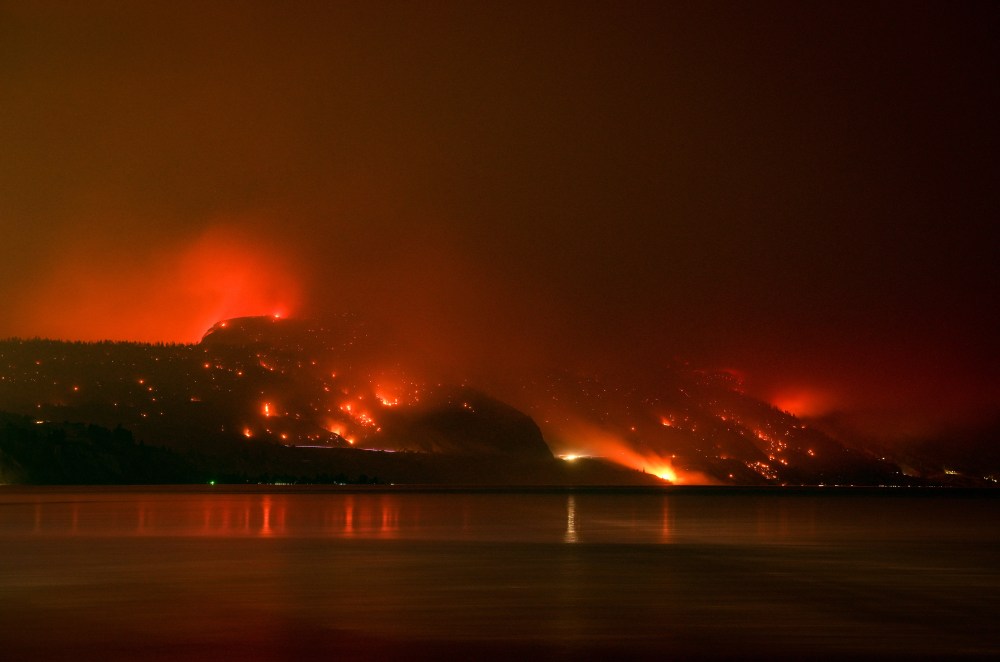
Holmes said there were concerns about fire debris in the water supply, potentially contaminating the drinking source with ash and algae.
“We’re the only community on Okanagan Lake that doesn’t draw our drinking water from the lake,” he said. “We draw it all from reservoirs that we hold up in the watershed, and the fire has burnt right through that.”
Meanwhile, the Regional District of Okanagan-Similkameen said smoke visible in the Osoyoos area was due to a wildfire across the U.S. border, but there was no immediate threat to Canadian communities.
Photos posted online by the BC Wildfire Service and others show a large smoke column looming high above the a mountainside. The service said it was monitoring the situation closely.
The service said recent rain in southern B.C. had allowed authorities to lift a ban on off-road vehicles from Friday for large portions of the province.
Among the regions are the Southeast, Cariboo, Coastal and Kamloops wildfire zones.
“We will be seeing a downturn in weather starting (Friday) bringing cooler temperatures to all areas of the province throughout the weekend,” the Wildfire Service says in its update.
This report by The Canadian Press was first published Aug. 28, 2026.