

Carney reflects on ‘dark chapter’ at Truth and Reconciliation ceremony in Edmonton
Advertisement
Read this article for free:
or
Already have an account? Log in here »
To continue reading, please subscribe:

Digital Subscription
One year of digital access for only $205*
- Enjoy unlimited reading on winnipegfreepress.com
- Read the E-Edition, our digital replica newspaper
- Access News Break, our award-winning app
- Play interactive puzzles
*First annual payment billed as $205.00 + GST for one year. This annual subscription will automatically renew at $233.00 + GST every 52 weeks (10% off the regular annual price of $259.35). Offer available to new and qualified returning subscribers only. Cancel any time.
To continue reading, please subscribe:
Add Free Press access to your Brandon Sun subscription for only an additional
$1 for the first 4 weeks*
- Enjoy unlimited reading on winnipegfreepress.com
- Read the E-Edition, our digital replica newspaper
- Access News Break, our award-winning app
- Play interactive puzzles
*Your next Brandon Sun subscription payment will increase by $1.00 and you will be charged $17.95 plus GST for four weeks. After four weeks, your payment will increase to $24.95 plus GST every four weeks.
Read unlimited articles for free today:
or
Already have an account? Log in here »
EDMONTON – Prime Minister Mark Carney came home to Alberta’s capital Wednesday to meet with First Nations leaders and families and honour the children who suffered and endured in Canada’s residential schools.
“Today is about all the truth,” Carney said in a speech Wednesday morning at Fort Edmonton Park in the city’s river valley near downtown.
“And it’s for the children. Those children. Those survivors. Those who didn’t survive.”
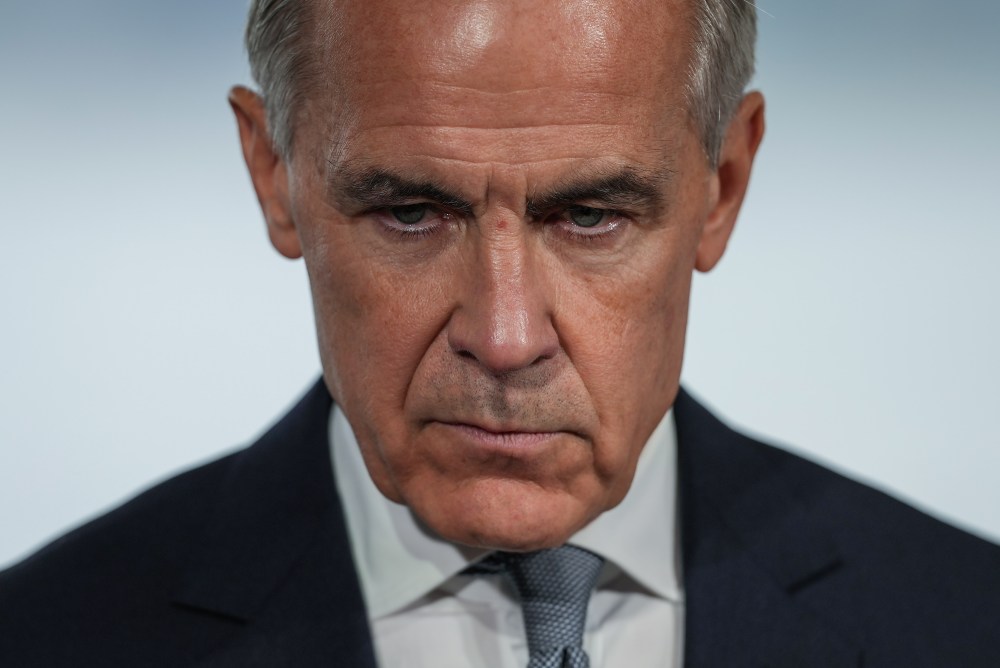
Wednesday was the sixth annual National Day for Truth and Reconciliation. The day is a sombre remembrance of 150,000 Indigenous children who suffered malnutrition and abuse over decades in Canada’s residential school system.
In 2015, the Truth and Reconciliation Commission concluded the schools were central to a state-backed policy of cultural genocide.
In Edmonton on Wednesday, dozens of people gathered at Fort Edmonton Park with bright orange shirts, the symbol for the children who attended residential schools, dotting the crowd. Many had bannock and sipped on warm beverages on the chilly autumn morning.
Carney, who was born in the Northwest Territories and raised in Edmonton, recalled in his speech the numerous visits to Fort Edmonton in his youth.
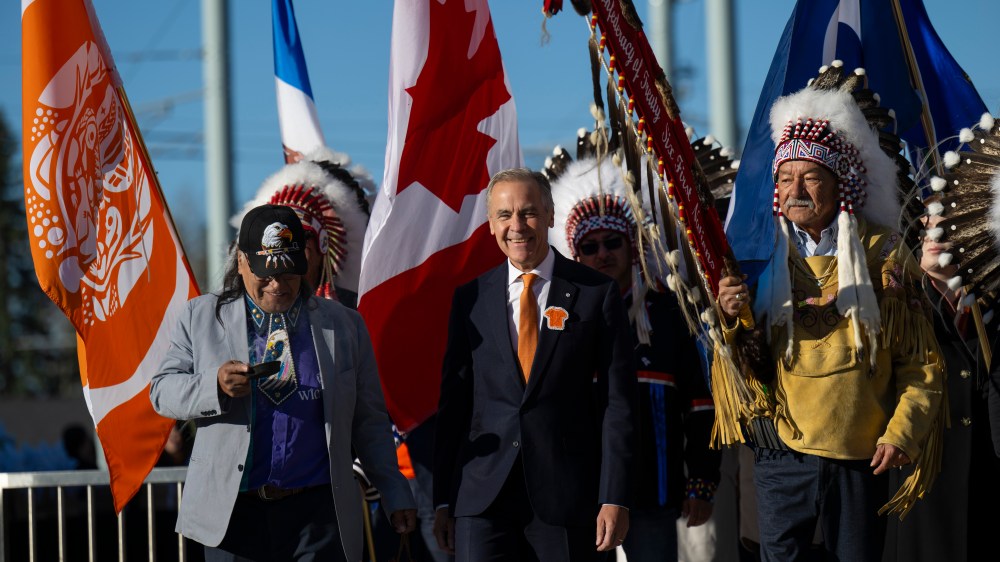
Before his speech, he entered the ceremony area flanked by Treaty 6 chiefs marching to the beat of drums and dressed in traditional attire. Alberta Lt.-Gov. Salma Lakhani also spoke and federal Conservative Leader Pierre Poilievre was also present.
Carney said the ceremony urged everyone to hear the stories of those affected by the residential school system and “reflect on a dark chapter in Canada’s past and to commit to move forward together.”
“This is not a distant chapter in Canada’s past, but a truth that endures,” said Carney, who wore an orange tie and a pin of a beaded orange T-shirt on his lapel.
“Reconciliation is a journey, not a destination. It’s an attitude, not an achievement. Our job is to move together as far and as fast down the path as we can.”
Treaty 6 Grand Chief George Arcand Jr. said healing is especially important.
“We can’t have reconciliation without truth — a truth that First Nations know so well can be difficult and we see it rejected, replaced with opinion and misinformation,” he told the crowd.
“Untruths about Canada’s past stand directly in the way of healing our relationship and moving forward in a good way.”
Andrea Sandmaier, president of the Otipemisiwak Métis government, said truth and reconciliation isn’t just for one day of the year.
“Despite the progress that has been made, there are still people out there across Canada, in our very own communities, who refuse to listen to those truths, who deny the undeniable,” she said.
“This is not new to Indigenous people. It is something we have experienced for generations.”
Sandmaier urged non-Indigenous people who see residential school denialism in person or online to “call it out.”
“Do not let misinformation and racism spread unchecked through our communities.”
This report by The Canadian Press was first published Sept. 30, 2026.
Advertisement Advertise With Us
Advertisement Advertise With Us