

Alberta First Nation discovers 169 potential graves
Advertisement
Read this article for free:
or
Already have an account? Log in here »
To continue reading, please subscribe:
Digital Subscription
One year of digital access for only $1.44 a week*
- Enjoy unlimited reading on winnipegfreepress.com
- Read the E-Edition, our digital replica newspaper
- Access News Break, our award-winning app
- Play interactive puzzles
*Billed as $5.77 plus GST every four weeks. After 52 weeks, price increases to the regular rate of $19.95 plus GST every four weeks. Offer available to new and qualified returning subscribers only. Cancel any time.
To continue reading, please subscribe:
Add Free Press access to your Brandon Sun subscription for only an additional
$1 for the first 4 weeks*
- Enjoy unlimited reading on winnipegfreepress.com
- Read the E-Edition, our digital replica newspaper
- Access News Break, our award-winning app
- Play interactive puzzles
*Your next Brandon Sun subscription payment will increase by $1.00 and you will be charged $17.95 plus GST for four weeks. After four weeks, your payment will increase to $24.95 plus GST every four weeks.
Read unlimited articles for free today:
or
Already have an account? Log in here »
Hey there, time traveller!
This article was published 01/03/2022 (1696 days ago), so information in it may no longer be current.
EDMONTON — The chief of a northern Alberta First Nation held back tears Tuesday as he said that the discovery of 169 potential graves at the site of a former residential school validates the horrifying testimonies survivors have been sharing.
“Our little warriors have waited for us to find them. Now we will ensure they rest in peace,” said Sydney Halcrow of the Kapawe’no First Nation at an emotional news conference.
Finding one grave is too much, the chief said, and finding many is incomprehensible.
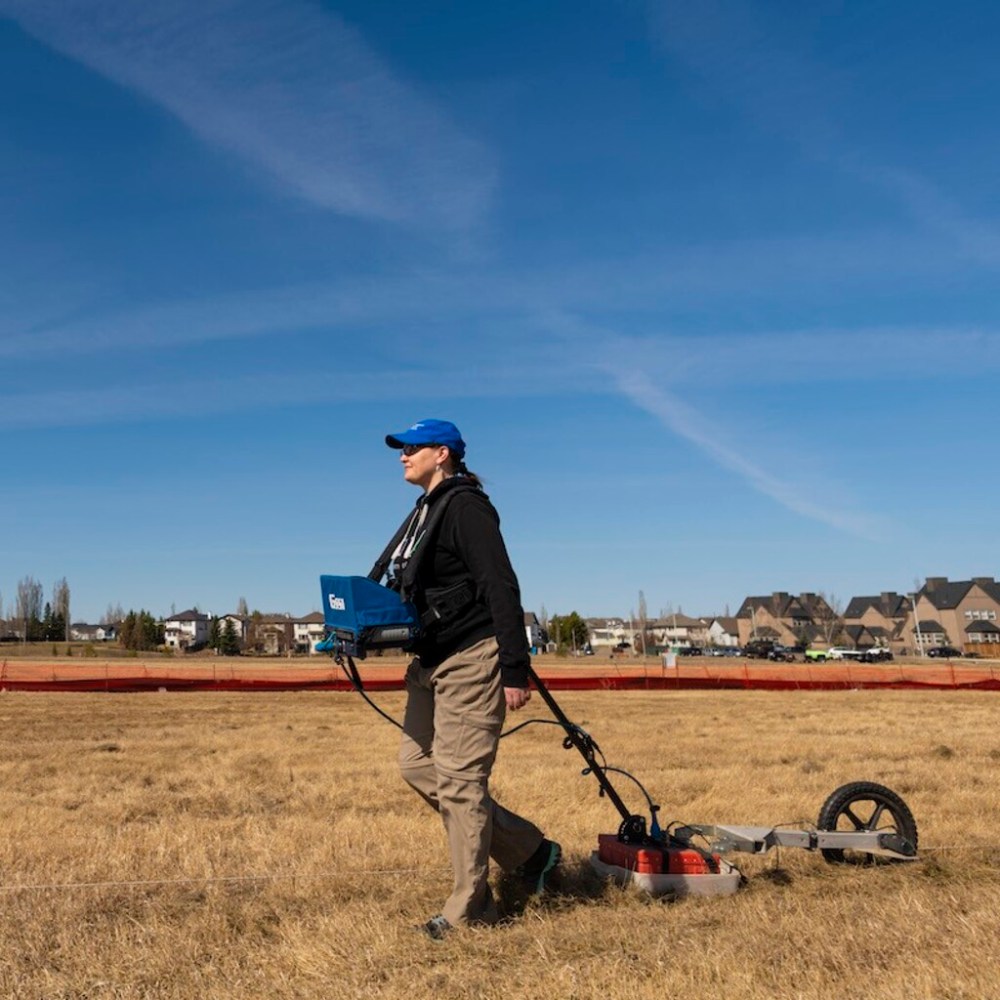
The possible graves were identified using ground-penetrating radar and a drone at the former Grouard Mission site, about 370 kilometres northwest of Edmonton.
Kisha Supernant, project lead and director of the Institute of Prairie and Indigenous Archaeology at the University of Alberta, said the discovery supports what survivors and elders had been saying and marks the beginning of a long journey to find answers.
“There’s much more to do… to bring the children home,” she said.
Searchers focused on a small parcel of land around the school, also called St. Bernard’s Indian Residential School. Fifty-four potential graves were located by the church, a former nuns residence and by an old root cellar.
Another 115 were identified in the community cemetery.
Supernant said the parish provided burial records indicating that children who died while living at the school were buried in unmarked graves. Some of the names provided by the church were included in a missing children registry created by the National Centre for Truth and Reconciliation.
Supernant, who is Métis, said her family members are in the records of those who died at the school.
“Each of these children was a beloved part of a family and no one has been held accountable for their deaths,” she said.
The residential school was opened by the Roman Catholic Church in 1894 and ran until 1961.
The Truth and Reconciliation Commission heard testimony from survivors about serious sexual and physical abuse, manual labour and the spread of illness at the school, which had a large population of Métis children.
The commission, which documented stories from survivors and issued a final report in 2015, has a record of 10 student deaths at St. Bernard.
Survivor Frank Tomkins testified that staff at the residential school once made a boy who could not control his bowels eat some of his own excrement.
Survivor Rita Evans went to the school for four years and told the commission there was much religious instruction and drudge work, but little emphasis on classroom education.
“We were forever praying and not learning anything, and when I came out of Grade 6, my goodness, I didn’t know nothing, you know, except work, work,” Evans said.
An inspector who visited the school 10 years before its closure said it was developing into an orphanage.
An estimated 150,000 First Nations, Inuit and Métis children attended residential schools. The commission documented at least 4,100 deaths.
Alberta Premier Jason Kenney and Indigenous Relations Minister Rick Wilson said in a statement that recorded instances of violence and abuse at the schools are part of their tragic legacy.
“The Indian residential school system was a wicked injustice that too often forcibly segregated children from their families and sought to suppress Indigenous culture and language,” they said.
A statement from Crown-Indigenous Relations Minister Patty Hajdu’s office said the findings are “a reminder of the scars and of the lasting pain inflicted on so many innocent children.”
Kapawe’no First Nation plans to continue with two more searches for children who never came home.
Based on testimony from survivors, search areas will include a nearby Anglican church and a spot where Indian agents and the North West Mounted Police, a precursor to the RCMP, had structures.
Treaty 8 Grand Chief Arthur Noskey said it is painful each time potential graves are located.
“It’s as if this wound cannot heal,” he said. “It’s reopened over and over. When you think it will get better, it splits open again.”
But it’s important for the world to see that these institutions were not schools, he said.
Healing will not come without answers, he added.
“Truth must come before reconciliation can begin. I hope the children we have found can now rest knowing we have found them.”
The Indian Residential Schools Resolution Health Support Program has a hotline to help residential school survivors and their relatives suffering trauma invoked by the recall of past abuse. The number is 1-866-925-4419.
— With files from Kelly Geraldine Malone in Winnipeg
History
Updated on Tuesday, March 1, 2022 4:28 PM CST: Recasts lead to include chief; adds quotes, details, background.
Updated on Tuesday, March 1, 2022 8:17 PM CST: Adds federal comment, photo