

Frozen funding rates for young scientists ‘robbing Canada of best and brightest’
Advertisement
Read this article for free:
or
Already have an account? Log in here »
To continue reading, please subscribe:

Digital Subscription
One year of digital access for only $205*
- Enjoy unlimited reading on winnipegfreepress.com
- Read the E-Edition, our digital replica newspaper
- Access News Break, our award-winning app
- Play interactive puzzles
*First annual payment billed as $205.00 + GST for one year. This annual subscription will automatically renew at $233.00 + GST every 52 weeks (10% off the regular annual price of $259.35). Offer available to new and qualified returning subscribers only. Cancel any time.
To continue reading, please subscribe:
Add Free Press access to your Brandon Sun subscription for only an additional
$1 for the first 4 weeks*
- Enjoy unlimited reading on winnipegfreepress.com
- Read the E-Edition, our digital replica newspaper
- Access News Break, our award-winning app
- Play interactive puzzles
*Your next Brandon Sun subscription payment will increase by $1.00 and you will be charged $17.95 plus GST for four weeks. After four weeks, your payment will increase to $24.95 plus GST every four weeks.
Read unlimited articles for free today:
or
Already have an account? Log in here »
Hey there, time traveller!
This article was published 12/05/2022 (1587 days ago), so information in it may no longer be current.
With federal funding rates frozen for two decades, more money is needed for budding scientists living below the poverty line, say the country’s leading scientists in a letter to the prime minister.
Hundreds of Canada’s leading scientists and engineers are calling on the government to increase funding to graduate student trainees and postdoctoral scientists funded by the Natural Sciences and Engineering Research Council of Canada (NSERC). The request is in an open letter on Thursday for Prime Minister Justin Trudeau and François-Philippe Champagne, minister of science, innovation and industry.
“After not having what amounts to a pay raise in 19 years many of us said enough is enough, we have to speak up about it,” said Marc Johnson, a professor in the biology department at University of Toronto.
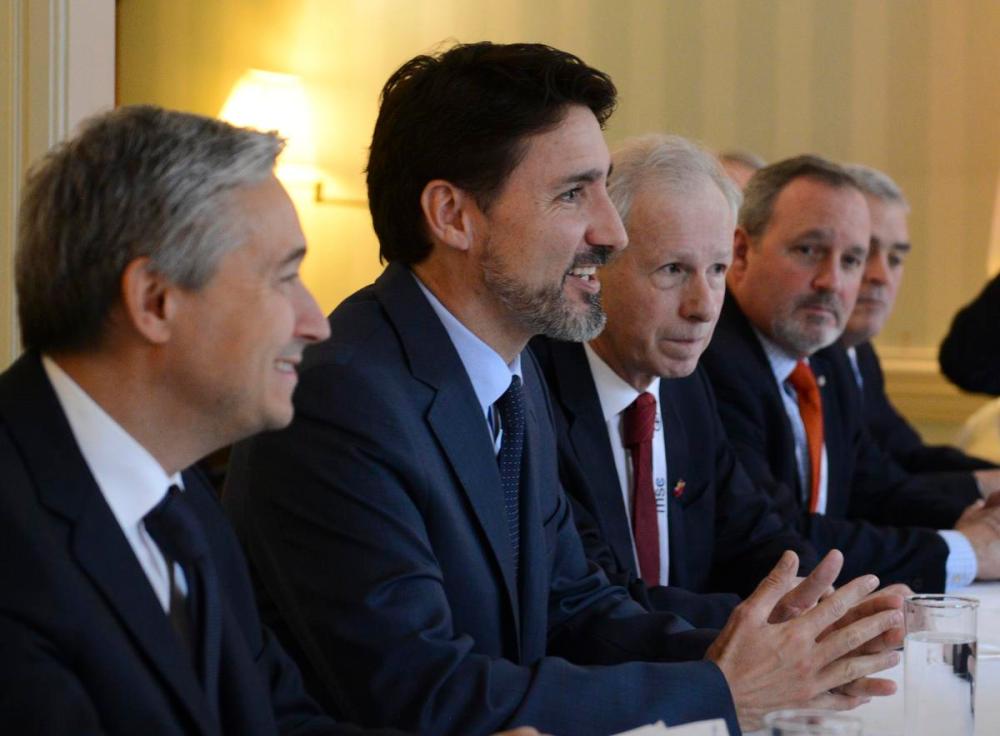
NSERC graduate scholarships are meant to cover the cost of living and tuition for Canada’s most promising early-career scientists and engineers. But many of these government-funded trainee awards and fellowships have not increased in nearly 20 years despite inflation and rising cost of living and tuition, making life unaffordable for students.
The values of NSERC Canada Graduate Scholarship Masters ($17,500) and NSERC Postgraduate Scholarship Doctoral ($21,000) have not changed since 2003. The NSERC Postdoctoral Fellowships stipend ($45,000) has not changed since 2015, and before that was set at $40,000 in 2003.
“We’re talking about thousands of young scientists that are the next generation of scientists,” Johnson said. “Given the incredible inflation that we’re all experiencing, it really hit students hard because their main expense is rent and food.”
Johnson said many of the students have had to take part-time jobs on the side. He warned that Canada could lose scientists to other programs abroad that offer more stability and better compensation. The problem is particularly severe for marginalized communities, many of whom forgo these opportunities because they do not have the financial support and cannot afford the subsequent costs.
“We’re robbing Canada of having the best and brightest scientists work in the country because many of these students will be leaving Canada and are leaving Canada because we do not offer sufficient compensation,” Johnson said.
Ghada Alsharif is a Toronto-based staff reporter for the Star. Reach Ghada via email: galsharif@torstar.ca