‘Beyond what’s humanly acceptable’: Testimony ends at Quebec long-term care inquest
Advertisement
Read this article for free:
or
Already have an account? Log in here »
To continue reading, please subscribe:

Digital Subscription
One year of digital access for only $205*
- Enjoy unlimited reading on winnipegfreepress.com
- Read the E-Edition, our digital replica newspaper
- Access News Break, our award-winning app
- Play interactive puzzles
*First annual payment billed as $205.00 + GST for one year. This annual subscription will automatically renew at $233.00 + GST every 52 weeks (10% off the regular annual price of $259.35). Offer available to new and qualified returning subscribers only. Cancel any time.
To continue reading, please subscribe:
Add Free Press access to your Brandon Sun subscription for only an additional
$1 for the first 4 weeks*
- Enjoy unlimited reading on winnipegfreepress.com
- Read the E-Edition, our digital replica newspaper
- Access News Break, our award-winning app
- Play interactive puzzles
*Your next Brandon Sun subscription payment will increase by $1.00 and you will be charged $17.95 plus GST for four weeks. After four weeks, your payment will increase to $24.95 plus GST every four weeks.
Read unlimited articles for free today:
or
Already have an account? Log in here »
Hey there, time traveller!
This article was published 26/10/2021 (1761 days ago), so information in it may no longer be current.
MONTREAL – As an inquest into 47 deaths at a Montreal long-term care home during the pandemic’s first wave heard its final witness Tuesday, the coroner summed up the horror stories of dehydrated, unfed and soiled residents being left to die.
“What we’ve heard in the past weeks goes beyond what is humanly acceptable in a society like ours,” coroner Géhane Kamel said. “In effect, no human should end their lives in such deplorable conditions.”
Kamel, who is examining the failings at Résidence Herron as part of a broad investigation of 53 deaths at six long-term care homes and one seniors residence in the province, has concluded the factual portion of her inquiry. She will next hear recommendations before filing a final report.
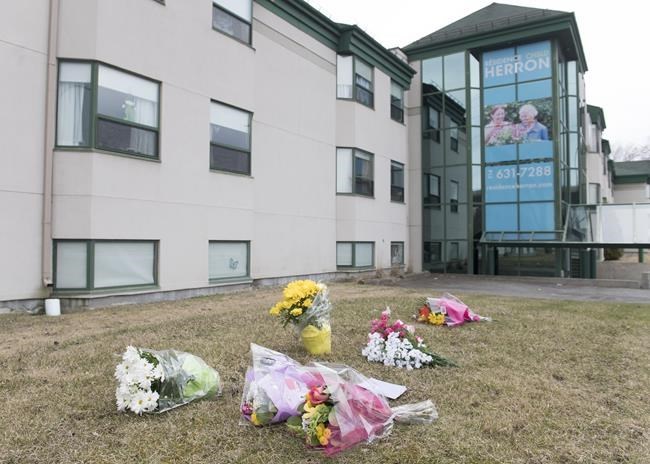
Lynne McVey, head of the regional health board that took control of Herron on March 30 as COVID-19 cases mounted, testified that authorities did what they could to save lives.
Appearing before the inquest for a second time, McVey was questioned Tuesday about why it took so long to realize how many people had died at the private facility.
She said the information was only discovered on April 10 after additional verifications. The inquiry has heard that no one appeared to be tabulating deaths at the suburban Montreal facility.
McVey told the inquiry she was scared when she learned that at that point there had been 31 deaths, prompting Kamel to interject that there should have been an accounting earlier.
“If we had the choice between saving lives and registering deaths, I don’t think you can fault nurses on the ground for going to a bedside rather than registering deaths,” McVey said.
She was also questioned about the timing of a 911 call to police, coinciding with a Montreal Gazette report that appeared outlining horrifying conditions at the residence. One day later, provincial officials announced the 31 deaths.
Kamel also noted the 911 call came after health authority staff had been on site for two weeks.
McVey said perhaps she should have called police earlier, but she acted after several pieces of information came to light, including the 31 deaths and a report about a disorganized pharmacy counter at the residence.
“Calling the police isn’t a crime, and it’s a certainly a situation we’d never gone through in our careers,” McVey said. “We found 139 patients with zero staff, it was unthinkable.”
McVey also defended a letter sent to Herron management that informed them the regional health authority was assuming management on March 30. When Kamel said the letter left little room for collaboration, McVey described the situation as “desperate times (that) called for extreme measures.”
She noted the situation at Herron was different than other residences where the health authority had assisted and owners handed over staff lists and patient files within an hour.
Later, asked by the lawyer representing some deceased Herron residents whether she took responsibility, McVey put the blame on the virus. “COVID-19 is the most devious virus I’ve had to deal with in my clinical career,” she told the inquiry. “The virus has a large responsibility in these deaths.”
She later told families she was sorry for the deaths, that the objective had been to provide care to residents.
“We went there to help, and we would have really wanted to save everybody,” she said. “There are 18 witnessesthat came through here and many of them are still very traumatized by not being able to save the lives that we wanted to save during the pandemic.”

Earlier Tuesday, Kamel said she was tired of finger-pointing between health authority managers and Herron officials, noting both sides were accountable and responsible for the vulnerable patients under their care.
The health authority’s deputy director also took the stand for the first time during the inquest.
Najia Hachimi-Idrissi testified that the health authority was unable force three doctors assigned to Herron, who were seeing patients through telemedicine as COVID-19 cases mounted, to treat patients on site.
She also maintained the health authority could not oblige unionized employees to report for work at Herron, which is why non-unionized managers were the first to arrive at the understaffed facility to help.
This report by The Canadian Press was first published Oct. 26, 2021.