

Quebec rights commission drops discrimination cases after Supreme Court’s Ward ruling
Advertisement
Read this article for free:
or
Already have an account? Log in here »
To continue reading, please subscribe:

Digital Subscription
One year of digital access for only $205*
- Enjoy unlimited reading on winnipegfreepress.com
- Read the E-Edition, our digital replica newspaper
- Access News Break, our award-winning app
- Play interactive puzzles
*First annual payment billed as $205.00 + GST for one year. This annual subscription will automatically renew at $233.00 + GST every 52 weeks (10% off the regular annual price of $259.35). Offer available to new and qualified returning subscribers only. Cancel any time.
To continue reading, please subscribe:
Add Free Press access to your Brandon Sun subscription for only an additional
$1 for the first 4 weeks*
- Enjoy unlimited reading on winnipegfreepress.com
- Read the E-Edition, our digital replica newspaper
- Access News Break, our award-winning app
- Play interactive puzzles
*Your next Brandon Sun subscription payment will increase by $1.00 and you will be charged $17.95 plus GST for four weeks. After four weeks, your payment will increase to $24.95 plus GST every four weeks.
Read unlimited articles for free today:
or
Already have an account? Log in here »
Hey there, time traveller!
This article was published 19/04/2022 (1604 days ago), so information in it may no longer be current.
MONTREAL – An October Supreme Court decision hailed by some as a victory for free speech is leading Quebec’s human rights commission to drop dozens of cases involving allegations of discriminatory comments.
The commission’s new approach comes after the Supreme Court of Canada last fall overturned a ruling by Quebec’s human rights tribunal, which had found that Quebec comedian Mike Ward discriminated against disabled child singer Jérémy Gabriel during a comedy routine.
Philippe-André Tessier, the president of the commission, said it was investigating about 100 cases involving discriminatory remarks this year. Most of those cases will have to be dropped as a result of the Ward ruling, he said, though a case-by-case review remains ongoing.
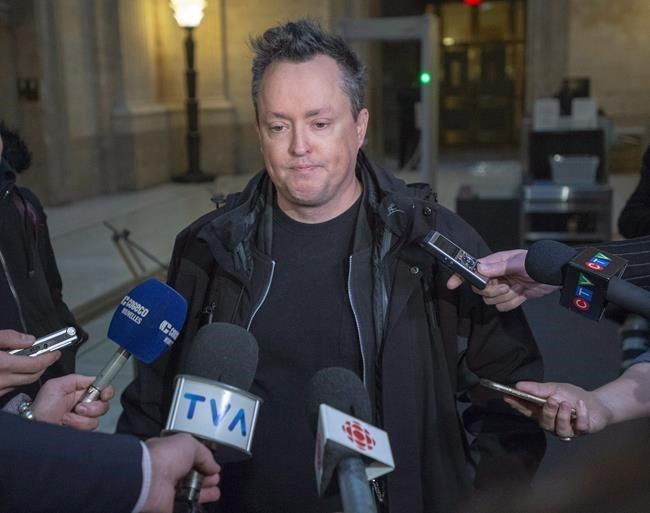
“The commission still retains jurisdiction if it’s a situation of harassment, or if another right guaranteed under the Quebec Charter of Human Rights and Freedom is affected, such as the right to … employment without discrimination, or the right to rent an apartment without discrimination,” Tessier said in an interview Tuesday.
In the Ward ruling, the high court said the Quebec tribunal, which hears cases brought to it by the provincial rights commission, had overstepped its legal bounds in several cases where it awarded thousands of dollars in damages after finding that comments alone amounted to discrimination.
Those sorts of cases, such as a person making a racist comment to a neighbour, can now only be heard by civil courts, Tessier said.
Fo Niemi, the executive director of the Center for Research-Action on Race Relations, a Montreal-based civil rights organization, said that while the commission’s announcement is an inevitable consequence of the Ward decision, he fears it will have “very counterproductive consequences on the fight against hate crimes and hate incidents in Quebec.”
Niemi said he worries about the impact of the commission’s decision on cases where discriminatory comments are part of a larger “hate incident” that also involves physical gestures or actions, such as incidents of racist or homophobic bullying.
He said it’s unclear what the decision could mean in a case his organization brought to the commission in which a white woman was videotaped making racist comments to a Black man before she called the police and claimed he was a gang member who threatened her.
“We’re concerned the commission may close this file because they said racist remarks or insults are not enough for us to keep the case open,” Niemi said. Going to court is more expensive and onerous than going before the commission, he added, creating a barrier to access to justice.
Lawyer Julius Grey, who represented Ward in his court challenge, said Tuesday’s announcement is a sign the commission has decided to conform to the Supreme Court ruling, which he characterized as a victory for freedom of expression.
“You cannot use the power of the state to prevent people from being offended, from creating a sort of goody-goody view of free speech where you can only say things that people say are nice or agreeable,” he said, adding that without the ability to mock and say things that are “biting,” satire would be impossible.
“It’s what I had hoped the consequences of the Ward judgment would be, that the human rights commission would stop enforcing their view of niceness,” Grey said in an interview.
In his act, Ward mocked Gabriel’s appearance and hearing aid. Ward joked that he thought Gabriel’s condition was terminal and people were only nice to him because he was dying, adding that after he realized the child was not going to die, he tried to drown him. Gabriel was born with Treacher Collins syndrome, which affected his appearance and caused deafness that was treated through a bone-anchored hearing aid.
This report by The Canadian Press was first published April 19, 2022.