

Supreme Court agrees to weigh in on ‘extreme intoxication’ defence
Advertisement
Read this article for free:
or
Already have an account? Log in here »
To continue reading, please subscribe:
Monthly Digital Subscription
$1 per week for 24 weeks*
- Enjoy unlimited reading on winnipegfreepress.com
- Read the E-Edition, our digital replica newspaper
- Access News Break, our award-winning app
- Play interactive puzzles
*Billed as $4.00 plus GST every four weeks. After 24 weeks, price increases to the regular rate of $19.95 plus GST every four weeks. Offer available to new and qualified returning subscribers only. Cancel any time.
Monthly Digital Subscription
$4.99/week*
- Enjoy unlimited reading on winnipegfreepress.com
- Read the E-Edition, our digital replica newspaper
- Access News Break, our award-winning app
- Play interactive puzzles
*Billed as $19.95 plus GST every four weeks. Cancel any time.
To continue reading, please subscribe:
Add Free Press access to your Brandon Sun subscription for only an additional
$1 for the first 4 weeks*
*Your next subscription payment will increase by $1.00 and you will be charged $16.99 plus GST for four weeks. After four weeks, your payment will increase to $23.99 plus GST every four weeks.
Read unlimited articles for free today:
or
Already have an account? Log in here »
Hey there, time traveller!
This article was published 23/12/2020 (1920 days ago), so information in it may no longer be current.
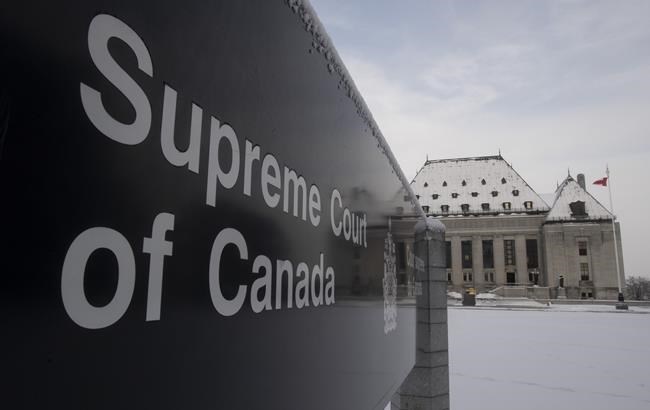
TORONTO – The Supreme Court agreed on Wednesday to weigh in on a ruling related to the defence of extreme intoxication that had alarmed some women’s groups.
The court granted prosecutors in Ontario leave to appeal separate decisions in which two men had killed or injured close relatives.
The men were initially convicted but the province’s Court of Appeal set aside the guilty verdicts after finding part of the law unconstitutional. The impugned provision, enacted in 1995, bars an accused from using self-induced extreme intoxication as a defence.
The two men, Thomas Chan and David Sullivan, were high on drugs they had taken voluntarily when they turned violent. One had eaten magic mushrooms; the other had tried to kill himself with an overdose of a prescription stop-smoking medication.
Trial evidence was that both became psychotic and went on a rampage. Chan, a high school student, stabbed and killed his father and badly injured his father’s partner. Sullivan came to believe his mother was an alien and stabbed her.
Both men claimed they had no control over what they did — a state called automatism. However, their defence of “non-mental disorder automatism” ran afoul of the ban on arguing self-induced extreme intoxication.
The federal government barred the intoxication defence 25 years ago amid a backlash over a court ruling that recognized drunkenness could be raised in a sexual assault case.
In quashing their convictions and finding the law unconstitutional, the Appeal Court said it would be wrong to punish someone for something they had no control over.
“(The law) enables the conviction of individuals for acts they do not will,” the Appeal Court said.
While such cases are rare, and successfully raising an intoxication defence difficult, critics argued the Appeal Court ruling had undermined a measure aimed at protecting women from sexual violence.
Megan Stephens, executive director with the Women’s Legal Education and Action Fund, said her group was pleased the Supreme Court will hear the case.
“We are hopeful that the appeal will provide the court with the opportunity to provide some necessary clarification on how to balance constitutional rights that are equally deserving of protection – both those of the accused as well as those who are disproportionately subjected to intoxicated violence,” Stephens said.
Both federal and Ontario New Democrats had urged an appeal.
Prosecutors sought leave to challenge the ruling before the Supreme Court, which agreed to hear the two cases as a single appeal. It’s not known when that might happen.
This report by The Canadian Press was first published Dec. 23, 2020.