WEATHER ALERT

Grade 11

Please review each article prior to use: grade-level applicability and curricular alignment might not be obvious from the headline alone.

No Subscription Required

Searing heat draws visitors to California’s Death Valley, where it’s tough to communicate the risks

Dorany Pineda, The Associated Press 7 minute read Preview
No Subscription Required

Searing heat draws visitors to California’s Death Valley, where it’s tough to communicate the risks

Dorany Pineda, The Associated Press 7 minute read Friday, Oct. 10, 2025

DEATH VALLEY NATIONAL PARK, Calif. (AP) — Ray Estrada's 11-year-old grandson is used to Las Vegas' scorching summers, but he'd always wanted to experience the heat in one of the Earth's hottest places. So Estrada recently drove him to Death Valley National Park, with an umbrella, extra water and electrolytes in tow. That day, the thermometer soared to 118 F (47.78 C).

“We have to be very careful when we go out there,” Estrada told him. “If you start feeling dizzy or whatever... we’re just gonna turn back and be safe so we can do this again another time.”

The extreme temperatures in this stretch of California desert attract visitors every year, some determined to finish a grueling, multiday race, others just curious about the sizzling heat and the landscape's vast beauty. Yet despite the warnings, the heat kills one to three people annually, and park rangers respond to overheated visitors multiple times per week, making communication about heat safety a priority for the National Park Service.

But that's easier said than done.

Read
Friday, Oct. 10, 2025
No Subscription Required

McGill University team develops AI that can detect infection before symptoms appear

Jean-Benoit Legault, The Canadian Press 4 minute read Preview
No Subscription Required

McGill University team develops AI that can detect infection before symptoms appear

Jean-Benoit Legault, The Canadian Press 4 minute read Friday, Oct. 10, 2025

MONTRÉAL - Researchers at McGill University say they developed an artificial intelligence platform that can predict when someone is about to come down with a respiratory tract infection before they start to feel sick.

In what researchers are calling a "world first," the study involved participants who wore a ring, a watch and a T-shirt, all of which were equipped with censors that recorded their biometric data. By analyzing the data, researchers were able to accurately predict acute systemic inflammation — an early sign of a respiratory infection such as COVID-19.

Published in The Lancet Digital Health, the study says the AI platform can one day help doctors address health problems much earlier than they normally would, particularly in patients who are fragile and for whom a new infection could have serious consequences. It could also potentially reduce costs for the health-care system by preventing complications and hospitalizations.

"We were very interested to see if physiological data measured using wearable sensors … could be used to train an artificial intelligence system capable of detecting an infection or disease resulting from inflammation," explained the study's lead author, Prof. Dennis Jensen of McGill University's department of kinesiology and physical education.

Read
Friday, Oct. 10, 2025
No Subscription Required

Should you let pets sleep next to you? (Does it even matter what the experts say?)

Albert Stumm, The Associated Press 4 minute read Preview
No Subscription Required

Should you let pets sleep next to you? (Does it even matter what the experts say?)

Albert Stumm, The Associated Press 4 minute read Friday, Oct. 10, 2025

It turns out, our furry best friend might be our sleep enemy.

Lots of pet owners let their animals sleep on the bed with them, which usually disrupts sleep. But many would say it’s worth it.

And researchers don't necessarily disagree.

Melissa Milanak, a professor at Medical University of South Carolina specializing in sleep health, said most people at her clinic say their pets disturb them often at night.

Read
Friday, Oct. 10, 2025
No Subscription Required

Enhanced Games perpetuate a growing problem

Editorial 4 minute read Preview
No Subscription Required

Enhanced Games perpetuate a growing problem

Editorial 4 minute read Saturday, Jun. 7, 2025

We appear to be entering a new golden age of steroids.

Years of scandals out of the Olympics, pro baseball, pro wrestling, and other athletic fields should have put to bed the notion that there is any athletic or cultural value in using performance-enhancing drugs, or PEDs, to get an edge. With every suspension, with every prize stripped from a competitor or left tainted by the way it was obtained, the message was clear — it’s cheating, and it’s not worth it.

Some haven’t received the message. The Enhanced Games hopes to hold its first-ever event in Las Vegas, Nev.

The Enhanced Games, as the name suggests, is a multi-sport athletic competition in which athletes are openly using PEDs. The games’ website makes much ado about the close supervision the athletes will be under, overseen by medical professionals to ensure their health and safety.

Read
Saturday, Jun. 7, 2025
No Subscription Required

US measles cases rise slightly as Colorado reports a new outbreak

Devna Bose, The Associated Press 8 minute read Wednesday, Oct. 15, 2025

Measles cases inched up slightly in the U.S. this past week, with a new county impacted in Texas and Colorado reporting a new outbreak.

There are 1,088 confirmed measles cases in the U.S., up 42 from last week, the Centers for Disease Control and Prevention said Friday. Texas, where the nation's biggest outbreak raged during the late winter and spring, reported 10 additional cases this week for a total of 738.

There are three other major outbreaks in North America.

One in Ontario, Canada, has resulted in 1,888 cases from mid-October through May 27. Another in Alberta, Canada, has sickened 628 as of Thursday. And the Mexican state of Chihuahua had 1,693 measles cases and three deaths as of Wednesday, according to data from the state health ministry.

No Subscription Required

Publix recalls baby food pouches after testing finds elevated levels of lead

Jonel Aleccia, The Associated Press 3 minute read Preview
No Subscription Required

Publix recalls baby food pouches after testing finds elevated levels of lead

Jonel Aleccia, The Associated Press 3 minute read Wednesday, Oct. 15, 2025

The supermarket chain Publix has recalled fruit and vegetable baby food sold in eight states because product testing found elevated levels of lead, according to federal health officials.

Publix recalled 4-ounce Greenwise Pear, Kiwi, Spinach & Pea Baby Food pouches sold at more than 1,400 stores.

The pouches were produced by Bowman Andros, a French company with a manufacturing plant in Mount Jackson, Virginia, according to the company's website. Publix issued the voluntary recall on May 9, but it wasn't added to the U.S. Food and Drug Administration recall list until late Thursday.

The potential contamination was flagged by officials in North Carolina, the state that first identified a 2023 lead poisoning outbreak linked to tainted applesauce pouches that sickened more than 500 U.S. children.

Read
Wednesday, Oct. 15, 2025
No Subscription Required

Quand le froid gèle la collecte de sang

Hugo Beaucamp 5 minute read Preview
No Subscription Required

Quand le froid gèle la collecte de sang

Hugo Beaucamp 5 minute read Saturday, Mar. 8, 2025

Les intempéries hivernales ont parfois des impacts insoupçonnés. Alors que les déplacements ont été rendus difficiles à travers le pays, la Société canadienne du sang doit combler les pertes causées pour répondre à un besoin toujours plus important.

Le temps hivernal s’est montré quelque peu extrême le mois dernier. S’il n’est pas nécessairement évident de faire le lien entre les deux, et bien les aléas météorologiques ont un impact direct sur la collecte de sang au Manitoba et plus largement dans tout le pays.

Aujourd’hui, il faut savoir que, la branche manitobaine de la Société canadienne du sang (SCS), ne compte pas moins de 30 cliniques mobiles. Ces dernières se déplacent trois fois par semaine dans les communautés rurales de la province. Entre autres, Brandon, Portage la Prairie ou bien Selkirk.

Or les intempéries ont provoqué l’annulation de plusieurs centaines de rendez-vous, comme l’explique Rayna Porter, responsable du développement communautaire pour la SCS ici, à Winnipeg.

Read
Saturday, Mar. 8, 2025
No Subscription Required

2 win medicine Nobel for showing how we react to heat, touch

David Keyton And Maria Cheng, The Associated Press 5 minute read Preview
No Subscription Required

2 win medicine Nobel for showing how we react to heat, touch

David Keyton And Maria Cheng, The Associated Press 5 minute read Monday, May. 18, 2026

STOCKHOLM (AP) — Two scientists won the Nobel Prize in medicine on Monday for their discoveries into how the human body perceives temperature and touch, revelations that could lead to new ways of treating pain or even heart disease.

Americans David Julius and Ardem Patapoutian separately identified receptors in the skin that respond to heat and pressure, and researchers are working on drugs to target them. Some hope the discoveries could eventually lead to pain treatments that reduce dependence on highly addictive opioids. But the breakthroughs, which happened decades ago, have not yet yielded many effective new therapies.

Julius, of the University of California at San Francisco, used capsaicin, the active component in chili peppers, to help pinpoint the nerve sensors that respond to heat, the Nobel Committee said. Patapoutian, of Scripps Research Institute at La Jolla, California, found pressure-sensitive sensors in cells that respond to mechanical stimulation.

“This really unlocks one of the secrets of nature,” said Thomas Perlmann, secretary-general of the committee, in announcing the winners. “It’s actually something that is crucial for our survival, so it’s a very important and profound discovery.”

Read
Monday, May. 18, 2026
No Subscription Required

Ban backyard fire pits? Councillor seeks report

Katie May 3 minute read Monday, Sep. 13, 2021

Another pandemic summer saw many homeowners spending more time around backyard fire pits — when conditions weren’t too dry — but some residents with breathing problems have asked a city councillor to try to put a stop to the smoke.

The idea of establishing buffer zones for residential fires will be up for discussion at an upcoming city committee meeting through a motion put forward by Coun. Kevin Klein, who is asking city administration to find out whether a fire-buffer policy exists in other places and would be feasible for Winnipeg.

Klein is not asking for a change to the city bylaw governing residential fires; he said he simply wants the public service to complete a report on the issue because he’s heard several complaints from residents with asthma. He’s also heard from residents who enjoy having fires and don’t want that privilege taken away.

“Some very angry, on both sides, so this is why I think it’s key for us (to get a report),” Klein said.

No Subscription Required

Anxiety, hope as children return to school

Maggie Macintosh 6 minute read Preview
No Subscription Required

Anxiety, hope as children return to school

Maggie Macintosh 6 minute read Wednesday, Sep. 8, 2021

On one side of the chain-link fence separating Glenelm School from the street, nervous elementary students fidgeted with their masks and bulky backpacks on the playground as they waited to meet new teachers and friends in lines.

On the other side, parents on the sidewalk — among them, Joisy Fernandez — peeked through the grey diamonds with anxieties of their own.

"I wish I could go in there and just stand next to her and say, ‘It will be OK,’" said Fernandez, who dropped off her daughter Natalie for the first day of Grade 5 on Wednesday morning. "As tough as it is on us, we have to show them that (a safe school year) is possible."

Glenelm, a K-6 building at 96 Carmen Ave., has kept its pandemic policy for drop-offs intact this year to prevent congestion on the playground. Parents are discouraged from entering both the Winnipeg school's grounds and building.

Read
Wednesday, Sep. 8, 2021
No Subscription Required

Chasser, pour avoir la conscience tranquille

Daniel Bahuaud de La Liberté pour le Winnipeg Free Press 4 minute read Preview
No Subscription Required

Chasser, pour avoir la conscience tranquille

Daniel Bahuaud de La Liberté pour le Winnipeg Free Press 4 minute read Saturday, Dec. 2, 2017

Vanessa Ahing a été végétarienne pendant plus de quatre années. Par refus de l’industrie de la viande qui, à son avis, est cruelle et nuit à l’environnement. Pourtant, un bon steak lui manquait. Pour réconcilier conscience et palais, un choix nouveau s’imposait...

Un soir de septembre, 2013, Vanessa Ahing rentrait de la campagne, où elle avait abattu son premier chevreuil. Souvenir de l’enseignante de 31ans: “J’étais toute seule. J’avais suivi une formation de chasse pour femmes, organisée par la Manitoba Wildlife Foundation. Mon chevreuil, coupé en quarts, était dans un sac de hockey dans le coffre de ma Honda Civic. C’était mon premier animal. Je voulais vivre l’expérience complète de la chasse. Donc pas question pour moi d’aller chez un boucher. D’ailleurs, j’étais étudiante. Je n’avais pas le fric pour me payer un tel service.

“Je me demandais comment j’allais faire pour préparer cette viande. Je n’ai pas été élevée dans une famille de chasseurs, ou même de jardiniers. Mes parents n’étaient pas prêts à avoir un chevreuil chez eux. Et moi, je vivais dans un petit appartement pour célibataires au centre-ville de Winnipeg.

“Il était tard. Trop tard pour dépecer l’animal tout de suite. Alors, j’ai ouvert les fenêtres de mon appartement. Je me suis endormie dans mon sac de couchage. Le lendemain, j’ai tapé ‘Comment couper de la viande de chevreuil’ sur YouTube. Et je me suis mise à l’œuvre.”

Read
Saturday, Dec. 2, 2017

Treating the fever while ignoring the infection

Rafiq Andani 6 minute read Preview

Treating the fever while ignoring the infection

Rafiq Andani 6 minute read Thursday, Jun. 4, 2026

At any moment in Manitoba’s hospital system, three patients may be waiting.

One is in the emergency room, waiting to be assessed.

A second has been assessed, admitted to hospital, and is waiting in the emergency department for an upstairs bed.

A third sits upstairs in that hospital bed. Their acute problem has resolved, but they cannot safely go home because home care, supportive housing, rehabilitation or long-term care is not ready.

Read
Thursday, Jun. 4, 2026

Screwworm fly detected in Texas decades after cattle threat was largely eradicated in US

John Hanna, The Associated Press 4 minute read Preview

Screwworm fly detected in Texas decades after cattle threat was largely eradicated in US

John Hanna, The Associated Press 4 minute read Thursday, Jun. 4, 2026

The New World screwworm fly has reached south Texas, the U.S. Department of Agriculture confirmed Wednesday, the first time in decades that the parasite with flesh-eating larvae has threatened the nation's cattle industry and only the third time it's appeared in the U.S. in that time.

Agriculture Secretary Brooke Rollins said the case was in a 3-week-old calf in La Pryor, Texas, about 50 miles (80 kilometers) from the Mexico border. Texas State Veterinarian Bud Dinges said he has established a 12-mile (20-kilometer) quarantine zone, prohibiting the movement of any warm-blooded animal — including pets — outside that zone without an inspection.

Rollins said there have been no other detections of the fly in the U.S., and officials were quick to say that while the fly’s larvae are a threat to livestock production, they don’t infest food. Properly treated, even the infested calf should recover, Rollins said.

Rollins, U.S. and Texas agriculture officials, and cattle industry leaders have been sounding public alarms about the fly’s movement across Mexico for more than a year, spurred on by memories of it causing tens of millions of dollars of losses — potentially billions in today’s dollars — before its eradication in the 1970s.

Read
Thursday, Jun. 4, 2026

Early childhood educators discuss First Nations students’ needs

Maggie Macintosh 4 minute read Preview

Early childhood educators discuss First Nations students’ needs

Maggie Macintosh 4 minute read Wednesday, Jun. 3, 2026

Early childhood educators traded tips to improve attendance and well-being among First Nations students and their families at a first-of-its-kind event in Winnipeg.

The University of Winnipeg hosted an inaugural roundtable for ECEs to share their challenges and successes related to Indigenous education on Tuesday.

“The limited assessment data that we do have shows Indigenous children are not doing as well in life as other children and so we need to pick it up,” said Sheri-Lynn Skwarchuk, a professor who oversees the developmental studies program.

The facilitator described the gathering of nearly 50 women, including front-line workers, centre co-ordinators and post-secondary instructors, as a momentous occasion for their shared profession.

Read
Wednesday, Jun. 3, 2026

Advocates call on Ottawa to limit nicotine use among youth, demand stricter measures

Ritika Dubey, The Canadian Press 4 minute read Preview

Advocates call on Ottawa to limit nicotine use among youth, demand stricter measures

Ritika Dubey, The Canadian Press 4 minute read Monday, Jun. 1, 2026

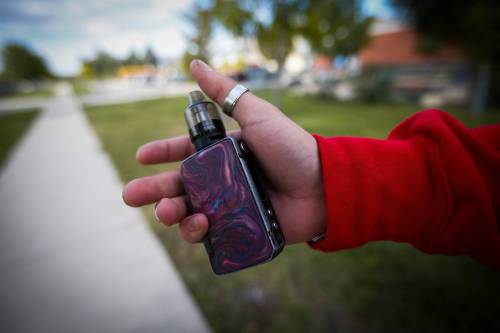
OTTAWA - Several health organizations are urging the federal government to bring down nicotine use among Canadians to less than five per cent of the population by 2045, as vaping among youth rises.

Les Hagen, executive director of Action on Smoking and Health, says nicotine use has grown exponentially among Canadians aged 25 and under, which he says is a "huge concern."

Hagen said several published systematic reviews have shown that vaping creates a nicotine pathway in the brain — making them addicted to the substance, which makes youth more susceptible to starting smoking cigarettes.

"If that can't be satisfied by nicotine products like vaping products, they will find other ways to satisfy those cravings, including smoking."

Read
Monday, Jun. 1, 2026

School science changes spark concerns

Maggie Macintosh 6 minute read Preview

School science changes spark concerns

Maggie Macintosh 6 minute read Wednesday, May. 27, 2026

Calls for more teacher training, consultation and updating Manitoba’s overhauled science curriculum are growing ahead of a mandatory rollout planned for the fall.

The Education Department is in the process of adjusting what scientific concepts students must learn and experiment with between kindergarten and Grade 10.

The new curriculum calls on teachers to regularly integrate Indigenous perspectives into their lessons and focus on building scientific literacy while leaving a lot up to professional discretion.

A pair of local researchers who’ve been surveying pilot participants have found “mixed responses.”

Read
Wednesday, May. 27, 2026

Manitoba bill would reduce availability of flavoured vapes; one group wants more

Steve Lambert, The Canadian Press 3 minute read Preview

Manitoba bill would reduce availability of flavoured vapes; one group wants more

Steve Lambert, The Canadian Press 3 minute read Wednesday, May. 27, 2026

WINNIPEG - The Manitoba government plans to greatly reduce the number of locations where flavoured vaping products can be sold, but one group says the idea does not go far enough and lags behind efforts in many other provinces.

A bill introduced in the legislature Tuesday would forbid the sale of such products in businesses in urban areas that allow people under 18 to enter. The measure would not apply in rural areas.

The NDP government said the aim is to help reduce the risk that minors might see the products, be enticed by the flavouring, and get hooked.

"We know that (flavoured vapes) is a gateway for kids in particular (to) choosing more significant — like tobacco, cigarettes — substances later on," Health Minister Uzoma Asagwara said.

Read
Wednesday, May. 27, 2026

Manitobans prefer later sunsets in time-change debate: poll

Chris Kitching 4 minute read Preview

Manitobans prefer later sunsets in time-change debate: poll

Chris Kitching 4 minute read Tuesday, May. 26, 2026

A new public opinion poll suggests year-round daylight time is the leading choice among Manitobans, as the provincial government considers ditching twice-annual clock changes.

The survey by Winnipeg-based Prairie Research Associates found roughly three in four Manitobans support an end to seasonal time changes, a move that would lead to the permanent use of standard or daylight time.

“There is a large group of people who say, ‘I don’t care what the change is as long as there is no (seasonal time) change.’ That group was larger than I expected,” PRA partner Nicholas Borodenko said about the survey results.

“The fact that more people are leaning toward wanting to have more summer daylight in the evening was expected.”

Read
Tuesday, May. 26, 2026

You should be dancing, yeah. Moving to music offers all kinds of benefits as you age

Anita Snow, The Associated Press 5 minute read Preview

You should be dancing, yeah. Moving to music offers all kinds of benefits as you age

Anita Snow, The Associated Press 5 minute read Tuesday, Jun. 2, 2026

TUCSON, Ariz. (AP) — Carol Ross can’t stop smiling at dance practice as she shouts out the steps of a routine to members of her tap and jazz troupe for women age 50 and older.

“I’ve been dancing my whole life, it’s the best,” said Ross, who founded the Rodeo City Wreckettes group 23 years ago at an age when many people are getting ready for retirement.

Now 87, Ross and her husband and lifelong dance partner John, also 87, have long known what more older adults are now discovering: Moving to music is one of the best ways to stay healthy. Medical professionals say it doesn’t matter if it’s Western line dancing, ballroom steps, salsa, tap, Zumba at the gym, or with a group like the Wreckettes.

“Dancing is one of the most powerful activities for older people,” said Julio Loya, a nurse and geriatric program coordinator at the Tucson Medical Center.

Read
Tuesday, Jun. 2, 2026

Winnipeg pair look to launch EyeMirage device for sale in Canada in fall, with eyes to follow on international markets

Gabrielle Piché 5 minute read Preview

Winnipeg pair look to launch EyeMirage device for sale in Canada in fall, with eyes to follow on international markets

Gabrielle Piché 5 minute read Wednesday, May. 27, 2026

By winter, a pair of Winnipeg entrepreneurs aim to have portable vision and concussion-screening products circulating Canada.

“Designing a device that is portable, affordable and AI-based and smartphone-based is a puzzle,” Dr. Behzad Mansouri said, a prototype of the device on the desk in front of him at the Brain, Vision and Concussion Clinic off St. Anne’s Road on Monday.

He’s a neuro-ophthalmologist at the clinic. He’s also the co-founder of Neuroptek, the medical technology company behind headsets meant to help diagnose concussions and other vision and neurological injuries and disorders.

The products look like virtual reality headsets. Instead of games, users take visual tests they’d find at a doctor’s office. They might try to read letters or identify colours.

Read
Wednesday, May. 27, 2026

Winnipeg families deserve real solutions for drug crisis

Dodie Jordan 5 minute read Monday, May. 25, 2026

The recent community gathering regarding Winnipeg’s proposed safe consumption site sparked strong emotions and important conversations.

Many residents expressed concerns about neighbourhood safety, public disorder and what this site could mean for families and businesses in the surrounding community.

Those concerns matter and they deserve to be acknowledged respectfully.

It is also important to recognize that the people who attended the community gathering and voiced concerns are not blind to the drug poisoning crisis affecting Winnipeg and communities across Manitoba.

It’s time to start simplifying for success

Mitch Calvert 5 minute read Saturday, May. 23, 2026

You’re tired in a way coffee doesn’t fix anymore. Your energy isn’t what it once was. Your clothes don’t fit right. You weren’t always like this — you used to chase your kids around the yard without thinking about it. You used to put on a swimsuit without a care in the world. You used to eat a burger and drink a beer on a Friday and wake up Saturday feeling fine.

What gives? Nothing seems to work anymore. It’s not for lack of trying. You did keto for six weeks until you cracked at a birthday party. You tried intermittent fasting until your 2 p.m. headache became a personality trait every co-worker saw coming. You bought a Peloton that became a sweater dryer. You did those circuit workouts at the place down the street until your back tweaked. You consulted the clinic that promised a peptide and supplement cocktail would fix it all. Spoiler: It didn’t. The pantry has a graveyard of half-empty protein tubs. The drawer has six supplement bottles you weren’t consistently taking. The closet has a pair of jeans you keep “just in case.”

Here’s the part nobody wants to say out loud: The reason none of it stuck isn’t because you lack discipline or your metabolism is broken. It’s because none of those plans were built for a person living your current reality.

Keto works for some people for a while. Fasting works for some people for a while. The reason they didn’t work for you is you have client dinners. You have your kid’s birthday cake. You have the lake in July and the kitchen at midnight after a long Tuesday.

Number of new measles cases trending down in Manitoba

Chris Kitching 3 minute read Preview

Number of new measles cases trending down in Manitoba

Chris Kitching 3 minute read Friday, May. 22, 2026

Manitoba’s number of new confirmed measles cases is trending downward, but it’s still difficult to predict when the outbreak could end, a top public health official told the Free Press Friday.

Read
Friday, May. 22, 2026

Is demographic collapse a good idea?

Gwynne Dyer 5 minute read Preview

Is demographic collapse a good idea?

Gwynne Dyer 5 minute read Thursday, May. 21, 2026

Smartphones seem to be directly linked to a worldwide crash in the birth rate.

It is “quite plausible that the modern digital media environment has had profound effects on society that have led to a decline in romantic coupling,” said Melissa Kearney, professor of economics at the University of Notre Dame.

She has to talk that way, being an academic, but what she means is that people are doomscrolling, not copulating.

That’s old news, but the evidence for it is more impressive because it is data-based. That’s what we have social scientists for, and John Burn-Murdoch, a columnist with the Financial Times, realized that you could quantify the data if you talk to enough of them. So he did, and learned that the big drop in the birth rate happened precisely when people got smartphones.

Read
Thursday, May. 21, 2026