







Natural resources

Please review each article prior to use: grade-level applicability and curricular alignment might not be obvious from the headline alone.

No Subscription Required

Nature is a big part of the Canadian economy — but how big? We crunched the numbers.

Julia-Simone Rutgers 8 minute read Preview
No Subscription Required

Nature is a big part of the Canadian economy — but how big? We crunched the numbers.

Julia-Simone Rutgers 8 minute read Friday, May. 8, 2026

Canada’s vast landscape, which boasts 20 per cent of the world’s freshwater, a quarter of global wetlands and 28 per cent of its boreal forests, is critical to its economy. Natural resource industries — forests, farms, fisheries, mining and oil and gas — together make up approximately seven per cent of Canada’s gross domestic product.

Tension exists between expanding these industrialized sectors and protecting the ecosystems on which they depend.

In Manitoba, some worry protecting the Seal River Watershed, which spans more than 50,000 square kilometres in the province’s north, will hinder opportunities in mineral resources and hydro; to the east, critical mineral mining ambitions in Ontario’s Ring of Fire clash with the protection of the Hudson and James Bay Lowlands, the second-largest carbon sink on earth; and in B.C., Coastal First Nations have protested that lifting the large tanker ban through their waters will endanger the protected Great Bear Rainforest.

These tensions make it easy to frame nature as the antithesis of economic activity, if it’s always put in opposition to projects that are described as growing Canada’s wealth, sovereignty and security.

Read
Friday, May. 8, 2026
No Subscription Required

Conservation shouldn’t come at the cost of access

Carly Deacon 5 minute read Preview
No Subscription Required

Conservation shouldn’t come at the cost of access

Carly Deacon 5 minute read Tuesday, May. 5, 2026

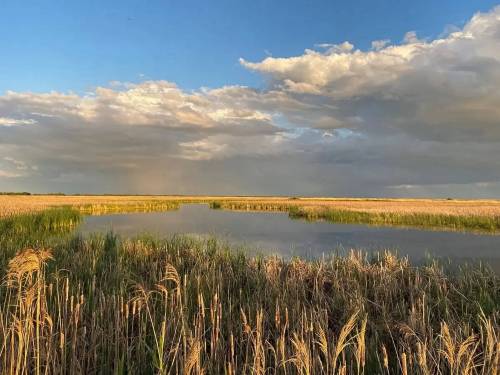
The Seal River Watershed in northern Manitoba is one of the last great intact ecosystems in North America.

Read
Tuesday, May. 5, 2026
No Subscription Required

Solar ranch in Tennessee aims to prove grazing cattle under the panels is a farmland win-win

Tammy Webber And Joshua A. Bickel, The Associated Press 5 minute read Preview
No Subscription Required

Solar ranch in Tennessee aims to prove grazing cattle under the panels is a farmland win-win

Tammy Webber And Joshua A. Bickel, The Associated Press 5 minute read Friday, May. 22, 2026

CHRISTIANA, Tenn. (AP) — From a distance, the small solar farm in central Tennessee looks like others that now dot rural America, with row upon row of black panels absorbing the sun's rays to generate electricity.

But beneath these panels is lush pasture instead of gravel, enjoyed by a small herd of cattle that spends its days munching grass and resting in the shade.

Silicon Ranch, which owns the 40-acre farm in Christiana, outside of Nashville, believes cattle-grazing is the next frontier in so-called agrivoltaics, which mostly has involved growing crops or grazing sheep beneath the panels.

The solar company debuted the project this week and will spend the next year working to demonstrate to farmers that much larger cattle also can thrive at solar sites. If successful, advocates say, that could jump-start new projects to meet the soaring electricity demand driven by rapidly expanding data centers — without contributing climate-warming carbon emissions — and help cattle producers hold onto their land and livelihoods.

Read
Friday, May. 22, 2026
No Subscription Required

Family donates 636 acres of peatlands near Elma to nature conservancy

Tyler Searle 4 minute read Preview
No Subscription Required

Family donates 636 acres of peatlands near Elma to nature conservancy

Tyler Searle 4 minute read Thursday, Apr. 23, 2026

A Manitoba family is doing their part to support the ecosystem by making a deal with the Nature Conservancy of Canada to protect 636 acres of peatlands in perpetuity.

Read
Thursday, Apr. 23, 2026
No Subscription Required

Former minister Catherine McKenna blasts the heads of Canadian oil companies

Stéphane Blais, The Canadian Press 5 minute read Preview
No Subscription Required

Former minister Catherine McKenna blasts the heads of Canadian oil companies

Stéphane Blais, The Canadian Press 5 minute read Monday, May. 11, 2026

MONTRÉAL - Former environment minister Catherine McKenna says the leaders of Canada's oil industry are figures close to American President Donald Trump who are "taking us for fools" and putting both the economy and environment at risk.

Canada's official greenhouse gas inventory was published last week. It showed that in 2024, oil and gas production was the only sector in the country to have increased its greenhouse gas emissions.

"In Canada, we expect, Canadians expect everyone to step up and do their parts. But instead, we have oil and gas, which is largely foreign-owned, largely U.S.-owned, who aren't doing their part. All they're doing is increasing our emissions and demanding subsidies," McKenna said in an interview while at Montreal's climate summit last week.

She adds that oil companies are "demanding that Canadian taxpayers pay the bill for cleaning up the pollution they cause and building pipelines they won’t risk their own money on."

Read
Monday, May. 11, 2026
No Subscription Required

Not consulted on Clear Lake motorboating: Chief

Connor McDowell 5 minute read Preview
No Subscription Required

Not consulted on Clear Lake motorboating: Chief

Connor McDowell 5 minute read Saturday, Apr. 11, 2026

The chief of Keeseekoowenin Ojibway First Nation says he did not consent to the return of motorboats at Clear Lake.

Read
Saturday, Apr. 11, 2026
No Subscription Required

Motorboats to return to Clear Lake this summer

Connor McDowell 6 minute read Preview
No Subscription Required

Motorboats to return to Clear Lake this summer

Connor McDowell 6 minute read Wednesday, Apr. 8, 2026

Motorboats will be allowed to return to Clear Lake this summer, a year after they were banned amid the discovery of invasive species.

Parks Canada officials said Wednesday watercraft inside the Riding Mountain National Park lake would be permitted under a mandatory tagging program and several other conditions.

“We’re pleased, but we also want to see how it will be implemented,” said Trevor Boquist, spokesperson for the Fairness for Clear Lake advocacy group.

“I would say we want to be part of the conversation of how this will be implemented.”

Read
Wednesday, Apr. 8, 2026
No Subscription Required

Feds, city, province join forces with First Nation to build 150 apartments in St. James

Scott Billeck 5 minute read Preview
No Subscription Required

Feds, city, province join forces with First Nation to build 150 apartments in St. James

Scott Billeck 5 minute read Wednesday, Apr. 8, 2026

More than a century after its lake became the source of Winnipeg’s drinking water, Shoal Lake 40 First Nation is leading a major housing development in the city, backed by more than $51 million in government funding.

The federal government announced the combined funding Tuesday to build 150 apartment units at 2675 Portage Ave. in the city’s St. James neighbourhood. The development will include one-, two- and three-bedroom units.

Shoal Lake 40 Chief Herb Greene said the project carries historical significance.

“This development is about three things: history, teamwork, and the future,” Greene said during a sod-turning ceremony Tuesday. He noted for more than 100 years, Winnipeg was in dire need of a reliable source of clean drinking water.

Read
Wednesday, Apr. 8, 2026
No Subscription Required

Energy-hungry Nova Scotia companies nearly doubled their solar power capacity in 2025

Devin Stevens, The Canadian Press 5 minute read Preview
No Subscription Required

Energy-hungry Nova Scotia companies nearly doubled their solar power capacity in 2025

Devin Stevens, The Canadian Press 5 minute read Wednesday, Apr. 29, 2026

HALIFAX - Energy-hungry companies in Nova Scotia are heading toward the light.

New statistics from the province's private power utility show that commercial-scale players — which includes municipalities and First Nations — grew their capacity to generate solar energy by 82 per cent last year.

Energy consultant David Brushett says that’s partly because legislative changes a few years ago have allowed companies to install solar systems 10 times larger than before. The “net-metering” system gives firms a credit on their power bills for the electricity they generate, offsetting their own usage. Even with the new rules, they are not allowed to generate more power than their operations consume.

The program allows solar projects of up to one megawatt for commercial customers. Brushett says that size makes more financial sense. “So that allowed much larger installations,” Brushett said in an interview.

Read
Wednesday, Apr. 29, 2026
No Subscription Required

Invasive species on the march, threaten city’s ash, elm trees

Kevin Rollason 5 minute read Preview
No Subscription Required

Invasive species on the march, threaten city’s ash, elm trees

Kevin Rollason 5 minute read Wednesday, Apr. 1, 2026

Winnipeg’s tree canopy is under siege.

The emerald ash borer has made a resurgence — after nearly a decade of minimal spread — and another invasive insect is bearing down on elm trees, which are already at risk of Dutch elm disease.

Read
Wednesday, Apr. 1, 2026
No Subscription Required

‘Good day to be a polar bear’: Carney unveils nature strategy, new conservation areas

Nick Murray, The Canadian Press 4 minute read Preview
No Subscription Required

‘Good day to be a polar bear’: Carney unveils nature strategy, new conservation areas

Nick Murray, The Canadian Press 4 minute read Tuesday, Apr. 28, 2026

LA PÊCHE - The Liberal government's new $3.8 billion nature protection strategy will put Canada's 2030 nature conservation goals within reach, Prime Minister Mark Carney said Tuesday.

Announcing the new plan at an event in Wakefield, Que., Carney said the federal government will create new national parks, urban parks and marine conservation areas.

Carney said his government is taking an "ambitious" approach to conservation spaces and urban parks. He said the plan will require "significant" federal funding and includes aspirations to spur private-sector investments.

The new conservation areas will include the Wiinipaawk Indigenous protected area and national marine conservation area in Eastern James Bay, and the Seal River watershed national park in Manitoba.

Read
Tuesday, Apr. 28, 2026
No Subscription Required

‘Massive operation’: Canadian driller, shipper enlisted to help tap Greenland oil

Lauren Krugel, The Canadian Press 7 minute read Preview
No Subscription Required

‘Massive operation’: Canadian driller, shipper enlisted to help tap Greenland oil

Lauren Krugel, The Canadian Press 7 minute read Friday, May. 1, 2026

CALGARY -

The promotional video shows a small creek trickling through a mossy patch in an otherwise brown, barren landscape, icebergs looming just offshore.

A petroleum engineer dips a hand into the stream, then takes a sniff.

"It smells like crude oil," he says, grinning at the camera.

Read
Friday, May. 1, 2026
No Subscription Required

‘Neighbours hating each other’: Proposed Saskatchewan wind farm divides community

Jeremy Simes, The Canadian Press 6 minute read Preview
No Subscription Required

‘Neighbours hating each other’: Proposed Saskatchewan wind farm divides community

Jeremy Simes, The Canadian Press 6 minute read Friday, May. 1, 2026

Don Bourassa says a proposed wind farm near his home in southeast Saskatchewan has ruined relationships in his community — to the point where he feels he has been bullied.

A resident of the Rural Municipality of Weyburn, Bourassa said one of his neighbours approached him about buying his property to keep him quiet on Enbridge's Seven Stars Energy Project.

"He wants me out of there, to shut up," Bourassa said in an interview. "That's bullying and I'm not falling for that.

“It’s neighbours hating each other."

Read
Friday, May. 1, 2026
No Subscription Required

Hydro built our past. What’s the future of energy?

4 minute read Thursday, Mar. 19, 2026

Manitoba has long told itself a comforting story about abundant clean electricity. For generations, hydroelectric power flowing through northern rivers has powered homes, farms and industry while giving the province one of the cleanest electricity systems in North America.

It remains a remarkable achievement. But climate change, rising electricity demand and growing affordability pressures are quietly rewriting that story.

Across Canada, provinces are beginning to rethink their electricity futures. Ontario is moving ahead with construction of what is expected to be the first grid-scale small modular reactor in the G7. Saskatchewan is preparing for potential deployment in the early 2030s. Meanwhile, proposals like StarCore’s concept near Pinawa are beginning to push the nuclear conversation into our public debate.

Manitoba itself has not made nuclear part of its near-term energy plan. Manitoba Hydro’s 2025 Integrated Resource Plan suggests the province could require new electricity supply by around 2030 as demand grows and existing capacity tightens.

No Subscription Required

Canada, Manitoba lagging behind promise to meet 2030 target of protecting more land and water

Julia-Simone Rutgers 7 minute read Preview
No Subscription Required

Canada, Manitoba lagging behind promise to meet 2030 target of protecting more land and water

Julia-Simone Rutgers 7 minute read Friday, Mar. 13, 2026

There are just four years left on the clock for Manitoba — and the rest of the country — to meet a promise to conserve 30 per cent of land and water by 2030.

But halfway through the timeline adopted at the United Nations Convention on Biodiversity in 2022, Canada has made little progress, adding less than one percentage point to its protected land tally and three points to its protected waters.

The country needs to double its protected areas to meet its target, known as 30-by-30. But conservation groups, including the Wilderness Committee and the Canadian Parks and Wilderness Society, warn progress could stall even further as federal funding for conservation initiatives is set to run out at the end of the month — and there’s no indication it will be renewed.

“We have a conservation economy that we can build on, that gives local jobs, that helps honour our Indigenous reconciliation commitments,” Sandra Schwartz, national executive director of the Canadian Parks and Wilderness Society, said.

Read
Friday, Mar. 13, 2026
No Subscription Required

Big dreams, cold reality: Buzz builds for Port of Churchill, but risks could outweigh rewards

Julia-Simone Rutgers 17 minute read Preview
No Subscription Required

Big dreams, cold reality: Buzz builds for Port of Churchill, but risks could outweigh rewards

Julia-Simone Rutgers 17 minute read Friday, Feb. 27, 2026

The marine town of Churchill, cherished for its wildlife, landscapes and history, has recently taken on a new sense of national importance. Plans to expand Canada’s lone deepwater Arctic port on the shores of Hudson Bay have gained momentum — and investment — in the last year as the country looks north for solutions to an unprecedented conflict with its southern neighbour.

Premier Wab Kinew has pitched the Port of Churchill as an answer to Canada’s trade concerns, and a means of galvanizing both provincial and national economies.

Prime Minister Mark Carney has designated a plan to upgrade the port facilities as “transformative,” committing millions in federal dollars to the project and touting its merits in meetings with European trade partners.

In late January, Kinew announced the province was in talks with several companies, including at least one major energy company, about investing in port expansion.

Read
Friday, Feb. 27, 2026
No Subscription Required

Data centres and Manitoba: a cautionary tale

Joel Trenaman 5 minute read Preview
No Subscription Required

Data centres and Manitoba: a cautionary tale

Joel Trenaman 5 minute read Friday, Feb. 27, 2026

Alongside the rapidly expanding use of AI in everyday life, there’s a growing awareness that the technology also comes with extreme, big-picture threats to the things we need more: fresh water, affordable clean energy and a healthy information ecosystem.

Read
Friday, Feb. 27, 2026
No Subscription Required

Tired of waiting, First Nation buys $8M worth of generators

Chris Kitching 5 minute read Preview
No Subscription Required

Tired of waiting, First Nation buys $8M worth of generators

Chris Kitching 5 minute read Friday, Feb. 13, 2026

A northern First Nation that was evacuated almost all summer due to a wildfire and power outage has bought an $8-million emergency backup generator system, the chief announced Friday.

Mathias Colomb First Nation Chief Gordie Bear said he wants the federal and provincial governments to reimburse the community, which had asked the two governments to purchase and provide diesel-powered generators before power was restored in September.

“I don’t know why they didn’t come through with the request that we made when we were out in the boondocks,” Bear told the Free Press. “I just hope they all get together — have a tea party — and cost-share my investment.”

He accused the governments of ignoring the First Nation’s concerns. Bear said four generators were purchased using own-sourced revenue.

Read
Friday, Feb. 13, 2026
No Subscription Required

Province to power up smart thermostat program, rebates

Gabrielle Piché 5 minute read Preview
No Subscription Required

Province to power up smart thermostat program, rebates

Gabrielle Piché 5 minute read Thursday, Feb. 12, 2026

Manitobans may get cash for turning down the thermostat during peak energy-use periods next winter.

Read
Thursday, Feb. 12, 2026
No Subscription Required

What to know about EPA decision to revoke a scientific finding that helped fight climate change

The Associated Press 3 minute read Preview
No Subscription Required

What to know about EPA decision to revoke a scientific finding that helped fight climate change

The Associated Press 3 minute read Friday, Mar. 6, 2026

The Environmental Protection Agency on Thursday revoked its own 2009 “endangerment finding,” a scientific conclusion that for 16 years has been the central basis for regulating planet-warming emissions from power plants, vehicles and other sources.

The finding itself is straightforward: Carbon dioxide and other greenhouse gases — caused by burning fossil fuels such as coal, oil and gas — endanger public health and welfare.

It was adopted after the U.S. Supreme Court ruled in 2007 that greenhouse gases are air pollutants that can be regulated under the Clean Air Act.

The Trump administration says the finding hurts industry and the economy and that the Obama and Biden administrations twisted science to determine that greenhouse gases are a public health risk.

Read
Friday, Mar. 6, 2026
No Subscription Required

Energy sector’s interest in Churchill heating up: Kinew

Julia-Simone Rutgers 6 minute read Preview
No Subscription Required

Energy sector’s interest in Churchill heating up: Kinew

Julia-Simone Rutgers 6 minute read Wednesday, Feb. 11, 2026

Several companies, including at least one Canadian energy giant, are “kicking the tires” on a long-touted vision to export oil, gas, minerals and agricultural products through Churchill, bringing the dream of a trade corridor to the Hudson Bay coast closer to reality, Premier Wab Kinew says.

Read
Wednesday, Feb. 11, 2026
No Subscription Required

Pause at N.W.T. diamond mine amid weak market ‘serious news,’ industry minister says

Lauren Krugel, The Canadian Press 4 minute read Preview
No Subscription Required

Pause at N.W.T. diamond mine amid weak market ‘serious news,’ industry minister says

Lauren Krugel, The Canadian Press 4 minute read Wednesday, Mar. 4, 2026

CALGARY - An expansion project has been put on hold at a diamond mine in the Far North, a move the Northwest Territories government says underscores the need to reduce its economic reliance on that industry.

Mountain Province Diamonds Inc. says it and joint-venture partner De Beers Canada Inc. have decided to pause the Tuzo Phase 3 project at the Gahcho Kué mine some 300 kilometres northeast of Yellowknife. Mountain Province owns 49 per cent of the mine and De Beers owns 51 per cent.

"This decision follows a careful assessment of the project's economics considering the prevailing market environment," Mountain Province said in a news release late Monday.

"While the Tuzo Phase 3 project has demonstrated strong potential, current market conditions have prompted the partners to take a measured approach to its development."

Read
Wednesday, Mar. 4, 2026
No Subscription Required

Bracing for a future global water shortage

Editorial 4 minute read Preview
No Subscription Required

Bracing for a future global water shortage

Editorial 4 minute read Thursday, Feb. 5, 2026

Declaring bankruptcy is by all accounts a painful, traumatic and perhaps even humiliating process.

Read
Thursday, Feb. 5, 2026
No Subscription Required

First Nation says Hydro misuse of river diversion destroying sturgeon population

Chris Kitching 5 minute read Preview
No Subscription Required

First Nation says Hydro misuse of river diversion destroying sturgeon population

Chris Kitching 5 minute read Thursday, Jan. 22, 2026

A northern First Nation is calling on Manitoba Hydro to alter its use of the Churchill River diversion to protect a lake sturgeon population allegedly decimated by hydroelectric operations.

Tataskweyak Cree Nation Chief Doreen Spence said the culturally significant species is facing extinction on the river system without immediate intervention, 50 years after Manitoba built the diversion to send water to large power generating stations.

“The diversion has artificially altered the flow of the water… so much that the river is barely able to sustain life as it once did,” Spence told reporters in Winnipeg Thursday.

“Manitoba Hydro must operate the diversion in sync with the natural flow regime of the river for the sturgeon to survive.”

Read
Thursday, Jan. 22, 2026