

Bipole may face delay
Boom in U.S. gas hurts value of province's electricity: PUB
Advertisement
Read this article for free:
or
Already have an account? Log in here »
To continue reading, please subscribe:
Digital Subscription
One year of digital access for only $1.44 a week*
- Enjoy unlimited reading on winnipegfreepress.com
- Read the E-Edition, our digital replica newspaper
- Access News Break, our award-winning app
- Play interactive puzzles
*Billed as $5.77 plus GST every four weeks. After 52 weeks, price increases to the regular rate of $19.95 plus GST every four weeks. Offer available to new and qualified returning subscribers only. Cancel any time.
To continue reading, please subscribe:
Add Free Press access to your Brandon Sun subscription for only an additional
$1 for the first 4 weeks*
- Enjoy unlimited reading on winnipegfreepress.com
- Read the E-Edition, our digital replica newspaper
- Access News Break, our award-winning app
- Play interactive puzzles
*Your next Brandon Sun subscription payment will increase by $1.00 and you will be charged $17.95 plus GST for four weeks. After four weeks, your payment will increase to $24.95 plus GST every four weeks.
Read unlimited articles for free today:
or
Already have an account? Log in here »
Hey there, time traveller!
This article was published 21/01/2012 (5392 days ago), so information in it may no longer be current.
Manitoba’s Public Utilities Board has sounded the alarm bell that a booming supply of cheap natural gas could postpone the Selinger government’s quest to build the Bipole III transmission line and the Keeyask and Conawapa generating stations.
In its decision on Manitoba Hydro’s most recent rate application, the PUB said with so much cheap gas available because of new drilling methods, the export market in the United States for Manitoba-made electricity isn’t what it was just three years ago.
Board chairman Graham Lane said that alone could defer the construction of Bipole III for a decade.
“There are identified alternatives that should be thoroughly vetted before spending more funds and committing Manitoba consumers to meet any shortage of revenue that may arise with respect to meeting the projected costs of Bipole III,” Lane said.
The PUB said it may be cheaper to build a new natural gas-fired combined-cycle combustion turbine (CCCT) plant in southern Manitoba — similar to the one in Selkirk — to meet the province’s power demands rather than spend more than $20 billion on new dams and transmission lines.
“With capital costs and financing costs in the tens of billions of dollars, the stakes are high for the domestic ratepayer who is at risk to bear the costs,” the PUB said.
The board also said Manitoba Hydro may be facing close to its worst-case export market scenario because of rising costs to build new transmission lines and new dams, costs that are 50 per cent higher than initially forecast, and because of a moribund U.S. economy.
“The obvious risk faced by Manitoba Hydro is that the current status quo prevails for the foreseeable future,” the board said.
How much these new supplies of natural gas play on the North American energy market is anyone’s guess, but right now it’s cut electricity prices for the U.S. power industry by 50 per cent since 2008 and reduced investment in costlier sources of energy, like wind farms and the expansion of two nuclear plants.
It’s also behind the PUB’s decision on Friday to approve a 23 per cent drop in primary gas rates for Centra Gas, effective Feb. 1. On average, annual bills for home customers will drop by 9.2 per cent or $79 a year.
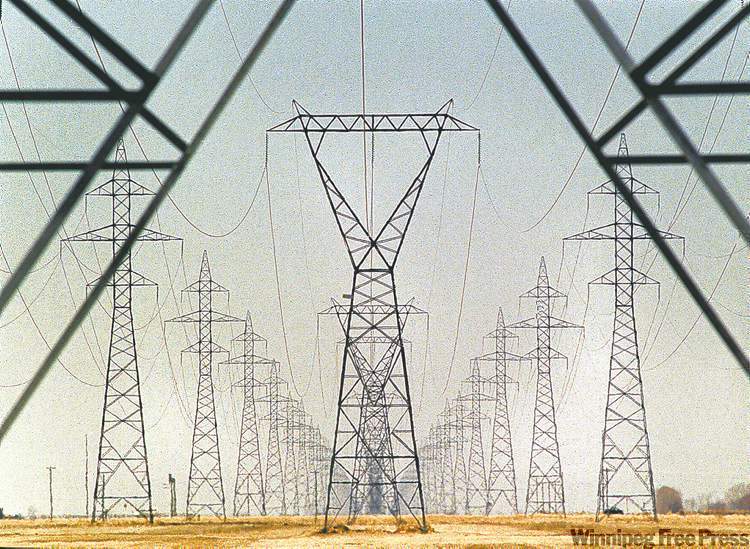
The construction of the $3.28-billion Bipole III line down the west side of the province is to be studied by the province’s Clean Environment Commission (CEC) over the coming months. Hydro wants to start building it in late 2012 with it expected to go into service in 2017, but those dates will likely be pushed back because of the hearing process.
The new bipole line is needed to move more power from northern dams south to improve reliability and to ship to export markets in the northern United States. Hydro has already signed deals with utilities in Wisconsin and Minnesota to supply power over the next 20 years, potentially earning Hydro $21 billion in revenue.
Premier Greg Selinger has already announced the construction of the $5.6-billion Keeyask generator. Construction is to start in 2014 after all the environmental and regulatory approvals are in place. The 695-megawatt dam is to be in service in 2019.
Energy and Mines Minister Dave Chomiak, responsible for Hydro, said this week it would be foolish to delay hydroelectric development, as it is “liquid gold” for the province.

Manitoba Hydro spokesman Glenn Schneider said the Crown utility is well aware of developments on the shale-gas market.
“Nobody has a crystal ball that says this is going to be the same two years from now or five years from now or 10 years from now,” he said.
He also said the utility expects a full review of its Keeyask development plan outside of the PUB, much like the review of the $1.3-billion Wuskwatim dam project near Thompson, which is to open this year. That panel is made up of CEC and PUB members.
He said working in Hydro’s favour is that many older coal plants in the U.S. are slated to close over the next five years and will most likely be replaced by natural gas-fired plants, increasing demand and raising gas prices.
bruce.owen@freepress.mb.ca
In his words
"If the construction of a natural gas generation plant of sufficient size can be found to provide a higher net present value than Manitoba Hydro's current preferred development plan (Bipole III, Keeyask and Conawapa), then ratepayers should be made aware of this opportunity."
"If an economic case can be made for the deferral of Bipole III, Manitoba ratepayers would be the beneficiaries of lower electricity rates, as 100 per cent of Bipole III's costs (not only the capital costs, but also the finance and operating costs associated with it) will, under Manitoba Hydro's cost allocation, be borne by Manitoba Hydro's domestic consumers."
-- Public Utilities Board chairman Graham Lane