

Pain and suffering: corporal punishment
Schools finally got it, but expert wonders why parents haven’t got the message corporal punishment is bad for children

Advertisement
Read this article for free:
or
Already have an account? Log in here »
To continue reading, please subscribe:
Monthly Digital Subscription
$1 per week for 24 weeks*
- Enjoy unlimited reading on winnipegfreepress.com
- Read the E-Edition, our digital replica newspaper
- Access News Break, our award-winning app
- Play interactive puzzles
*Billed as $4.00 plus GST every four weeks. After 24 weeks, price increases to the regular rate of $19.95 plus GST every four weeks. Offer available to new and qualified returning subscribers only. Cancel any time.
Monthly Digital Subscription
$4.99/week*
- Enjoy unlimited reading on winnipegfreepress.com
- Read the E-Edition, our digital replica newspaper
- Access News Break, our award-winning app
- Play interactive puzzles
*Billed as $19.95 plus GST every four weeks. Cancel any time.
To continue reading, please subscribe:
Add Free Press access to your Brandon Sun subscription for only an additional
$1 for the first 4 weeks*
*Your next subscription payment will increase by $1.00 and you will be charged $16.99 plus GST for four weeks. After four weeks, your payment will increase to $23.99 plus GST every four weeks.
Read unlimited articles for free today:
or
Already have an account? Log in here »
Hey there, time traveller!
This article was published 12/01/2013 (4830 days ago), so information in it may no longer be current.
Why in the world would you ever think hitting your kid was a good thing?
Canada no longer allows teachers and principals to beat students with leather straps or wooden canes, but unlike dozens of other countries, we still allow parents to hit their children.
And when those parents hit their kids, those kids grow up thinking that it was loving discipline, and not physical or even criminal abuse.
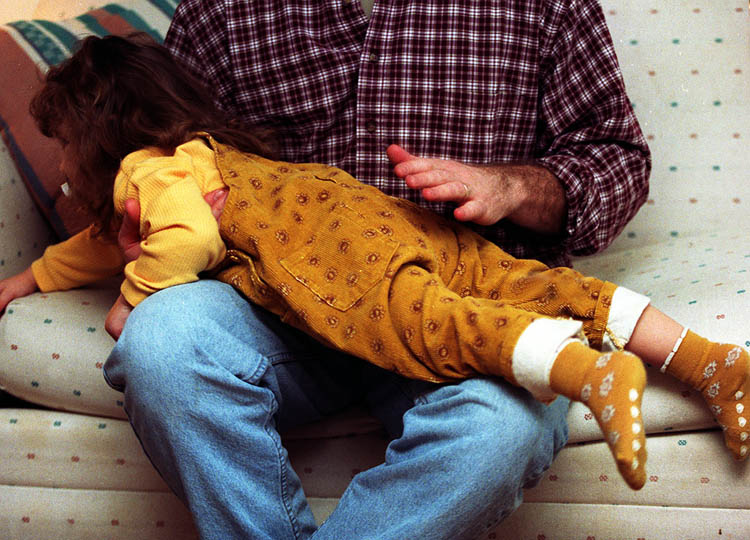
It’s a perception a University of Manitoba family social sciences professor has been fighting for decades.
“There’s never been a study that shows a positive outcome,” said Prof. Joan Durrant, an internationally recognized expert in the negative results of corporal punishment for children.
Research shows children who receive corporal punishment become withdrawn, and their cognitive development is slowed — there are studies emerging showing that there are direct detrimental effects on a child’s ability to be educated, Durrant said.
“It’s really not controversial in research any more,” she said.
Too many people trivialize abuse as spanking, as though it was a harmless exercise that leaves no physical or emotional mark.
Every time a supposedly groundbreaking study comes out condemning spanking, Durrant knows she’ll be called upon by international media as an expert to comment on an amazing discovery, something that no one has apparently ever known before.
“It’s amazing — it’s been going on for 20 years,” she said. “Every time, it’s like the first time — nobody has heard it before. We can’t seem to get that message out.
“They call me the spanking lady — people trivialize it, make jokes. Why is it so frightening to us?” asked Durrant.
Durrant said without any trace of irony or being disingenuous that no academic has ever produced a research paper proving that hitting a child is beneficial for that child.
“People who are physically abused have a tendency to lower IQ and slower cognitive development,” she said. “There is evidence that physical punishment damages the brain.
Children who get slapped for failing or making a mistake will avoid trying, she said.
“The pathway is, try equals pain. They explore less, which is critical to cognitive development,” said Durrant. “They also start to avoid their parents; you don’t know when you’re going to get slapped.”
Durrant said numerous studies show physically abused children are more aggressive, those not abused are less aggressive.
A U.S. study showed the main factor to differentiate violent and non-violent people was physical punishment.
Yet people believe leniency leads to trouble, Durrant said. “I call that the hitting-deficit hypothesis; they’re in trouble because they haven’t been hit enough.
“It’s never been shown hitting children decreases their aggressive and anti-social behaviour. They’re losing the opportunity to learn constructive conflict resolution.”
It took a long time for Canada to decide being physically punished by a teacher or principal was not a good idea, Durrant pointed out.
“You never wanted to go near the principal, because he represented fear and pain,” she said.
In 2004, the Supreme Court of Canada ruled that teachers can’t use corporal punishment.
But, she said, Manitoba and Alberta haven’t prohibited it in the Public Schools Act: “It was a surprise to me.”
The Administrative Handbook for Schools has a section on corporal punishment, and makes reference to the 2004 Supreme Court decision. “It concludes by stating that ‘teachers who use corporal punishment on students will not be protected under s. 43. Teachers may reasonably apply force to remove a child from a classroom or secure compliance with instructions, but not merely as corporal punishment’,” said a provincial official.
Durrant said adults carry their punishment with them their whole lives. One study cited an adult in Asia, who said he harboured fantasies of confronting the teacher who had strapped him as a child: “Kids can carry revenge fantasies their whole lives — they live with that fear,” she said.
The U.S. still extensively allows physical punishment in school, Durrant said.
Texas allows paddling by a same-sex teacher; the debate there is over the same sex doing the paddling, not the paddling. “In more than 20 states, it’s still very much alive, especially in the southern states,” she said.

So how did a clinical psychologist become a leading expert on the negative impact of the physical punishment of children?
Durrant’s PhD looked at how parents perceived their children’s problems. “Two parents with the same child could respond so differently because of the way they think.”
That’s when Durrant read that Sweden had abolished corporal punishment, but there was no context for that decision in what she’d read.
“For some reason, it turned on the neon light,” recalled Durrant.
She started asking herself, “How differently they must think about raising children. How can a whole society think so differently about children?
“I applied for some funding, and went to Sweden to find out.”
Canadian law allows parents to do what’s reasonable in the circumstance, Durrant said.
“Swedish law is written from the point of view of children. They may not be subject to corporal punishment or any other form of humiliation.”
Sweden put the ban in civil law, not criminal: “It carries no criminal penalty — people are not jailed for slapping their kids in Sweden. The idea was never punitive.
“You don’t need harsh punishment to change a child’s behaviour — wouldn’t it be hypocritical?” to treat parents harshly, she asked.
Sweden emphasizes prevention, and figuring out means of discipline that don’t involve parents laying a finger on their kids.
That’s what Durrant’s book Positive Discipline does — it’s in 20 countries and 16 languages.
In the simplest terms for what is a long step-by-step program to understanding, she explained, look to build long-term character development, talk instead of slapping, give children the information they need to understand. “It’s about facilitating healthy development.”
The book is royalty-free, available free on the Internet, and sold at cost by Family Resource Practitioners.
Since Sweden banned corporal punishment of children in the 1980s, said Durrant, “Now there are 32 countries with the ban.”
Durrant emphasized that physical punishment of children was never part of aboriginal culture.

Only New Zealand among countries with a British heritage has joined the ban. “Where you find a British colony, you find physical punishment.”
And Canada was a British colony, and Canada has not joined the ban.
nick.martin@freepress.mb.ca
Nick Martin
Former Free Press reporter Nick Martin, who wrote the monthly suspense column in the books section and was prolific in his standalone reviews of mystery/thriller novels, died Oct. 15 at age 77 while on holiday in Edinburgh, Scotland.
Our newsroom depends on a growing audience of readers to power our journalism. If you are not a paid reader, please consider becoming a subscriber.
Our newsroom depends on its audience of readers to power our journalism. Thank you for your support.
Nick Martin
Former Free Press reporter Nick Martin, who wrote the monthly suspense column in the books section and was prolific in his standalone reviews of mystery/thriller novels, died Oct. 15 at age 77 while on holiday in Edinburgh, Scotland.
Our newsroom depends on a growing audience of readers to power our journalism. If you are not a paid reader, please consider becoming a subscriber.
Our newsroom depends on its audience of readers to power our journalism. Thank you for your support.
Advertisement Advertise With Us
Advertisement Advertise With Us