

A short life, a long legacy
A year after Tina Fontaine's body was pulled from the Red River, her tragic story continues to impact the province
Advertisement
Read this article for free:
or
Already have an account? Log in here »
To continue reading, please subscribe:
Digital Subscription
One year of digital access for only $1.44 a week*
- Enjoy unlimited reading on winnipegfreepress.com
- Read the E-Edition, our digital replica newspaper
- Access News Break, our award-winning app
- Play interactive puzzles
*Billed as $5.77 plus GST every four weeks. After 52 weeks, price increases to the regular rate of $19.95 plus GST every four weeks. Offer available to new and qualified returning subscribers only. Cancel any time.
To continue reading, please subscribe:
Add Free Press access to your Brandon Sun subscription for only an additional
$1 for the first 4 weeks*
- Enjoy unlimited reading on winnipegfreepress.com
- Read the E-Edition, our digital replica newspaper
- Access News Break, our award-winning app
- Play interactive puzzles
*Your next Brandon Sun subscription payment will increase by $1.00 and you will be charged $17.95 plus GST for four weeks. After four weeks, your payment will increase to $24.95 plus GST every four weeks.
Read unlimited articles for free today:
or
Already have an account? Log in here »
Hey there, time traveller!
This article was published 15/08/2015 (3974 days ago), so information in it may no longer be current.

Her slaying shone a spotlight on Manitoba Child and Family Services and galvanized support for a national inquiry into murdered and missing indigenous women.
It contributed to a growing negative image of Winnipeg as a community beset by racism, and it prompted a renewed effort to end the controversial practice of housing state-apprehended children in hotels.
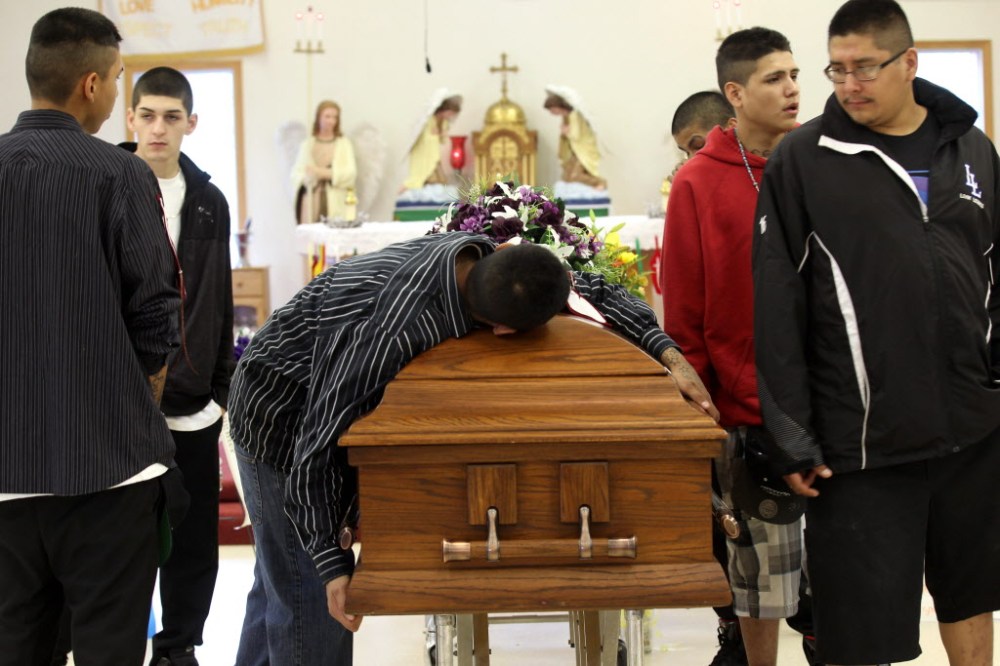
On Monday, it will be a year since 15-year-old Tina Fontaine’s plastic-wrapped body was retrieved from the Red River, sparking deep soul-searching in the halls of power on Broadway, within CFS agencies and among everyday Manitobans. The slaying remains unsolved.
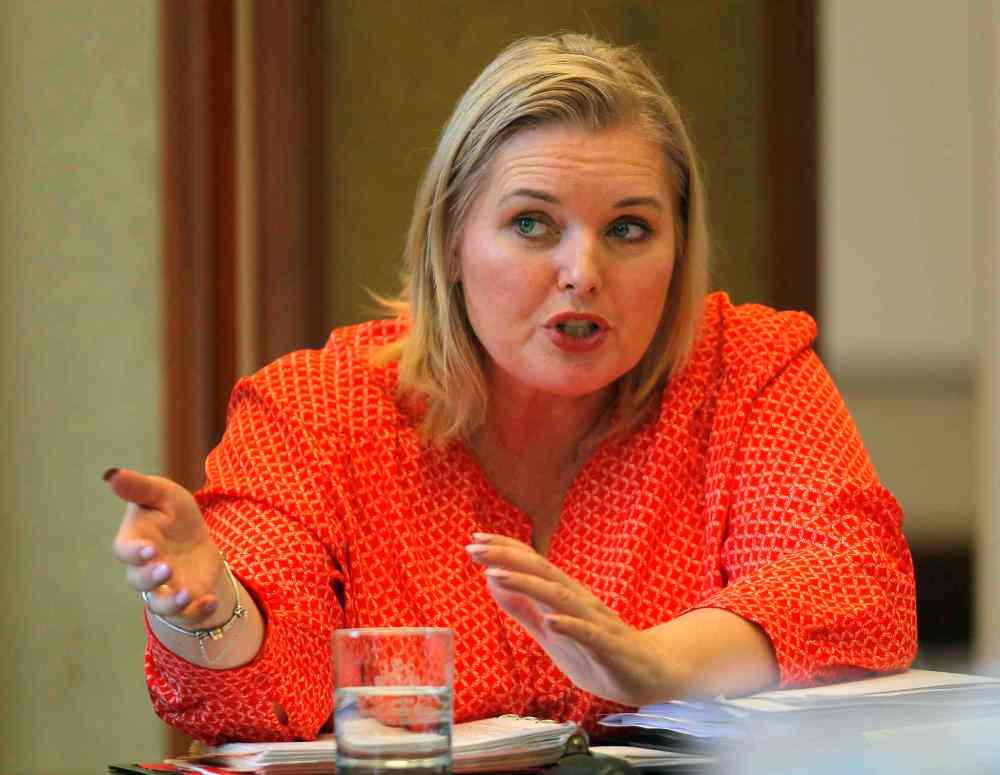
“Tina is a household name now, and it’s unfortunate that it took her death to be that household name,” Family Services Minister Kerri Irvin-Ross said this week.
Irvin-Ross’s department, still grappling with the fallout from the Phoenix Sinclair inquiry, was once again under intense public scrutiny in the aftermath of the youngster’s death.
It soon became known that in the days before she disappeared, Tina had been placed by a CFS agency into a downtown hotel, had contact with police and received medical care.
The emergency placement of CFS wards in hotels, long criticized by the Office of the Children’s Advocate, became a cause célèbre once again, aggravating deep tensions between the province and First Nations leaders.
The Free Press and other media outlets learned the people chaperoning CFS kids in hotels were poorly paid and poorly trained employees of private firms who answered to their company supervisor — not to CFS. The public also learned hotel use by CFS agencies, once thought to be somewhat under control, had soared as the system had come under increasing strain from an ever-increasing number of child apprehensions. Supports for families with at-risk kids were also found to be lacking.
So what has happened in the past year? What is the legacy of the enormous public response to Tina’s death, which included a march that drew 2,000 people from all walks of life to The Forks just two days after her body was recovered?
‘We could have done a much better job’
On Nov. 4, 2013, months before Tina Fontaine’s name registered with most Winnipeggers, the RCMP issued a news release asking for the public’s help in locating the then-missing 14-year-old.
Tina had last been seen at her home in Powerview, police said. She was considered an at-risk teen with a history of visiting Winnipeg.
The next time she made the news was mere days before her body was recovered.
On Aug. 13, 2014, the Winnipeg police issued another bulletin, saying they were concerned for the well-being of a 15-year-old.
Between those two police alerts, there were chances for the child-welfare system to give her the help she needed, but, as the cliché goes, Tina fell through the cracks.
“If you ask me today, I believe that we could have done a much better job for Tina Fontaine,” Irvin-Ross said. “There are things that we could have done differently to support her.”

Among the many issues that emerged from Tina’s death and its aftermath was child-welfare agencies had been again relying too much on hotels, where dozens of CFS wards in Winnipeg were being housed on any given night. Another was the need for government to provide more help to families to solve problems before situations reach a crisis and a child is apprehended.
A year after Tina’s death, the province has made a fair bit of progress dealing with the first problem, and not nearly as much with the far more complex second one.
Last November, the government announced an overhaul of its emergency-placement program to deal more effectively with children in crisis.
The plans included the creation of 71 foster-home spaces and the hiring of 210 child-care workers over two years. Much of that has already been accomplished, with 140 new staff in place as of this week. About 120 new emergency beds have been created.
Last fall, the government also said it would reduce its reliance on for-profit companies to supervise kids and renew efforts to curb the use of hotels.
Yet it took another terrible incident — the severe beating of another teenage girl housed by CFS temporarily in a downtown inn — to finally get some real action.
The April 1 attack occurred near Cityplace. The girl had been staying at the same hotel Tina was placed in. She was allegedly beaten by a boy, also a CFS ward, who had been staying in the same hotel.
Irvin-Ross immediately announced the use of hotels as temporary placements for kids would end June 1. She would later extend that deadline for CFS agencies dealing with kids outside of Winnipeg to Dec. 1.
Since May 11, no CFS kids have been placed in a city hotel, the minister said Thursday. Also as of this week, none was housed in rural Manitoba either, she added.
Sandie Stoker, executive director of the All Nations Co-ordinated Response Network (ANCR), which provides intake and around-the-clock emergency CFS response services in Winnipeg, said there is no truth to persistent rumours apprehended kids are occasionally having to stay overnight at her agency’s offices due to the ban on hotel use.
Stoker said while there were early concerns within the child-welfare system it would be unable to cope without hotels, those fears were quickly dashed as the province provided agencies with far more resources.
“We’ve had an influx of placements, actually. It’s been better than I’ve ever seen it since being at ANCR (since 2005),” she said.
Each day at 4 p.m., ANCR receives an updated list of foster homes and other facilities that are available for kids on an emergency basis. Since May, Stoker said, there have been a minimum of 30 beds on that list and sometimes more than 50.
CFS numbers rising — and it’s not known when it will slow down
The number of children in the care of Child and Family Services keeps rising. On March 31, 2014, a few months before Tina’s death, the tally stood at 10,293. By the end of April this year, it had soared to 10,750, according to the province. (The numbers don’t include some 600 adults, former CFS wards, who are continuing to receive services to help them get on their feet.)
Irvin-Ross said she cannot estimate when that number will start to go down, but there seems to be a consensus that prevention programs — including supports to families to keep them together — are key.
In the months before Tina had been placed in foster care, her aunt, who had been looking after her, had tried in vain to get counselling for the girl from child-welfare agencies and victim services.
Today, the government is placing an increased emphasis on providing family supports. Some outreach programs have been beefed up and pilot projects have sprung up. But much more is needed, people who work within the system say.
Ian Wishart, the Progressive Conservative family services critic, said funding for prevention programs is inadequate. “We haven’t seen the proactive programs that we think are necessary to actually have an impact on the numbers of kids that are in CFS.” he said.
As others have also pointed out, poverty is a major factor in the numbers of kids in care, Wishart said. “Until we see the number of families and children in poverty start to drop, we’re going to have a problem,” he said.
Clashing philosophies
If Tina Fontaine’s death prompted yet another re-examination of frontline child-welfare services, it also highlighted a deepening rift between the province and First Nations leaders.
It’s a rift that’s been long in the making, exacerbated by what seems like child after child who dies in care — Phoenix Sinclair, Gage Guimond, Roanna Fontaine, Rephanniah Redhead and many others. It’s a rift that’s grown since the province essentially took back control of the aboriginal child-welfare system, undoing much of the high-level work of devolution. And it’s a rift characterized by profound differences in philosophy.
Where once First Nations leaders, including the grand chiefs of provincial organizations, debated whether devolution was working and how to tweak it, now the debate appears to centre around whether the system can be fixed at all, or must be scrapped.
Assembly of Manitoba Chiefs Grand Chief Derek Nepinak, arguably the most militant critic of the current regime, has repeatedly called it an extension of the residential school system, a continuation of genocidal policies. In a policy paper released last summer, the AMC called for the “immediate end to the CFS system as it currently functions.”
And it doesn’t help that indigenous control over child welfare has eroded. No longer do First Nations have direct governance of the two key oversight bodies than manage the many front-line agencies.
The Southern Authority is still under provincial administration almost three years after the Selinger government dissolved its board and took control. The move followed a power struggle between the Southern Authority and the Assembly of Manitoba Chiefs over the issue of whether band chiefs could serve as board members. The province and the Southern Authority argued that risked political interference. The chiefs argued it was their prerogative, their responsibilty, to have direct oversight of agencies.

A new board for the Southern Authority has been chosen for months, with the approval of the Southern Chiefs Organization, but it hasn’t yet been formally put in charge yet. It’s not clear when it will be.
Then, last fall, a few months after Fontaine’s body was found, the province took over control of the Northern Authority, a move many in the child-welfare system believed was long overdue. The authority, widely seen as less effective than its southern counterpart, was accused of failing to adhere to provincial standards, failing to make good on recommendations and poor oversight. Its First Nations board was dissolved and a lawyer appointed to take over.
As First Nations control over the system dissolved, the power of the province’s child-protection branch has grown, leaving oversight and control of the system even more firmly in the hands of bureaucrats on Broadway. Meanwhile, the number of First Nations children in care continues to grow, not shrink. Culturally appropriate services such as foster homes and family healing programs are spotty. Rules are imposed from Broadway. And First Nations leaders grow increasingly frustrated with a system they see as profoundly hurtful to families and undermining their sovereign right to care for their children.
“First Nations are looking at it and shaking their heads,” said longtime aboriginal child-welfare lawyer Lore Mirwaldt in a recent interview. “The leadership is walking away from it because it’s not their system.”
Still no answers
To date, Tina’s killer or killers have yet to be caught. And information about how Child and Family Services handled her file in the days and weeks before her death may never be known.
So far, Irvin-Ross said, she has not ordered a comprehensive review of Tina’s death, in part, because of the ongoing police investigation.
An internal review of Tina’s file would have been completed by the agency responsible for her care, but the minister said she has not seen the results. The minister will receive a report by the Office of the Children’s Advocate on the case when it is completed.
Under existing law, there is nothing compelling the release of the advocate’s report to the public.
— with files from Mary Agnes Welch


Advertisement Advertise With Us
Advertisement Advertise With Us