Training grounds
American bird-dog trainers have been making the trek north to Manitoba for more than 100 years
Advertisement
Read this article for free:
or
Already have an account? Log in here »
To continue reading, please subscribe:
Digital Subscription
One year of digital access for only $75*
- Enjoy unlimited reading on winnipegfreepress.com
- Read the E-Edition, our digital replica newspaper
- Access News Break, our award-winning app
- Play interactive puzzles
*Billed as $5.77 plus GST every four weeks. After 52 weeks, price increases to the regular rate of $19.95 plus GST every four weeks. Offer available to new and qualified returning subscribers only. Cancel any time.
Monthly Digital Subscription
$4.99/week*
- Enjoy unlimited reading on winnipegfreepress.com
- Read the E-Edition, our digital replica newspaper
- Access News Break, our award-winning app
- Play interactive puzzles
*Billed as $19.95 plus GST every four weeks. Cancel any time.
To continue reading, please subscribe:
Add Free Press access to your Brandon Sun subscription for only an additional
$1 for the first 4 weeks*
- Enjoy unlimited reading on winnipegfreepress.com
- Read the E-Edition, our digital replica newspaper
- Access News Break, our award-winning app
- Play interactive puzzles
*Your next Brandon Sun subscription payment will increase by $1.00 and you will be charged $17.95 plus GST for four weeks. After four weeks, your payment will increase to $24.95 plus GST every four weeks.
Read unlimited articles for free today:
or
Already have an account? Log in here »
Hey there, time traveller!
This article was published 19/09/2015 (3897 days ago), so information in it may no longer be current.
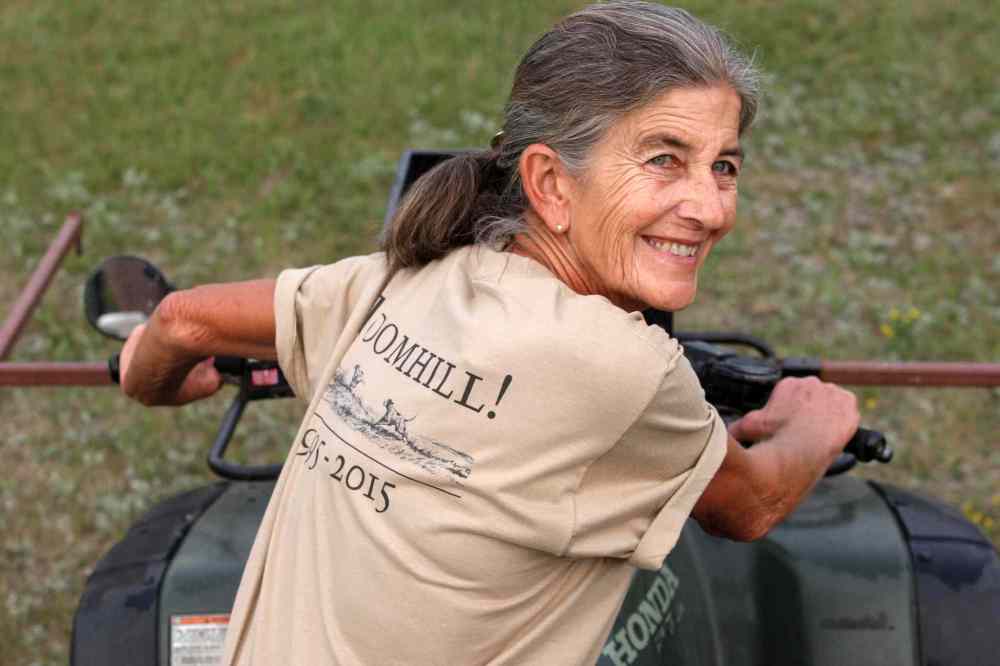
BROOMHILL, Man. — Mazie Davis calls me “honey” in the first minutes of my visit.
She says “ah” for I, and “ha” for hi, and “ba” for bye, in her lazily melodic southern accent and glides out her vowels like a singer stretching a word over an entire musical bar.
Her accent is as genuine as they come. Mazie grew up near Montgomery, Ala., when Rosa Parks’s refusal to sit at the back of a city bus in 1955 triggered race riots and gave life to the civil rights movement.
Husband Colvin’s Alabama accent is even thicker. You practically need subtitles. He says “dowg” for dog, and often gives those elastic vowels an extra syllable, like when he says “schooo-el” for school.
Even though Colvin and Maize are from Alabama, their roots in our province run deep. They are among the last of the bird-dog trainers from the American Deep South who have been coming up to Manitoba for almost 130 years.
There were once as many as 15 bird-dog schools in Manitoba, most of them run by southerners like the Davises. Field trials for English pointers and setters have been held in Manitoba since 1886. Dogs and trainers would come up by railway, then travel by horse and wagon to their camps. The camps ran from July through September.
Mega-rich American families, such as the Livingstones (long rumoured to be one of five wealthy families that pulled out of the stock market and caused the 1929 crash), the Duponts (made their fortune in manufacturing gunpowder), and the Rockefellers (railroads), sent their dogs here and to training schools in Saskatchewan, as did other wealthy families, including the Maytags (appliances), and Singers (sewing machines).
Hunting with pointer dogs was considered a gentleman’s sport — make that a rich man’s sport — with hunters on horseback following their bird dogs. It’s a bit of a throwback to the English fox hunts. But hobbyists also sent their dogs here. The bird dogs, mainly short-haired English pointers and some setters, are trained to assist hunters, but they also compete in field trials, which is a sport itself.
However, the sport’s rich link to Manitoba changed in 1990. The province’s grouse population declined, and some people started blaming the American bird-dog trainers. People claimed the pointer-dog schools were stressing out local game birds, possibly contributing to their declining numbers.
There is no shooting at the dog schools. The training is to get the dogs to just point, but the birds do get flushed, especially before the dogs master the technique. Colvin maintains being flushed up by the “dowgs” is little more than exercise for the game birds.
But then-natural resources minister Harry Enns, acting on complaints in his Interlake riding where some bird-dog training schools were based, introduced measures that shut them down. About 10 training schools closed, and that was supposed to include the Davises.
It was an easy political kill. Virtually all of the trainers were Americans who were just here for the summer months.
However, at the last minute, Jim Downey, who was the MLA for the area that surrounded Broomhill and who was also the deputy premier to then-premier Gary Filmon, held a public meeting and invited Enns. Local people came out to show their support for their American friends. One pickup truck after another pulled up, and even a tractor or two, and formed a line of vehicles too long to count. Just before the meeting started, one of the locals pulled Colvin and Mazie aside. “They told us don’t say nothing. Let us take care of it,” Colvin recalled.
The outcome was the Davises could stay, but their training program would be grandfathered, meaning it closes when they retire unless family carries it on, which isn’t in the cards.
“Our neighbours saved us,” said Colvin, now 76.
That’s how Broomhill, a ghost town for the past 50 years, has continued its reputation as one of the finest bird-dog training centres in North America.
In addition to the Davises, the other bird-dog trainer allowed to stay in Manitoba is Robin Gates, operating just down the road. Robin’s late father, Cap’n John, is a legend in bird dog training, and started here in 1932. Robin took over from him, and his dog, Bo, has won the Super Bowl of bird dog competitions, called the Grand Junction Tennessee, the last two years running, the first setter to ever win. Colvin and Mazie also won the grand championship with an English pointer named Quicksilver Pink back in the 1990s.
* * *
Where is Broomhill? Better yet, what is Broomhill? Most people in Manitoba have never heard of it.
Broomhill is a speck on the map just north of Melita, deep in Manitoba’s southwestern corner. It was founded in 1888 and named after a community in Scotland.
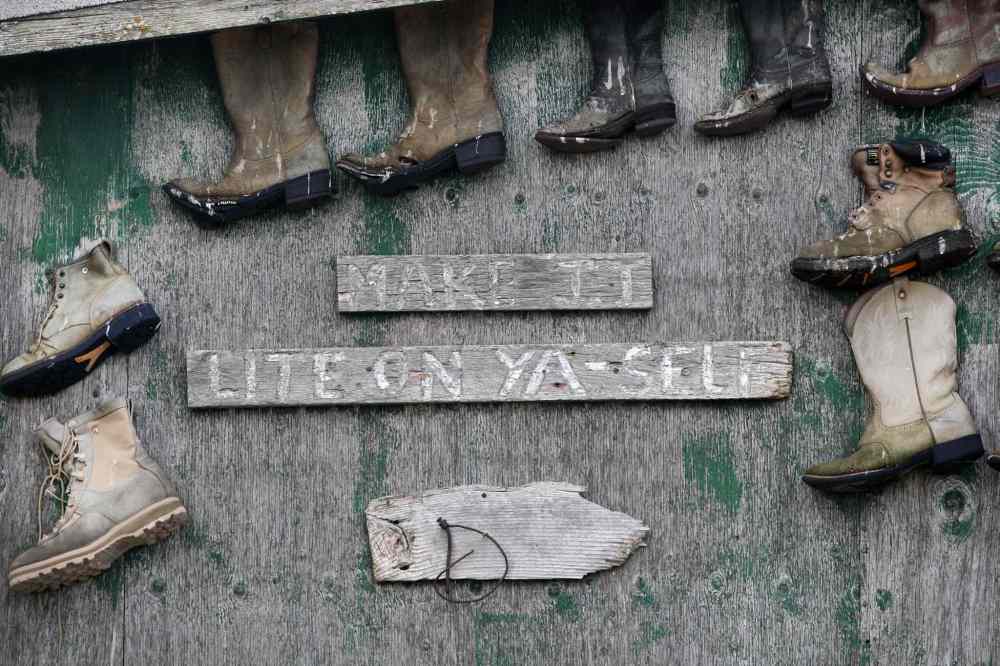
It’s a ghost town today. Only the shell of a long-abandoned store, which also served as a two-storey hotel, still stands. It was solidly built out of moulded concrete blocks in 1906; it closed in 1964. With its windows blown out, it now acts as giant birdhouse for swallows.
Curtis Gervin, who farms next to the Davis operation, likes to tell a story about Broomhill.
He and his brother travelled to Alabama to visit the Davises one winter about 20 years ago. They were riding horseback and watching some bird-dog trials on a plantation outside the city of Selma.
“Where you boys from?” a rider asked Curtis and his brother.
Canada, they said. What part of Canada, the rider asked. Manitoba, they replied, to which he responded — where in Manitoba?
Have you ever heard of Brandon? Gervin asked. The man couldn’t say he had.
Well, have you ever heard of Winnipeg? The man said he might’ve. “Is that anywhere near Broomhill?”
“I darn near fell off my horse,” Gervin said.
He didn’t really know how big of a name Broomhill was in dog-training circles until then.
“Different dog trainers have told me there have been more national champion dogs trained at Broomhill than anywhere else in the world,” Gervin said. “It’s almost the mindset that in order to be a national champion in its life, a dog has to go through Broomhill.”
There was another incident that put Broomhill on the map. It was in the late 1970s when Jimmy Carter was president of the United States. Jimmy’s brother, Billy, had a reputation for guzzling beer and making outrageous statements. He had become a minor celebrity. A small brewery even named a beer Billy Beer to capitalize on his colourful image as a good ol’ Southern boy.
“I refused to conform to an image that a lot of people thought a president’s brother should adopt,” Billy said at the time. But Billy’s beer-guzzling, loose-mouthed ways had become an embarrassment to the family and government.
The Carter family happened to know the Gates family, who run a bird-dog training school every summer at Broomhill. So security agents spirited Billy off to Broomhill, of all places, about 315 kilometres southwest of Winnipeg, to dry out and hide from the media. In fact, Carter was stashed in the same modest farmhouse the Davises now rent.
“They were hiding him out. He was drinking and talking too much,” Mazie said.
“Ol’ Billy Carter,” Colvin said. “He stayed here one summer when they were trying to dry him out. The old peanut farmer liked his pickup trucks and he liked his beer.”
Media eventually tracked him down, although not as fast as an English pointer.
“The American press came up here, and then the Canadian press came up here,” Colvin said. Carter spent about half the summer holed up in Broomhill. “He never did quit drinking,” he said.
Colvin has been coming up to Broomhill to train dogs since 1964 under the tutelage of the late Cap’n John Gates.
There are several reasons bird-dog trainers like Manitoba and Saskatchewan: the long daylight hours (when it’s still light out at 9:30 p.m. here, it’s dark by 7:30 p.m. in Alabama); the wide-open space (the joke is you can’t lose a dog because you can never lose sight of them on the flat open prairie); and there are no poisonous snakes. But the main reason is climate. It’s simply too hot from July to September to run bird dogs in Alabama. “It’s in the 100s,” Colvin said.
Pointer dogs aren’t commonly used for hunting in Canada. Hunters here tend to use dogs like the Labrador to flush out and retrieve the game, not to stand and point.
Which is the curious trait about English pointers. They have a natural instinct to stop and point. They don’t point from sight, just from their sense of smell. This starts at two months of age. But they do not stop and point at every little critter — no songbird, gopher, fox, nor badger. They have been bred over time to point at just game birds and the occasional rabbit.
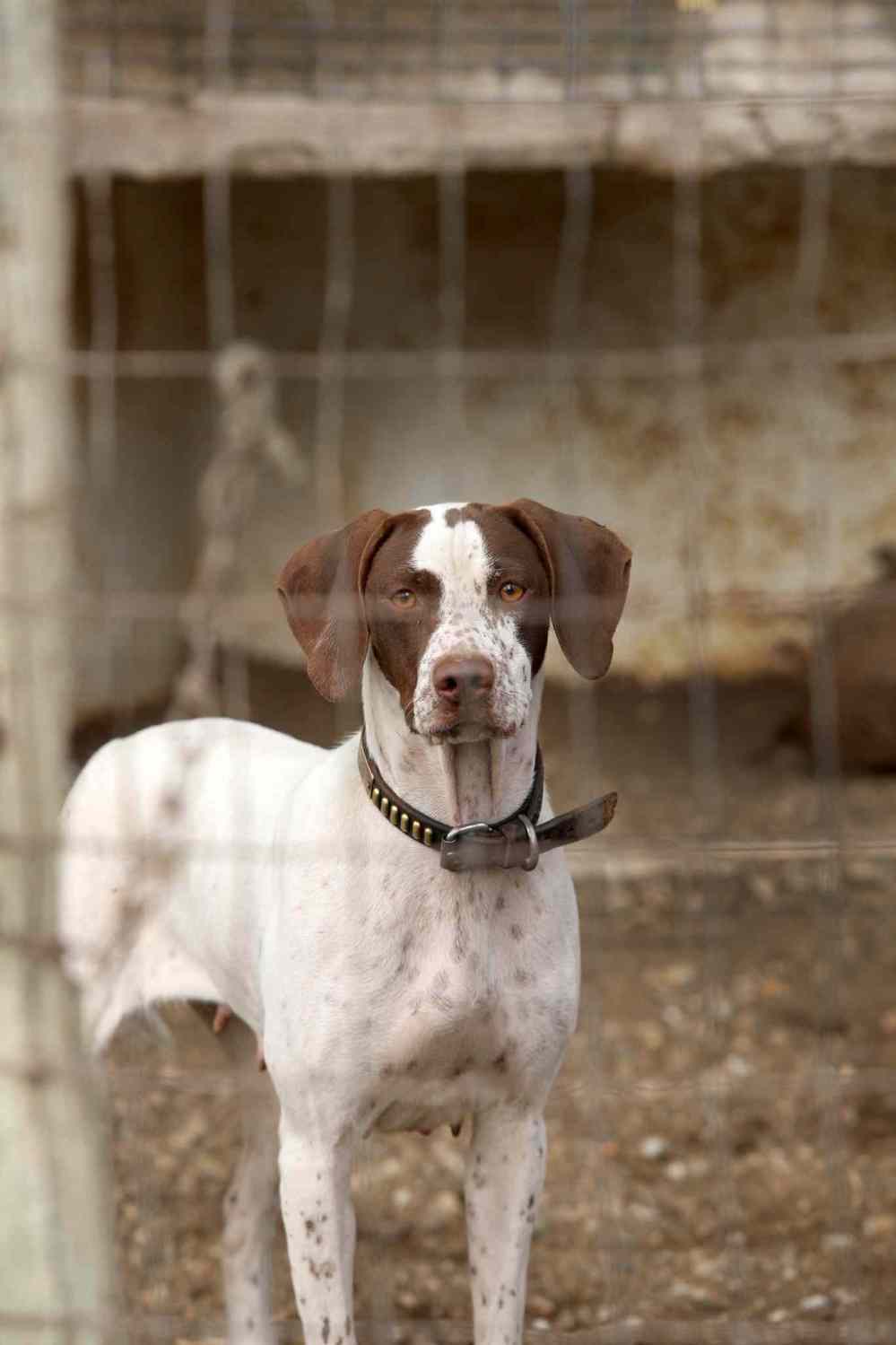
Where the training comes in is to get the pointer dog to stay pointing. Their instinct is to stop and point, then stalk and pounce.
“The whole time we’re doing this we teach them one word, and that’s ‘Whoa!’ ” Mazie said.
They start the dogs off on pigeons, then move up to domestic quail, which are relatively tame, before graduating to wild game such as prairie chicken, pheasant, and Hungarian partridge in Manitoba.
They use lead ropes to teach the dogs to stay pointing. When they are graduated, they will use collars that give dogs a “tingle” when they do something they know they’re not supposed to do, Mazie said.
It’s not as rigid as it sounds. “You don’t want to take the heart, or spirit, or that gleam in their eye, out of the dog,” Mazie explained.
And they’ve succeeded, say their fans.
“I’ve been at camps all over and seen how dogs are trained and treated,” said Ken Forster, of Regina, who kept bird dogs for 36 years and is a friend of the Davises. “There’s nobody looks after dogs better than Colvin and Mazie.”
Forster said he has never seen puppies as spirited as those the Davises handle. “Alert, tails cracking and eyes sparkling,” he said.
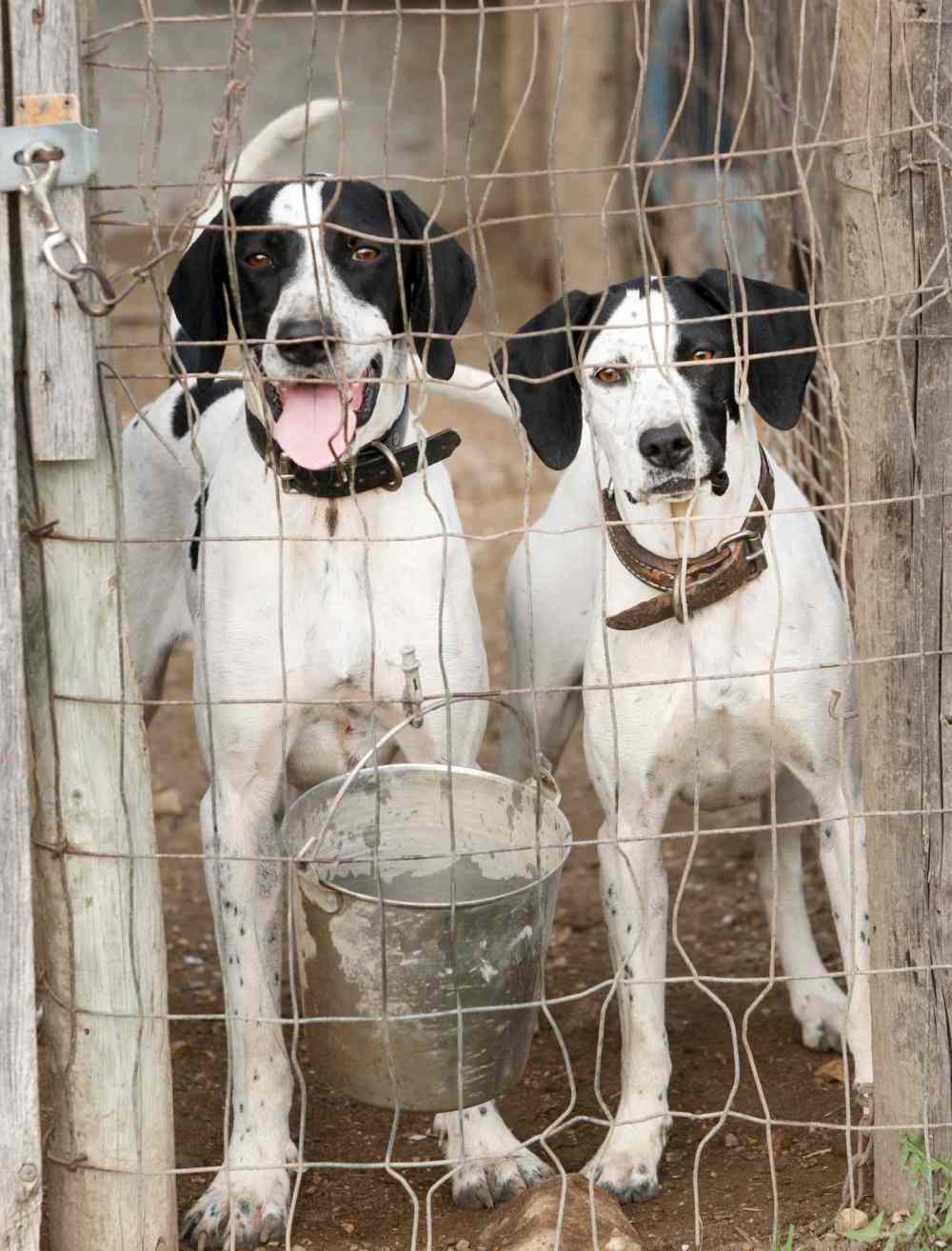
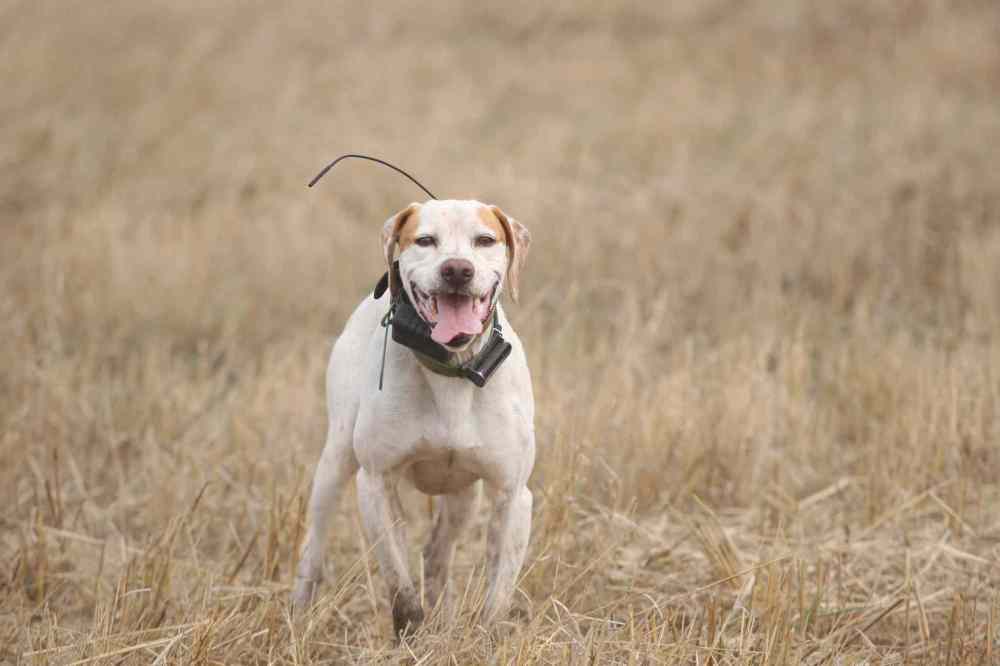
English pointers are predominantly white with coloured patches. If they don’t have a patch over one eye, they look almost bald. The patches are usually of a single colour, ranging from black, liver, orange, or lemon, although the occasional English pointer is calico.
Their sense of smell is remarkable. The nose of an English pointer has 220 million olfactory receptors, which is basically like having a super-power. There are two types of dogs: trackers and air-sniffers. Trackers put their nose to the ground and follow a scent, while the Davises prefer air-sniffers. The smart dog will even circle around, if possible, so they are downwind when searching for birds.
The other trait of English pointers is they are high-energy dogs. You wouldn’t want to be whipped by one of their tails. They like to run, and run, and run. You think the dogs are killing themselves by non-stop running, except they never stop smiling. It’s like watching a long-distance Olympic track race with all the runners grinning from cheek to cheek.
English pointers have incredible endurance. When let loose to look for game birds, they run back and forth, from post to post, making their way across a farm field. In field-trial competitions, the bird dog is expected to run as fast at the end of the three-hour competition as at the start.
The Davis field of operations ranges 9.5 kilometres one direction, and eight km the other, Colvin said, which is nearly heaven for the dogs. Almost all of it is weak cropland neighbouring farmers allow the Davises to use.
* * *
Colvin and Mazie introduce us to Dutch to demonstrate how their English pointers find game birds.
Dutch has what they look for in a bird dog — a broad chest — and it known for his stamina. Narrow-chested pointers don’t have as much stamina. Dutch was sired by a dog called White Powder, who won numerous endurance competitions.
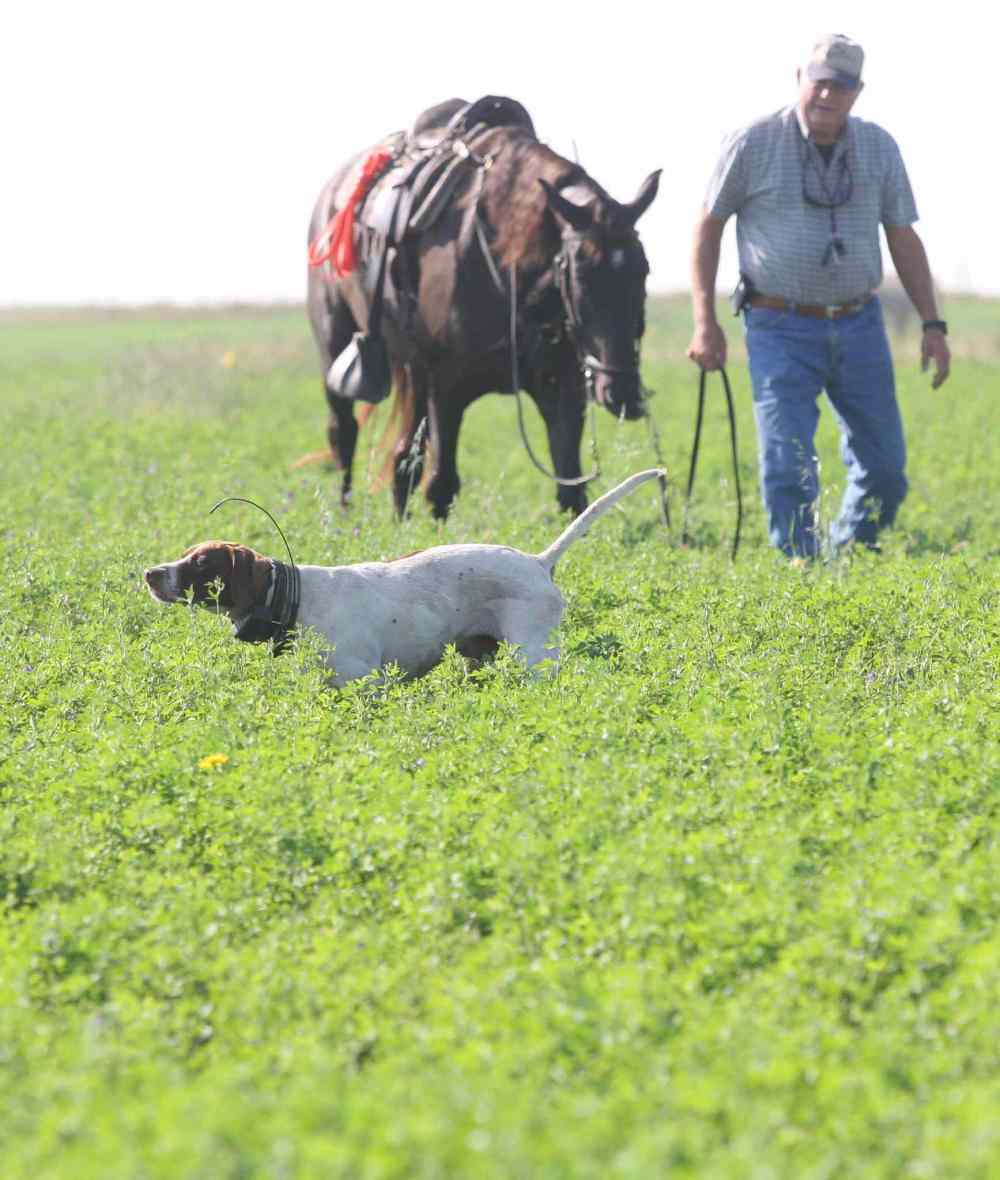
Even after a horse kicked Dutch when he was five months old and broke his hip in eight places, the Davises didn’t give up on him. They took him to a veterinarian and had his hip wired back together. That back story made watching Dutch run, with his happy face, all the more special.
We started across a lightly purpled alfalfa field. Colvin followed Dutch on horseback — nearly all their training is from horseback — while Mazie pulled photographer Joe Bryksa and me along with an ATV. We were perched atop a wagon that had raised seating, like a stagecoach.
The dogs do get distracted. They can’t resist going after gophers and have to be called back. At one point, we saw a fox go peeling out of a lair faster and longer than I’d ever seen a fox run before, and the English pointer had to be called back.
Otherwise, Dutch wasn’t having much luck, and neither were the other dogs. They covered a lot of ground but couldn’t find a single prairie chicken. Overland flooding in 2014 destroyed much of the game-bird habitat in this area and reduced their numbers. On the drive in, we had encountered washed-out sections of road and highway, which had still not been repaired.
But then the third dog suddenly froze. These dogs run like crazy for five to 10 kilometres, not stopping except for water. Then they freeze the instant they sniff something, and are expected to stay in that position. They stand stock-still, but their body is practically vibrating. Their tails are bolt upright, the first and only time I saw the tail on any English pointer not slapping back and forth. Every muscle in their body that worked to keep them running is now tensed to keep them from moving. Even if the bird flies up, even if a shotgun fires — the dog isn’t supposed to move.
Dogs point in different ways. Occasionally, they lift a paw but not usually. They point with their stance.
“A lot of them point like this,” Colvin says, indicating the head pointing towards the ground. “Some point high-head, some point low-head. I like mine looking up. Proud. A little class in anything helps, no matter what you’re doing.”
This dog pointed with head perfectly level. Proud, as Colvin would say. They are to hold the pose until someone pats it on the head.
It turned out to be a false alarm. “They can smell a bird that left 15 to 20 minutes ago,” Colvin explained.
Finally, the Davises let out some domestic quail into the alfalfa field to show what their dogs can do. The most impressive demonstration was when two dogs approached a single quail on either side, stopped, and pointed. It was like the ending to an episode of Mantracker but with game birds.
* * *
Jim Downey is long retired from politics, a career in which he attended umpteen public meetings, but he has no trouble recalling the one with Enns and the bird-dog trainers in 1990.
Downey, who lives not far from Broomhill, knew the bird trainers weren’t hurting the bird population.
“Where the training was taking place, we probably had a higher number of upland game birds than other areas,” he said in an interview.
Besides, he said, the dog trainers are good for the local economy. They hire local people, spend money and bring tourism into the area.
That’s especially true when the often well-heeled owners come to see their dogs compete in field trials. The first Manitoba Field Trial Championship was held in 1904, making it one of the oldest in North America. It didn’t start in Broomhill, but that’s where its been held for the past couple of decades. Dogs are judged on range, style, endurance, bird-finding ability and manageability. They will run up to three kilometres in competitions.
The bird trainers also give back to the community with two local scholarships — the Broomhill Field Trial Foundation and the Tobe Stallings Memorial Foundation — the latter for the hardest-working student.
That’s important, but most people will tell you this story isn’t really about economics. People just enjoy the southern visitors and get a kick out of the way they talk. The first thing Downey asked me was whether I could understand them. That’s what everybody asks.
“Remember, these people have been coming in for over 100 years. They just fit in like a hand and glove when they come up, and people look forward to seeing them,” Downey said.
They add an interesting mix to the community, added Curtis Gervin, who farms next door to the Davises.
“This is something that makes our area richer for having these people. It’s like a huge cultural exchange. They have become a part of our community,” Gervin said.
It’s been educational for the area, too.
“When you don’t understand other people, it’s pretty easy to not care,” said Gervin. “When I hear some of these anti-American people say ‘Americans are this, and Americans are that,’ I say, ‘How many do you know?’ Just about every American I know you’d want as a neighbour. They come here and make our community richer. They’re our friends. They respect everybody.”
For the record, Mazie was almost apologetic about the history of Montgomery.
“Horrible, terrible things happened there that should have never happened.”
The 1965 march from Selma to Montgomery, a transformative moment in the civil rights movement and the subject of the recent Oscar-nominated movie Selma, took place 50 kilometres from her house.
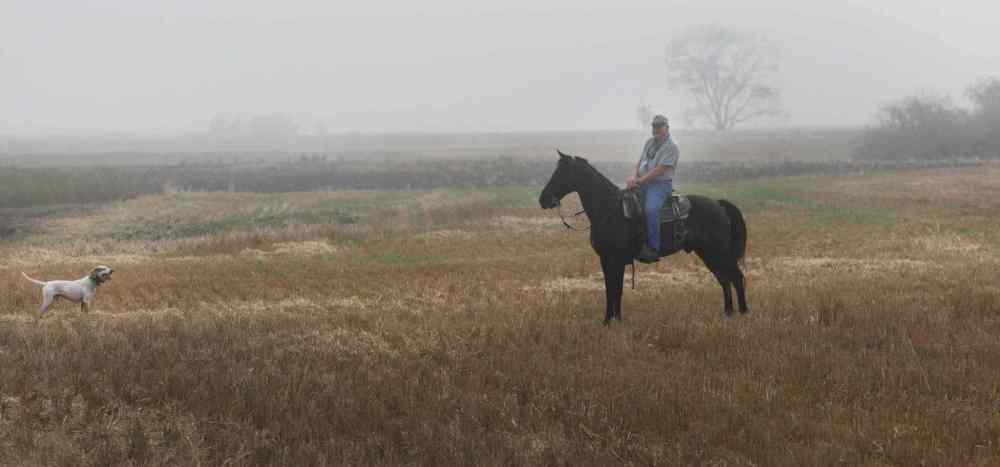
We had started following Dutch and the other bird dogs before an early-morning fog lifted. The morning light made the hayfields, which were beyond the alfalfa fields, look golden, flecked with just the start of autumn rust. ‘Beautiful’ is an overused word — let’s just say it filled you up.
Mazie and Colvin have been married 41 years. They feel privileged leading the lifestyle they do, saying several times how much they appreciate the support they’ve received from their Canadian friends over the years.
It was also apparent the last roundup is not too far off in the future. Colvin does most of the work by horse, but it’s not so easy to clamber into the saddle at age 76. They’ve scaled back the number of dogs they train. Of the 33 dogs this year, only six are for private owners. The rest are for their quail-hunting farm back in Alabama.
“When I decide to quit, no one can take my place,” Colvin said, referring to the law passed in 1990.
That won’t be the end, however. The Gates family is likely to continue bird-dog training, with Robin Gates’s son Hunter expected to carry on Broomhill’s tradition.
bill.redekop@freepress.mb.ca