

The Jets Whiteboard: Shoddy penalty killing has been Jets’ most obvious flaw
Advertisement
Read this article for free:
or
Already have an account? Log in here »
To continue reading, please subscribe:

Digital Subscription
One year of digital access for only $205*
- Enjoy unlimited reading on winnipegfreepress.com
- Read the E-Edition, our digital replica newspaper
- Access News Break, our award-winning app
- Play interactive puzzles
*First annual payment billed as $205.00 + GST for one year. This annual subscription will automatically renew at $233.00 + GST every 52 weeks (10% off the regular annual price of $259.35). Offer available to new and qualified returning subscribers only. Cancel any time.
To continue reading, please subscribe:
Add Free Press access to your Brandon Sun subscription for only an additional
$1 for the first 4 weeks*
- Enjoy unlimited reading on winnipegfreepress.com
- Read the E-Edition, our digital replica newspaper
- Access News Break, our award-winning app
- Play interactive puzzles
*Your next Brandon Sun subscription payment will increase by $1.00 and you will be charged $17.95 plus GST for four weeks. After four weeks, your payment will increase to $24.95 plus GST every four weeks.
Read unlimited articles for free today:
or
Already have an account? Log in here »
Hey there, time traveller!
This article was published 28/01/2016 (3896 days ago), so information in it may no longer be current.
There have been plenty of up and downs for the Winnipeg Jets this season.
But if one thing has been consistent through 47 games, it’s the Jets’ poor performance on the penalty kill. Heading into the all-star break, the Jets’ 77.2 per cent efficiency rate ranks 27th out of 30 teams, behind only the Arizona Coyotes (76.6), Calgary Flames (75.7) and Ottawa Senators (75.3). It doesn’t help that the Jets are one of the most penalized teams in the NHL, atop the league leaders in almost every category including a league-high 207 minor penalties.
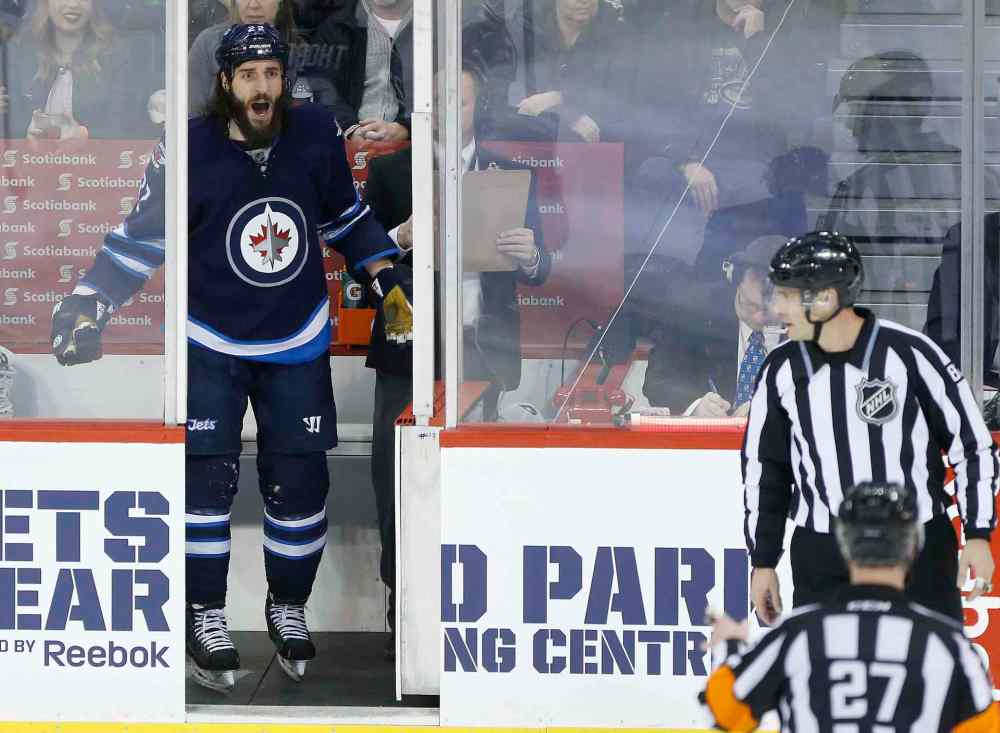
Needless to say, the penalty kill has become a sore spot for Winnipeg, and one in need of major fixing if they hope to return to the post-season. In the fourth episode of The Whiteboard, J.P. Vigier discusses the good, the bad, and the ugly of the Jets’ struggling PK.
The good
Taking penalties is nothing new for the Jets. They were just as bad at taking them last year as they are this year, only this season they don’t seem to possess a similar confidence when it comes to killing them off.
A big part of the Jets’ success last year was their ability to be aggressive on the puck. This begins at their own blue-line; giving their opposition difficulties gaining the offensive zone. By forcing teams to either dump the puck or enter the zone without speed, it prevents the opposition from being able to set up.
Another reason the Jets were so strong at killing penalties last season was their ability to get in the shooting lanes.
This isn’t just about getting in front of a shot, but also limiting the space for other shooters. By limiting those lanes, it simplifies things and allows each player to get a read on plays and act accordingly. When a shot does get through, proper positioning allows for an effective collapse towards the net, which limits an opponent’s second chances.
The bad
One of the most glaring parts of the Jets penalty kill this season is the availability of the east-west pass. What this means is opponents are finding ways to create space between the penalty killers, which opens up the cross-ice pass.
You see it all the time from the most effective power plays in the league; that cross-ice one-timer goal that leaves the goalie sprawling to get in position and the defenders shaking their head as they’re pulling the puck from the net.
Also, attacking as a group. Often we’ll see one player pressure the opposition with little to no support from the rest of the unit. When one guy attacks, everyone else has to follow suit to make it difficult to move the puck.
With the right support, it often will take three or four good passes for the opposition to get into position and generate a scoring chance. It only takes one if there is no support.

The ugly
Like the way a strong power play can boost a team, a weak penalty kill can deflate one.
When you know you have a good penalty kill, you’re not going to lose momentum in a game. When it’s struggling, it can affect the confidence level on the bench.
Furthermore, the Jets often use some of their best players to kill penalties, guys who are depended on to produce offensively.
When they’re spending a taxing two minutes in their own zone, blocking shots, trying to get the puck out, they’re not getting a chance to go on the offensive. Therefore, struggling on the PK often creates a trickling effect, causing concern in other parts of the game.
Related Articles
All-stars have their say in Nashville



Advertisement Advertise With Us
Advertisement Advertise With Us