

Crossing out catastrophes
Some of Manitoba's 2,000-plus rail crossings are among the most dangerous in Canada; mandatory safety upgrades are on the way
Advertisement
Read this article for free:
or
Already have an account? Log in here »
To continue reading, please subscribe:

Digital Subscription
One year of digital access for only $205*
- Enjoy unlimited reading on winnipegfreepress.com
- Read the E-Edition, our digital replica newspaper
- Access News Break, our award-winning app
- Play interactive puzzles
*First annual payment billed as $205.00 + GST for one year. This annual subscription will automatically renew at $233.00 + GST every 52 weeks (10% off the regular annual price of $259.35). Offer available to new and qualified returning subscribers only. Cancel any time.
To continue reading, please subscribe:
Add Free Press access to your Brandon Sun subscription for only an additional
$1 for the first 4 weeks*
- Enjoy unlimited reading on winnipegfreepress.com
- Read the E-Edition, our digital replica newspaper
- Access News Break, our award-winning app
- Play interactive puzzles
*Your next Brandon Sun subscription payment will increase by $1.00 and you will be charged $17.95 plus GST for four weeks. After four weeks, your payment will increase to $24.95 plus GST every four weeks.
Read unlimited articles for free today:
or
Already have an account? Log in here »
Hey there, time traveller!
This article was published 03/09/2016 (3669 days ago), so information in it may no longer be current.
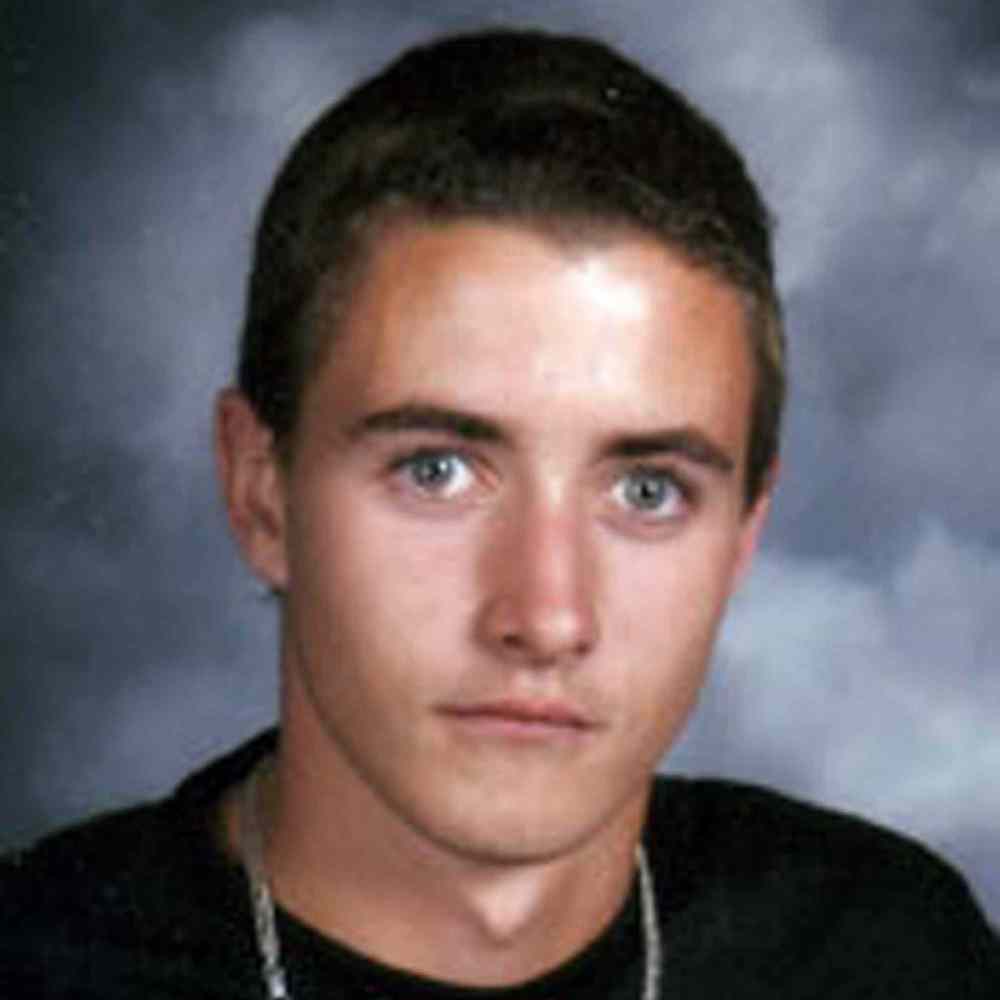
OTTAWA — On March 29, 2007, 17-year-old Owen Michael Hart was driving his pickup truck on Heatherdale Road South of Oakbank, when he collided with a freight train.
The aspiring diesel mechanic and avid saxophonist was rushed to hospital but died of his injuries.
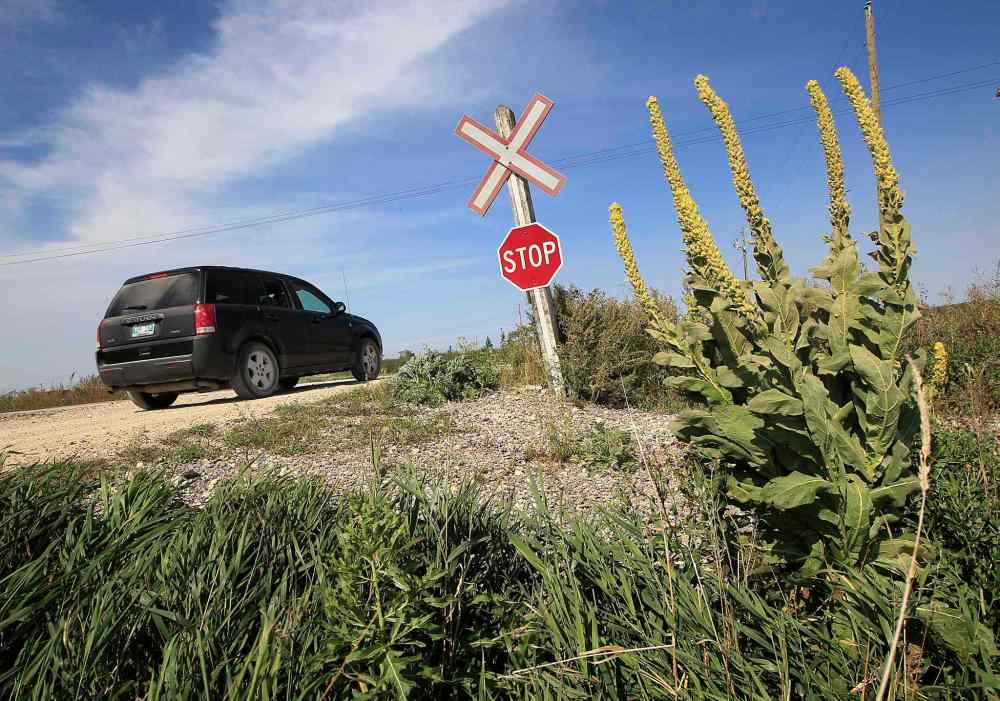
Almost four years later, and about 17 km east at a nearly identical crossing on Millbrook Road in the RM of Springfield, a 77-year-old man from Anola was killed when a freight train struck his Ford Taurus. His name wasn’t publicly released.
And, almost 18 months after that, and less than two km west along the same rail line on Edgewood Road, 36-year-old Marko Kordic died when the pickup truck he was a passenger in collided with a freight train. The driver, who was also injured along with another passenger, was eventually convicted of drunk driving.
25 deaths since 2004
They are just three of the 225 train collisions with vehicles and pedestrians at rail crossings in Manitoba over the last 12 years, killing 25 people and injuring 43 others.
They all occurred in the RM of Springfield, along a 75-km stretch of CN rail line between the Perimeter and Highway 11 known as the Redditt subdivision, which carries an average of 18 freight trains a day along CN Rail’s main line in eastern Manitoba. There are more than three dozen rail crossings on this stretch, most of which are on gravel roads that run between farm fields, vast expanses of prairie stretching out in every direction.
Since 2004, there have been a dozen crashes at crossings on this stretch.
A Free Press analysis of collision data and rail-crossing inventories provided by Transport Canada and the Transportation Safety Board, shows four of the locations are among the 100 highest-risk crossings — out of more than 21,000 — in Canada. And 13 of them are in a group of the worst 500 in the country.
Collisions at rail crossings
Provincewide there are nine crossings in the group of 100 and 42 in the high-risk 500.
"There’s no doubt every one of our crossings is a concern," Springfield Reeve Bob Bodnaruk says. "We are definitely looking at it and trying to do what we can."
Springfield is not alone. Across Manitoba, and across the country, municipalities and railways are working to comply with new crossing regulations introduced by Transport Canada in 2014. Hundreds of crossings will require various safety upgrades under the new rules. In Manitoba, there are at least 48 that fall into that category.
Number of accidents ‘too high’
Every day in the province, trains pass approximately 2,100 grade or level crossings — where a rail line intersects directly with a roadway —more than 15,000 times; some 2.5 million vehicles cross those tracks daily. In general terms, safety isn’t an issue.
Yet the crossings do present a significant risk when it comes to fatalities and injuries. In 2014, the TSB said the risk of accidents between trains and vehicles at rail crossings "remains too high." It noted there had not been any real improvement in the number of incidents in the previous decade.
Although crossings account for just 13 per cent of all accidents and incidents involving trains in Manitoba, (track derailments account for more than half of them), they are responsible for 50 per cent of the fatalities and 63 per cent of injuries since 2004.
The vast majority of crossings in Manitoba — 77 per cent — are passive, meaning they have no automated warning systems in place, and more than 95 per cent of them are in rural areas. Some have stop signs, but at others there is only a road sign warning of train tracks ahead. Because of limited train and vehicle traffic, many of the intersections — a few of which are on private roads or farms — are fairly low-risk.
The rest are active: 14 per cent have automated warning bells and flashing lights, and nine per cent are equipped with lights, bells and gates. Under the new Transport Canada regulations, some crossings require all three safety elements.
Until 2014, the safety standards were industry-led, says Jay Rieger, Transport Canada’s chief engineer of rail safety operations.
"By bringing them into the grade-crossing regulations in 2014, these standards became law," he says.
The regulations are being phased in over seven years; municipalities and railways have until 2021 to become fully compliant. The next phase, ending at the end of November, requires municipalities and rail companies to share information about every crossing so both are on the same page about required upgrades.
TC doesn’t know how many crossings comply with legislation
Determining what, if any, type of active warning system is required involves a simple math equation to come up with what is known as the "cross product" — the daily number of trains passing an intersection multiplied by the number of vehicles that cross it.
The new regulations require lights and bells where the cross product is above 2,000. Gates must be added when the number exceeds 50,000.
Transport Canada doesn’t currently know how many crossings are in compliance with the new regulations, because while it monitors railways for safety, the rail lines are not owned or operated by the federal government, Determining says.
"I wouldn’t want to speculate on the specificity of the compliance," he says. "The grade crossing standards are specific to the environment of that grade crossing, of the use of that grade crossing."
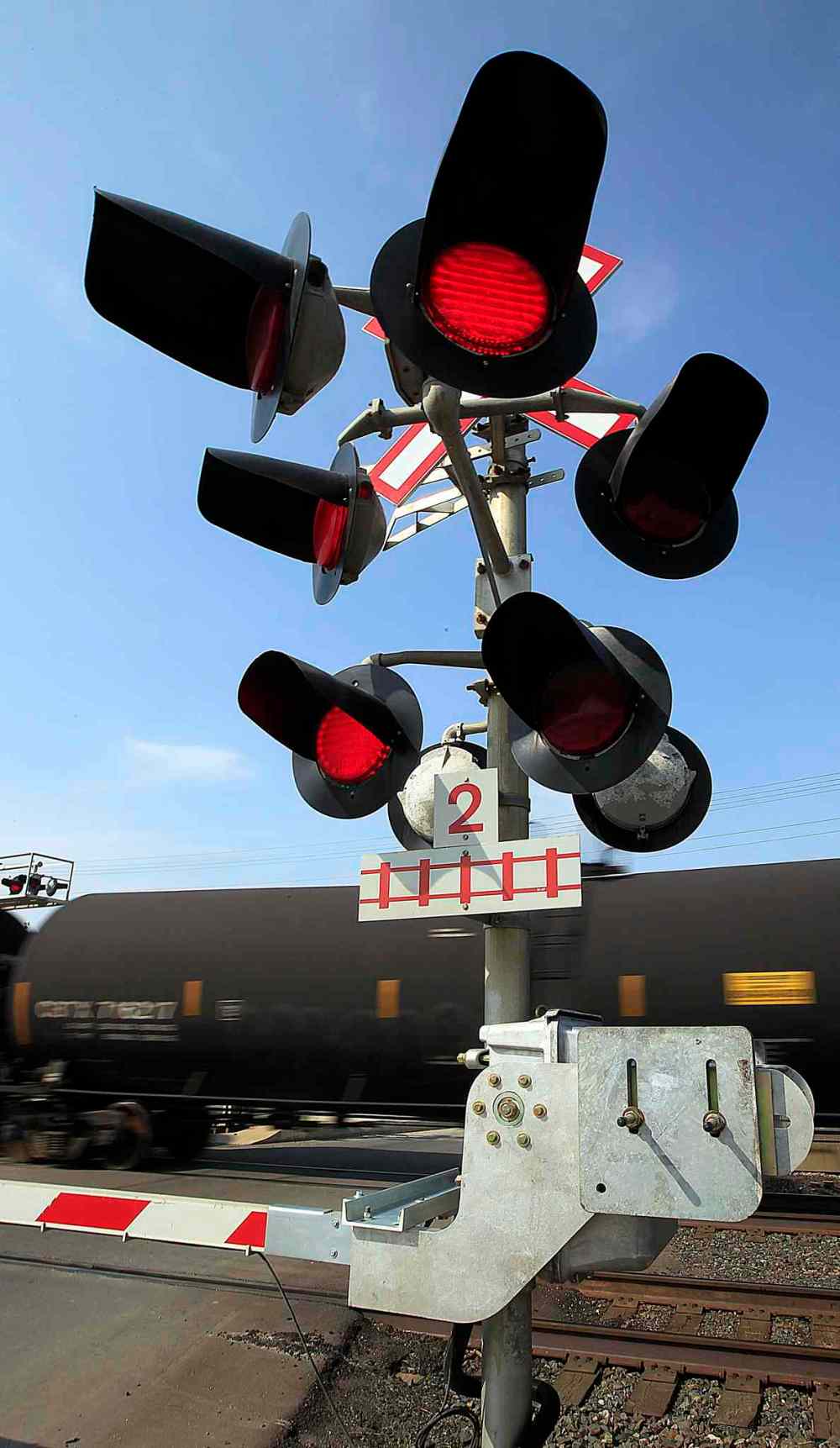
However, using the cross product criteria alone, the Free Press analysis shows there are 42 passive crossings in Manitoba that will need to have automated bells and lights installed. Six of them are in Winnipeg, and there are two each in Brandon and Dauphin, leaving 32 in rural areas.
Five locations along the Redditt line will need lights and bells, including two of the three crossings where the fatal accidents mentioned earlier occurred.
It generally costs upwards of $150,000 to add lights and bells to a crossing, and more than $200,000 to add lights, bells and gates. With at least 48 crossings needing some sort of upgrade, the cost of meeting the new regulations could near $100 million in Manitoba alone.
Transport Canada is spending about $11 million to assist with crossing improvements nationally this year under its grade crossing improvement program.
Bodnaruk said his municipality is already working with Transport Canada and both CN and CP to look at what upgrades and improvements need to be made. The Heatherdale Road crossing where Hart was killed will be getting lights and bells this year. The crossing at Millbrook Road is also on the list for upgrades.
"We’ve got a plan in place," he says. "This is being addressed."
The cost for the upgrades will be shared with the rail companies, he says. Springfield is going to pay between $60,000 and $70,000 for the first one.
The new regulations do not address whether a crossing can simply be too busy to be considered safe. The TSB’s report on a fatal bus-train accident in Ottawa in 2013 says although it’s not known how it was derived "historically, a cross-product of 200,000 was the accepted benchmark used by (Transport Canada) and industry for a grade separation project to be considered."
The report urged Transport Canada to develop guidelines for the point at which a grade separation should be studied, if not for when it should be required.
"The only way to ensure that similar accidents do not occur at such high-traffic locations is to physically separate the roadway from the railway though grade separation," the report notes.
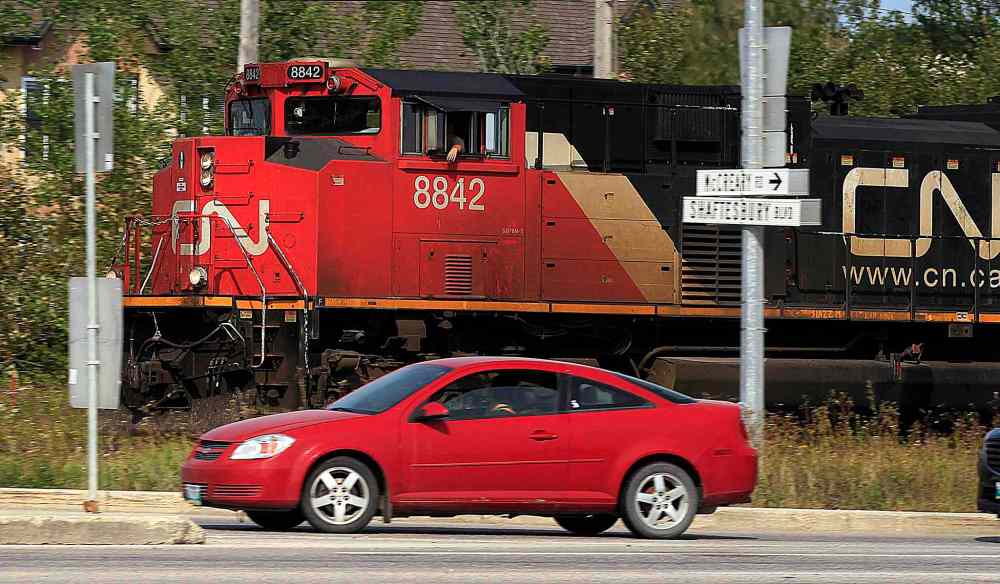
In Manitoba, six crossings, all of them in Winnipeg, have a cross product above 200,000. The busiest crossing in Manitoba is on Waverley Street near Taylor Avenue, where more than 35 trains pass each day and nearly 34,000 vehicles drive over it. It has the fifth-highest cross product of any rail crossing in Canada and is one of only nine where the cross product exceeds one million.
The good news is that Waverley is getting an underpass. First announced a year ago by Stephen Harper’s Conservative government, work is underway to build the $155-million structure.
There have been no announcements of upgrades to other Winnipeg crossings. A spokeswoman for the city says a risk analysis and prioritization plan for every rail-road intersection has to be in Transport Canada’s hands by December.
"We are on track to meet this deadline," she says.
mia.rabson@freepress.mb.ca
Meeting legislation
The Transportation Safety Board wants Transport Canada to develop a new regulation that would dictate when a municipality and a railway have to undertake a study to determine whether a level rail crossing should become a grade-separated crossing with an underpass or overpass.
Historically, the industry has used a cross product of 200,000 or more as this threshold. The cross-product is the number of trains per day multiplied by the number of vehicles.
In Manitoba, there are six crossings that meet the threshold. All of them currently have flashing lights, warning bells and gates. Only one, at Waverley Street, is currently scheduled to have an underpass built.
Waverley Street near Taylor Avenue
Daily trains: 35
Daily traffic: 33,665
Cross product: 1.17 million
Number of accidents since 2004: 2
Risk ranking in Canada: 121/21,115
Ravenhurst Street (north of Dugald Road, west of Perimeter Highway)
Daily trains: 19
Daily traffic: 11,200
Cross-product: 211,232
Number of accidents since 2004: 0
National risk ranking: 328/21,115
Shaftesbury Boulevard, near Wilkes Avenue
Daily trains: 28
Daily traffic: 10,975
Cross product: 304,008
Number of accidents since 2004: 1
National risk ranking: 931/21,115
Panet Road, south of Regent Avenue West
Daily trains: 19
Daily traffic: 10,908
Cross product: 205,725
Accidents since 2004: 1
National risk ranking: 1,101/21,115
Panet Road (north of Girdwood Crescent)
Daily trains: 18
Daily traffic: 14,739
Cross product: 265,302
Accidents since 2004: 2
National risk ranking: 1,238/21,115
Plessis Road, north of Gunn Road
Daily trains: 18
Daily traffic: 12,800
Cross product: 230,400
Accidents since 2004: 0
National risk ranking: 1,306/21,115
Related Articles
City unveils Waverley underpass project plans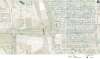
Advertisement Advertise With Us
Advertisement Advertise With Us