

Jail offers inmates support, access to treatment

Advertisement
Read this article for free:
or
Already have an account? Log in here »
To continue reading, please subscribe:
Digital Subscription
One year of digital access for only $1.44 a week*
- Enjoy unlimited reading on winnipegfreepress.com
- Read the E-Edition, our digital replica newspaper
- Access News Break, our award-winning app
- Play interactive puzzles
*Billed as $5.77 plus GST every four weeks. After 52 weeks, price increases to the regular rate of $19.95 plus GST every four weeks. Offer available to new and qualified returning subscribers only. Cancel any time.
To continue reading, please subscribe:
Add Free Press access to your Brandon Sun subscription for only an additional
$1 for the first 4 weeks*
- Enjoy unlimited reading on winnipegfreepress.com
- Read the E-Edition, our digital replica newspaper
- Access News Break, our award-winning app
- Play interactive puzzles
*Your next Brandon Sun subscription payment will increase by $1.00 and you will be charged $17.95 plus GST for four weeks. After four weeks, your payment will increase to $24.95 plus GST every four weeks.
Read unlimited articles for free today:
or
Already have an account? Log in here »
Hey there, time traveller!
This article was published 15/10/2017 (3150 days ago), so information in it may no longer be current.
Norm Packulak used to get by getting people high — he sold cocaine to make his money.
“I always had money, but I drank it all the time, used it up my nose,” he said.
Drinking and drugging were his way of life.
“Once I start drinking, I have to do some cocaine,” said Packulak, now 48. “Pull out a couple rails, snort a couple rails.”
He was also one of the first provincial inmates to graduate from Winding River Therapeutic Community, a unit at Headingley Correctional Centre meant to help drug- or alcohol-addicted inmates deal with their substance-abuse problems.
Ultimately, the goal is to keep the inmates sober and out of jail.
According to an evaluation report by the University of Winnipeg’s Justice Research Institute (JRI), Winding River does just that — it reduces recidivism rates. A reporter obtained a copy of the evaluation through a provincial freedom-of-information request.
Selling and snorting was day-to-day for Packulak — until in 2007, when he sold cocaine to a police officer and a handgun to a robber.
He was charged with a laundry list of crimes — drug trafficking, robbery with a firearm, discharging a firearm.
He was looking at 12 years in prison. He pleaded guilty and got seven, bouncing around provincial jails in Manitoba. He also spent time in federal prison.
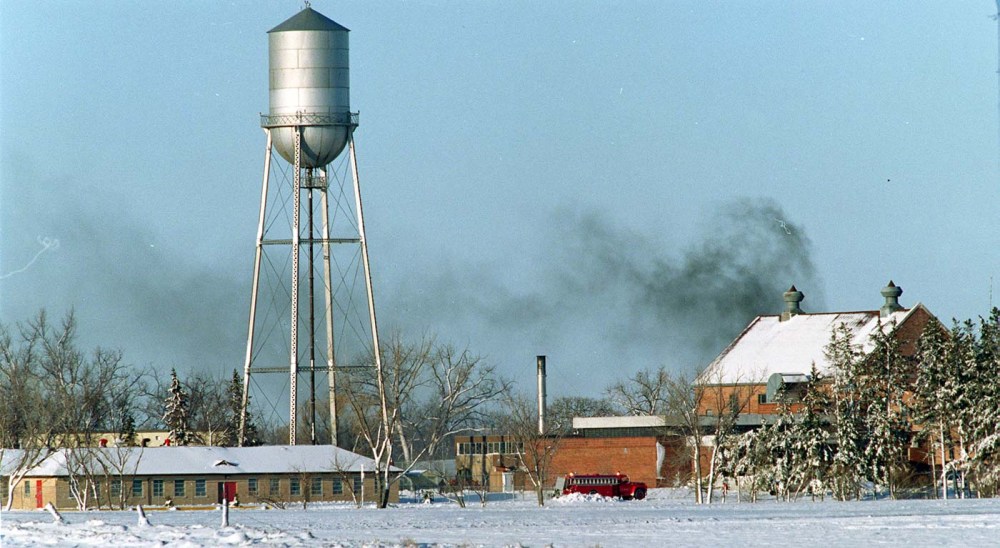
Then, in late 2012, Manitoba Corrections converted an old trades building at Headingley Correctional Centre to house Winding River.
The program gives the inmates day-to-day structure, peer support and access to addictions treatment — from information on harm-reduction and cognitive therapy to Alcoholics Anonymous meetings.
After the program had been up and running for three years, Manitoba Justice contracted the U of W’s JRI to evaluate the program in 2015.
The program works well, according to Dr. Michael Weinrath, the U of W criminal-justice researcher who led the evaluation.
“Offenders are hard to change,” Weinrath said. “But even small differences in recidivism are significant.”
The researchers compared 83 Winding River inmates to 104 general population inmates. Part of what they studied is whether Winding River had a positive effect on recidivism, the tendency of criminals to reoffend after being released.
In the researchers’ evaluation, about 88 per cent of the Winding River group had a criminal history prior to their incarceration at Winding River — repeat offenders. Almost three-quarters of the group members — about 74 per cent — were charged with a violent crime.
After following the groups for a year, the researchers found Winding River inmates were about 71 per cent less likely to be arrested for any kind of crime compared to about 56 per cent of the control group — about a 14 per cent drop in recidivism.
That 71 per cent works out to be about 61 people in the researchers’ group.
Fourteen per cent might sound like an insignificant number — a drop in the bucket in a province with the second-highest crime rate in the country, according to Statistics Canada. But that’s at least 61 people who didn’t get charged for committing new crimes.
The average daily cost to keep a person in jail in Manitoba is $204, according to Statistics Canada.
That’s about $4.5 million that could be kept in taxpayers’ pockets or in government coffers, if these 61 offenders don’t come back into the system for one year.
Considering Manitoba Corrections’ 2015 budget was $233 million, $4.5 million might sound like pocket change.
But in a province with a $764-million deficit, possibly saving $4.5 million is significant.
Packulak got bailed to the Behavioural Health Foundation’s residential drug treatment centre in St. Norbert in 2011.
About a year later, he got charged with a breach of probation and went back to jail. But he was a year sober.
His lawyer, Stacey Soldier, told him about a new program that just opened up at Headingley Correctional Centre — Winding River. He got transferred in January 2013.
‘It structures you to not fail when you get out of jail. I’m still sober today. I’ve been sober nine years’– Norm Packulak
“He was doing well then,” Soldier said. “He’s doing well now.”
The inmates have to actively participate in running the program — a key to the program’s success, according to Packulak.
But Winding River isn’t just about costs.
Although Winding River is in a jail, the inmates told researchers the facility lacked a “jailhouse mentality” — what Packulak explained as an inability to trust other inmates.
“A lot of guys think if you go to these programs, you’re a rat,” he said. “But you make it the way you want to make it.”
That trust makes the program work, because the inmates have to work together to improve, Packulak said.
Like personal growth of any sort, it won’t work if the inmates don’t make the effort.
“If you put 100 per cent energy into the program, it works. It really does,” Packulak said.
“It structures you to not fail when you get out of jail,” he said. “I’m still sober today. I’ve been sober nine years.”
The program isn’t without problems, despite the possible cost savings and reduced recidivism rates.
Packulak went back to jail in 2015 for another robbery charge.
About one in five of the inmates in Winding River said they didn’t feel like they had a drug or alcohol problem, according to the researchers’ evaluation.
If inmates don’t believe they have a drug problem, they might not participate in the programming, ultimately reducing the efficacy of the program as a whole, the evaluation suggested.
About one in five Winding River inmates spent only 15 days or less in the program, according to the researchers’ evaluation.
Fifteen days doesn’t count for much when it comes to drug treatment. Effective residential addictions programs need to run for 90 days, according to National Institute on Drug Abuse research from 2015.

At least in Packulak’s view, the program works — it can help people stay out of jail.
“I wish more guys in jail would go to these programs. There would be less guys in jail,” he said.
Manitoba Justice did not respond to a request for comment on the costs of Winding River and whether there are any changes planned for the program.
Erik Pindera is a senior journalism student in the Creative Communications program at Red River College in Winnipeg. This article was a product of a feature writing assignment.
epindera@gmail.com
Erik Pindera is a reporter for the Free Press, mostly focusing on crime and justice. The born-and-bred Winnipegger attended Red River College Polytechnic, wrote for the community newspaper in Kenora, Ont. and reported on television and radio in Winnipeg before joining the Free Press in 2020. Read more about Erik.
Every piece of reporting Erik produces is reviewed by an editing team before it is posted online or published in print — part of the Free Press‘s tradition, since 1872, of producing reliable independent journalism. Read more about Free Press’s history and mandate, and learn how our newsroom operates.
Our newsroom depends on a growing audience of readers to power our journalism. If you are not a paid reader, please consider becoming a subscriber.
Our newsroom depends on its audience of readers to power our journalism. Thank you for your support.
Erik Pindera is a reporter for the Free Press, mostly focusing on crime and justice. The born-and-bred Winnipegger attended Red River College Polytechnic, wrote for the community newspaper in Kenora, Ont. and reported on television and radio in Winnipeg before joining the Free Press in 2020. Read more about Erik.
Every piece of reporting Erik produces is reviewed by an editing team before it is posted online or published in print — part of the Free Press‘s tradition, since 1872, of producing reliable independent journalism. Read more about Free Press’s history and mandate, and learn how our newsroom operates.
Our newsroom depends on a growing audience of readers to power our journalism. If you are not a paid reader, please consider becoming a subscriber.
Our newsroom depends on its audience of readers to power our journalism. Thank you for your support.
Advertisement Advertise With Us
Advertisement Advertise With Us