Big-city thinking
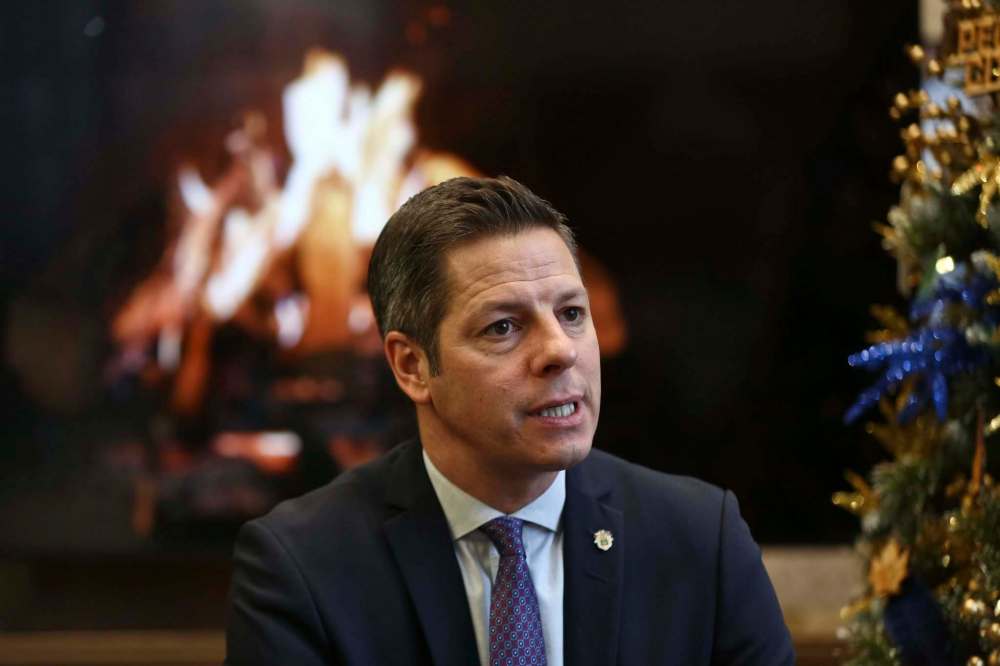
Winnipeg Mayor Brian Bowman talks to the Free Press about the trials and tribulations of the past year and the challenges of the one about to begin
Advertisement
Read this article for free:
or
Already have an account? Log in here »
To continue reading, please subscribe:
Monthly Digital Subscription
$1 per week for 24 weeks*
- Enjoy unlimited reading on winnipegfreepress.com
- Read the E-Edition, our digital replica newspaper
- Access News Break, our award-winning app
- Play interactive puzzles
*Billed as $4.00 plus GST every four weeks. After 24 weeks, price increases to the regular rate of $19.95 plus GST every four weeks. Offer available to new and qualified returning subscribers only. Cancel any time.
Monthly Digital Subscription
$4.99/week*
- Enjoy unlimited reading on winnipegfreepress.com
- Read the E-Edition, our digital replica newspaper
- Access News Break, our award-winning app
- Play interactive puzzles
*Billed as $19.95 plus GST every four weeks. Cancel any time.
To continue reading, please subscribe:
Add Free Press access to your Brandon Sun subscription for only an additional
$1 for the first 4 weeks*
*Your next subscription payment will increase by $1.00 and you will be charged $16.99 plus GST for four weeks. After four weeks, your payment will increase to $23.99 plus GST every four weeks.
Read unlimited articles for free today:
or
Already have an account? Log in here »
Hey there, time traveller!
This article was published 30/12/2019 (2307 days ago), so information in it may no longer be current.
Late last year, Winnipeg Mayor Brian Bowman declared 2019 the Year of Transit.
By mid-December, public transportation had received plenty of press: from proposed route changes to progress on the rapid transit corridor and a narrowly avoided transit union strike in the fall.
Near the end of the year, the mayor had been a bus rider just “a handful” of times, often relying on his vehicle due to his busy schedule, he said.
When it comes to being a public transportation champion, Bowman may not always walk the talk.
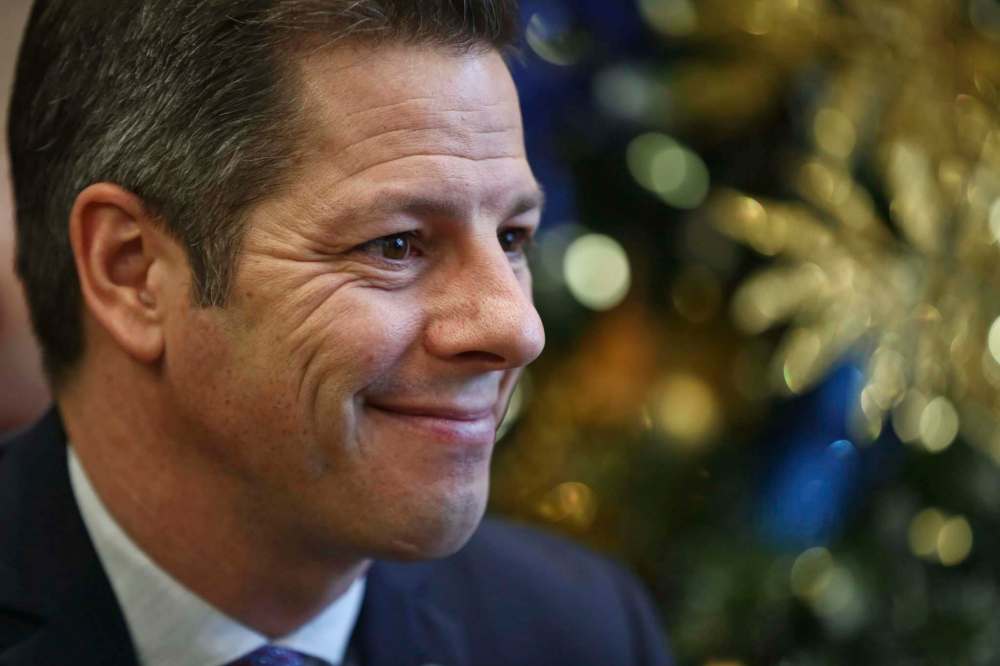
He does, however, continue to lobby the provincial and federal governments to pay their fair share of transit funding (and roads funding and infrastructure funding and North End sewage plant funding…). And he’s dead-set on seeing Winnipeg grow to fit — and move — one million people.
Bowman didn’t have a theme for his 2020 predictions, but said he suspected transit would still be top of mind as “the days of Winnipeggers looking at their city as a small town, I think, are over,” he said.
The mayor sat down with Free Press legislative reporter Jessica Botelho-Urbanski Dec. 13 to go over an array of topics, including the year ahead and his relationship with that other Brian, the premier. The conversation has been edited for length and clarity.
WFP: How is your relationship with Premier Brian Pallister?
BB: Actually, it’s excellent. We have good dialogue. I’ve appreciated the opportunities I’ve had to meet directly with him. Each of those meetings have been really beneficial and they’ve been really productive. And so, one-on-one, for him as an individual, I’ve got a lot of time for him… Unfortunately, you know, when we don’t have year-end interviews, you don’t get an opportunity in the cut and thrust of dealing with issues to really put on the record how you might feel about an individual. But I have a tremendous amount of respect for him.
WFP: In his year-end scrum, the premier said we can expect bolder moves from his government in 2020. Can we also expect a bolder Brian Bowman?
BB: I think it’s been a pretty bold year. I mean (on Dec. 12), we voted on the bylaw for the police pension reform. We’re going to open our first full rapid-transit line in the city’s history in April. We have, of course, the Waverley underpass that came in on time and under budget. We have the Jubilee underpass also on time, under budget. So you know, there’s a lot more work to do, and I think a four-year, multi-year budget is a bold move. It’s something that’s never been done in our history. I would love to see the federal and provincial governments balance their budgets. I’d love to see them balance four budgets and I’d love to see them do it across the aisle.
WFP: The new budget deliberation process seemed to alarm a lot of people this year. There were lots of cuts proposed and some people criticized the process as seeming rigged from the outset, because there wasn’t enough time to debate some of the proposals or suggest alternatives. Are you happy with how it turned out or would you have changed anything about the process?
BB: There absolutely can be improvements to any process, but for years, some of the same critics were saying we need greater openness and transparency about the budget. Now that it is open and transparent to the extent that it has been this year, now they’re complaining that it’s too open and transparent… Some have even said that we need to move everything back behind closed doors in order to protect people from the information. I don’t believe that, I think that’s the wrong approach. I think having a full open and transparent assessment earlier in the stage invites people to be more engaged, and that was really the objective. We need people to be engaged in these decisions, we need to hear from them because we are going to be making some very difficult decisions in this budget…. Some of (the cuts) are going to be accepted. Some of them are not.
WFP: Are there any cuts to services Winnipeggers could prepare for in 2020?
BB: I don’t think anyone should presume the will of council before council has decided on the budget. And so, obviously discussions, collaboration and debates need to happen and we’ll obviously respect that process.
WFP: With your growing city mentality in mind, are you 100 per cent committed to the 2.33 per cent property tax cap?
BB: Yes.
WFP: Have you considered upping that, if we’re trying to grow the city to one million people?
BB: No, absolutely not. Why would I? Winnipeggers elected me to the tune of 114,000 votes. I increased my plurality of votes to 53 per cent and I did it on a commitment to cap those tax increases to 2.33 (per cent). And I think Winnipeggers and voters should expect their elected officials to remain committed to their promises that they make. I think we’ve seen far too often politicians break their promises and that’s a pretty fundamental promise that I made to Winnipeggers that I’m going to respect.
WFP: Another promise you made was to open Portage and Main and that went to a plebiscite.
BB: What I promised was that I was going to work with council to move forward as best we could and I did. I honoured that commitment. I wish I could unilaterally open Portage and Main. If I could, it would be open right now. But what I did say is I would work towards that. I also said that I would respect the outcome of the plebiscite and that was a commitment I made in the campaign and I’m making good on that now.

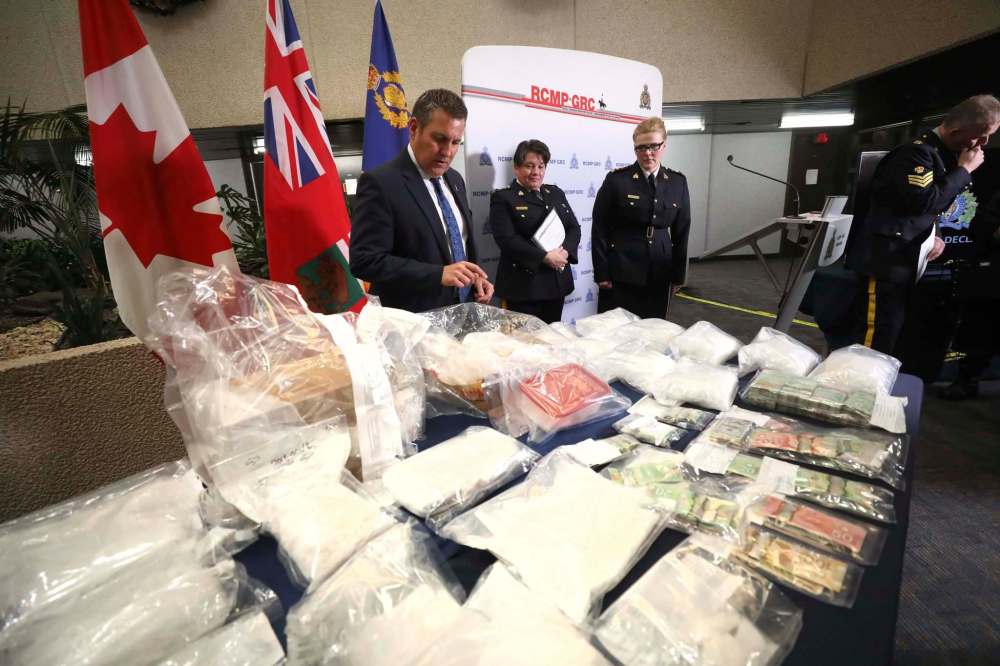
WFP: We spoke around this time last year about meth use. A year later, you could say that has spiralled into a wave of violent crime. Do you connect the two: the prevalence of meth use with the prevalence of crime now in Winnipeg?
BB: It’s part of it. It’s definitely part of it. I think it would be oversimplifying to blame everything on meth. Definitely the (police) Chief (Danny Smyth) and I have been raising alarm bells in terms of addictions issues (and) meth in particular for a number of years. We simply don’t have the level of supports for those that have health needs related to mental health and addictions and families in crisis…. There have been some recent announcements by the provincial government on mental health and addictions, which are commendable. We need to see a lot more support and resources to deal with the health needs of our community. Homelessness is also a major part of it — and I’m not connecting homelessness with crime, but there are far too many people that are unwell in our community. And we all suffer as a result.
WFP: Something the provincial government obviously has not backed has been the safe-consumption site idea, which you’ve supported. The federal government has allowed municipalities to implement those sites on their own. Is that something you’re considering or what are you waiting for?
BB: We’re certainly not contemplating operating that kind of facility. There may be organizations in Winnipeg that may ultimately push for the opening of those kinds of services. What I’ve said is we’re not going to stand in their way. What I think is we shouldn’t be ruling anything out based on partisan or ideological grounds. We should be open to what can we do differently, because right now the results are not where the community needs them to be when it comes to those suffering from addictions.
WFP: If we’re talking about establishing a healthier community in Winnipeg though, should it not be up to the City of Winnipeg to establish such a site rather than rely on other organizations?
BB: Well let’s keep in mind, we’re not the level of government responsible for health. I think we have a role to play and we continue to provide supports to many organizations, some of which received funding this year from the new Community Safety and Crime Prevention Fund. And some of them are absolutely in areas that touch on health… supports for those who have lived experience or are using right now, meth and other illicit drugs. But we’re not going to be opening hospitals. We’re not going to be getting into national defence. There are areas of jurisdiction that are absolutely in provincial and federal areas and we want to work to support them.
WFP: When are we going to see a new chief administrative officer appointed?
BB: The search is ongoing. We’re obviously hoping it’ll be in the new year.
WFP: What was your highlight of the year?
BB: On the fun factor, it’d be the Winnipeg Blue Bombers bringing home the Grey Cup. Twenty-nine years in the making. I’m a long-suffering season-ticket holder, so there’s a reason the helmet’s here (points to a Bombers helmet on the table). We’ve got a tremendous amount of pride. In the last year… I was very proud of the illicit-drug strategy. To get three levels of government working together is something that we need to do more of and we need to be working more collaboratively on complex problems like that. I was very pleased that the Waverley underpass was completed and in the manner of which it was completed.
WFP: What was your lowlight?
BB: I think the Jets being knocked out in the first round (of the National Hockey League playoffs) was definitely…”
WFP: Politically speaking.
BB: Well that was pretty important to me! And pretty important to Winnipeg. I just think some of the challenges that we have in just unilateral decisions being imposed on the City of Winnipeg. We need more collaboration and so we’ll continue to work towards a more collaborative dialogue and actions with other levels of government. And we’ll also ensure that we’re fighting for Winnipeggers and Winnipeg taxpayers.
WFP: What’s next for you after city hall? What do you want to do career-wise?
BB: That’s not something I’ve given any thought to at this stage. I’ve got three years left in this term and may very well be running for a third term. You know, I play hockey. Hat tricks are always good. And with each of the elections, I’ve been fortunate enough to grow my support. That doesn’t always happen in politics. You quite often see political parties losing support, certainly in the City of Winnipeg. And the fact that we’ve been able to grow our support shows me that people want to continue to see us building the city for the future.”
jessica.botelho@freepress.mb.ca
Twitter: @_jessbu