

Time travel
Recently found tourist guide offers a glimpse at what travellers — and Winnipeggers — could do in this city in 1958
Advertisement
Read this article for free:
or
Already have an account? Log in here »
To continue reading, please subscribe:

Digital Subscription
One year of digital access for only $205*
- Enjoy unlimited reading on winnipegfreepress.com
- Read the E-Edition, our digital replica newspaper
- Access News Break, our award-winning app
- Play interactive puzzles
*First annual payment billed as $205.00 + GST for one year. This annual subscription will automatically renew at $233.00 + GST every 52 weeks (10% off the regular annual price of $259.35). Offer available to new and qualified returning subscribers only. Cancel any time.
To continue reading, please subscribe:
Add Free Press access to your Brandon Sun subscription for only an additional
$1 for the first 4 weeks*
- Enjoy unlimited reading on winnipegfreepress.com
- Read the E-Edition, our digital replica newspaper
- Access News Break, our award-winning app
- Play interactive puzzles
*Your next Brandon Sun subscription payment will increase by $1.00 and you will be charged $17.95 plus GST for four weeks. After four weeks, your payment will increase to $24.95 plus GST every four weeks.
Read unlimited articles for free today:
or
Already have an account? Log in here »
Hey there, time traveller!
This article was published 29/08/2021 (1837 days ago), so information in it may no longer be current.
Long before Trip Advisor, Yelp, Instagram influencers and travel websites, what could visitors in a new city — trying to find out what to do, what to see, where to eat, and where to stay — turn to? The answer: visitors guides, printed on (gasp!) actual paper.
The author recently came across the August 1958 edition of the Winnipeg Visitors Guide, designed to lead guests — those touching down at Winnipeg International Airport after smoking cigarettes and enjoying meals on flights from abroad, those arriving from all directions in personal automobiles they purchased after the Second World War — to the best shops, restaurants, clubs, events, points of interest, parks, and more (or if not the best, at least ones who paid to place ads in the guide.)
“Winnipeg,” the preamble reads, “is a brisk and busy metropolis of more than 410,000 people of assorted origins and backgrounds. It’s a clean city, with wide paved streets, tree-laned residential areas, an excellent shopping district, and a reputation for warm-hearted hospitality… all the conveniences offered by a modern city are at your disposal in Winnipeg.”
Sounds like a place you want to visit, doesn’t it? So, now that we’ve got the context, let’s take a step back 63 years to experience our Prairie city circa 1958, using the guide as, well, our guide.
Shop till you drop
While in 2021, someone looking to shop until they drop would likely just hit up Outlet Collection Winnipeg or Polo Park, the shopping scene was rather different in 1958.
It was still a year prior to Polo Park’s opening, and downtown was the retail centre of the city.
“Two landmark department stores, Eaton’s and Hudson’s Bay, proudly stood a few blocks apart on Portage Avenue and were beacons that drew countless thousands of residents and visitors downtown every day,” wrote Gordon Goldsborough, Russ Gourluck, Rob McInnes, Giles Bugailiskis and Randy Rostecki of the Manitoba Historical Society.
Until the outward movement to the suburbs that accelerated in the 1960s and 1970s, most Winnipeggers lived, worked, and shopped in or near the city core, the authors noted, and that meant visitors shopped there too.
Indeed, there was perhaps no better place for visitors to spend serious dough than at Eaton’s, which advertised the massive eight-floor department store as “Winnipeg’s Shopping Showplace” where an “enormous array of merchandise for every need and from every part of the world,” in addition to dining facilities could be found.
The flagship downtown Hudson’s Bay store, not to be outdone, touted a number of pricey wares as well, including its “world-famous” point blankets, Scottish and English woolens, leather goods, India rugs, South African diamonds, and “beautiful furs in a variety of skins and smart designs.” It also asked visitors to check out a fourth-floor historical exhibit on “Indian and Eskimo life, before and after the coming of the white man,” which included weapons, beadwork, soapstone carvings, and “one of the last original Red River carts.”
Also recommended in the guide was Graham Jewellers for bone china, fine diamonds, watches as sterling silver (they accepted American currency at par), Kolchin & Boxer Furriers at 320 Smith St. for “coats jackets, capes and stoles in the latest New York and Paris fashions,” and Rene’s for Gifts at 401 Graham Ave. for pewter, crystal, and imported jewelry.
The guide even outlined how much American tourists were allowed to bring back to the U.S. — anyone in Canada for more than 48 hours was permitted to bring back goods totalling up to $200 in value, and anyone in Canada for 12 days or longer got a further exemption of $300 to a total of $500.
On eating well

Winnipeg, nowadays, punches well above its weight when it comes to great restaurants, and it did back in 1958 as well.
In the “Doin’ the Town” section, the guide touted 11 restaurants featuring sumptuous cuisines of all sorts (and specifies that the joints are all “licensed for the sale of alcoholic beverages.”)
Carnivorous types were encouraged to hit up the new Town N’ Country Restaurant at 317 Kennedy St. for broiled steaks, ribs, and “delicious cheesecake known from coast to coast” (online scuttlebutt says the secret was People’s Co-op cream cheese.) The Town N’ Country had a cabaret and cocktail lounge upstairs, and a then-19-year-old Barbra Streisand had a two-week stint there in 1961.
In a 1961 feature on Winnipeg restaurants for Maclean’s, Ralph Hedrin noted the cheesecake was well-travelled. “For dessert here we ordered cheesecake topped with black cherries,” he wrote. “In the week past, Town N’ Country cheesecake had been flown to customers in Texas and Toronto and points between; how could we pass it up?”
They were also encouraged to visit The Ellice Inn Bar-B-Q at Ellice Avenue and Toronto Street for spare ribs, chicken, fish and chips, and breaded fried shrimp. (If diners wanted delivery, all they had to do was call “Spruce 2-0476.”) Also advertised was The Riviera Restaurant at 571 Portage Ave. and its “air-conditioned continental atmosphere composed of soft dinner music, tinkling waterfalls and luxurious décor,” where diners noshed on the “famed flaming pepper steak” and other beefy entrees.
Competing with The Riviera was Ivanhoe Restaurant at Portage Avenue and Carlton Street — which offered steaks customers could watch being cooked on a charcoal broiler — and Mardi Gras at 287 Portage Ave. — a colourful New Orleans-themed restaurant that slung Louisiana fried chicken and flaming shrimp (a lot of food seemed to be lit on fire in these days.)
Visitors looking for something a bit more exotic could visit Mama Trossi, an Italian spot at 1605 Pembina Hwy. with a spacious dining room that also allowed “dining on the lawn in a sidewalk café atmosphere.” Mama Trossi’s menu took up two pages of the guide and featured such dishes as veal scallopini for $1.75, homemade ravioli for $1.50, and shrimp a la marinara for the same price.
It was an “it’s all included” restaurant like today’s Old Spaghetti Factory, and all orders included bread or rolls with butter; tea, coffee, or milk; French fries; and Italian salad. Talk about bang for your buck.
For a taste of (Canadianized) Chinese cuisine, visitors could visit Chan’s Café at 426 Main St. — which is now a surface parking lot directly north of Portage and Main — for sweet and sour ribs with pineapple, chop suey, and chow mein. Chan’s was a sprawling restaurant with stools around a U-shaped counter, and according to a Free Press feature from 2017, their “signature Moon Room featured a giant dragon on the north wall with eyes that alternated on and off.”

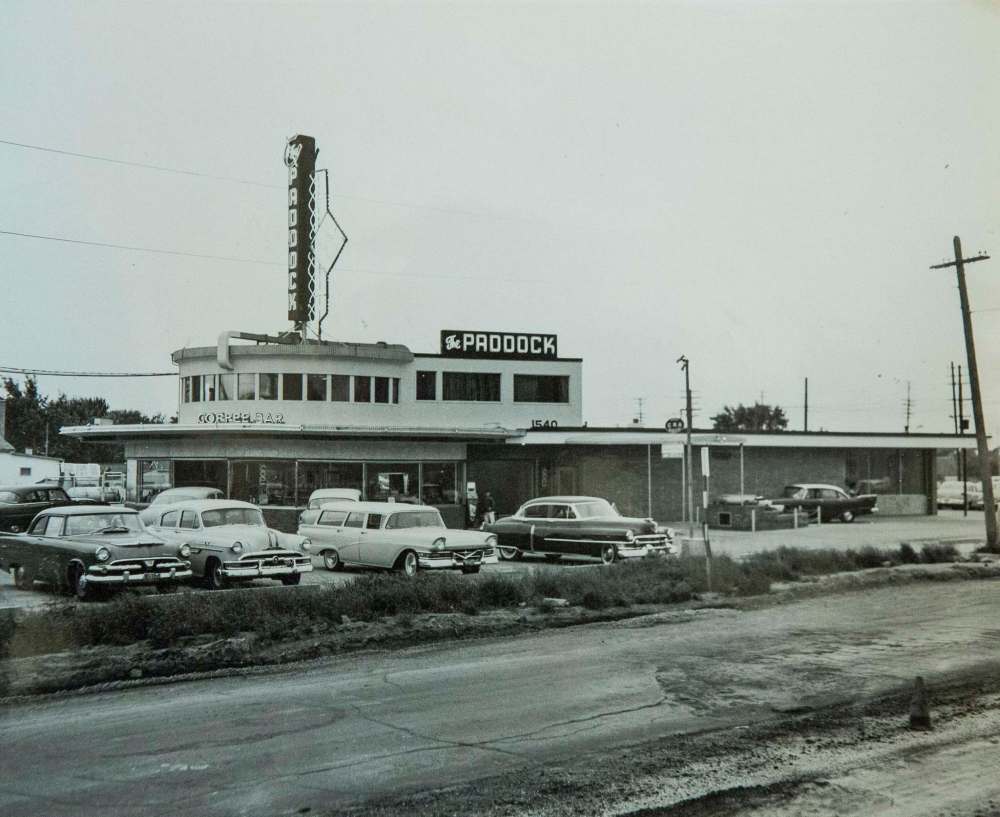
The Paddock on Portage Avenue — the land is now home to an Olive Garden and a Red Lobster — was a popular spot, though it didn’t start out that way. Built by notorious illegal gambling baron Stan Zedd, Winnipeggers were initially leery of associating with the city’s darker underworld. Zedd operated his gambling operations on the fringes, but he apparently never let his craps tables bleed a gambler dry: he always had a staffer on hand to stuff dollars into the pocket of someone who would otherwise leave empty-handed.
Still, the Paddock struggled, until he sold it to his investors, including Perry Orestes, whose son, Melvin, would go on to run the joint until it closed in 1985. Those investors apparently came on board when Zedd ran out of what he called “legal money” to finance the restaurant.
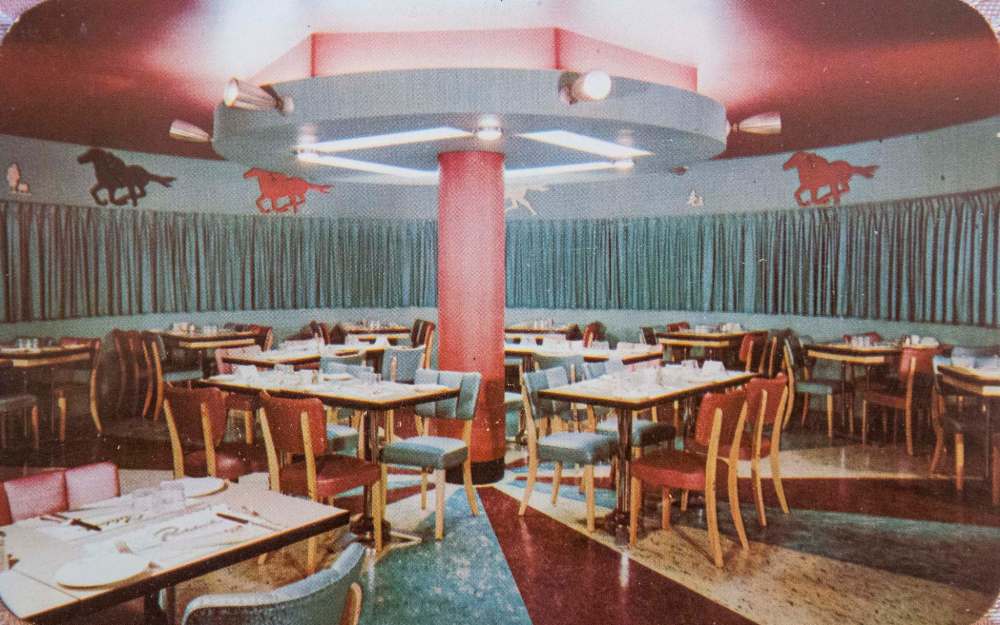
The design mimicked a restaurant Zedd had visited in California, and featured a horseshoe-shaped dining room with a tall spire bearing its name.
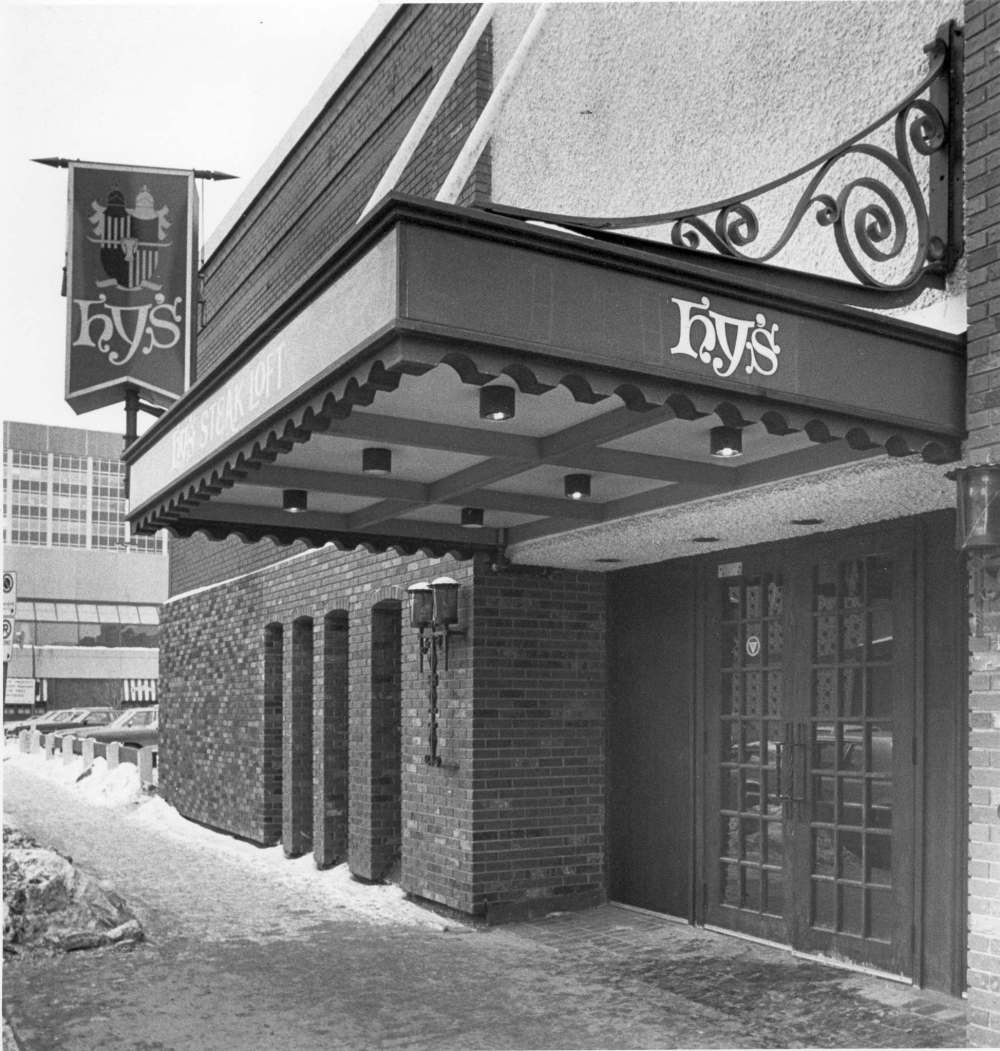
All the restaurants in the guide are defunct with exception of one — Hy’s Steak Loft (now known as Hy’s Steakhouse and Cocktail Bar.)
At the time, Hy’s was brand new, having been opened by Hy Aisenstat that very year, according to their website. It was located at 216 Kennedy St. rather than 1 Lombard Place and boasted it was “the home of the charcoal broiler” where diners could “watch (their) favourite steaks being prepared to perfection…” while they sipped “savoury onion soup” and munched on garlic bread. Also on offer was the “Steak Loft Special” — a 72-ounce behemoth slab of meat that likely bested many folks whose eyes were bigger than their stomachs.
What to do, what to do?
There was no shortage of things to do and see in Winnipeg in the final full month of summer that year, other than shop and eat.
For sporting events, the Winnipeg Goldeyes of the original Northern League — at the time, they were a minor-league affiliate of the St. Louis Cardinals — were in action at Winnipeg Stadium, taking on Fargo, Duluth, Eau Claire, Aberdeen, and St. Cloud throughout the month. The Goldeyes were defending Northern League champions that year but failed to repeat (although they won the championship again in 1959.)
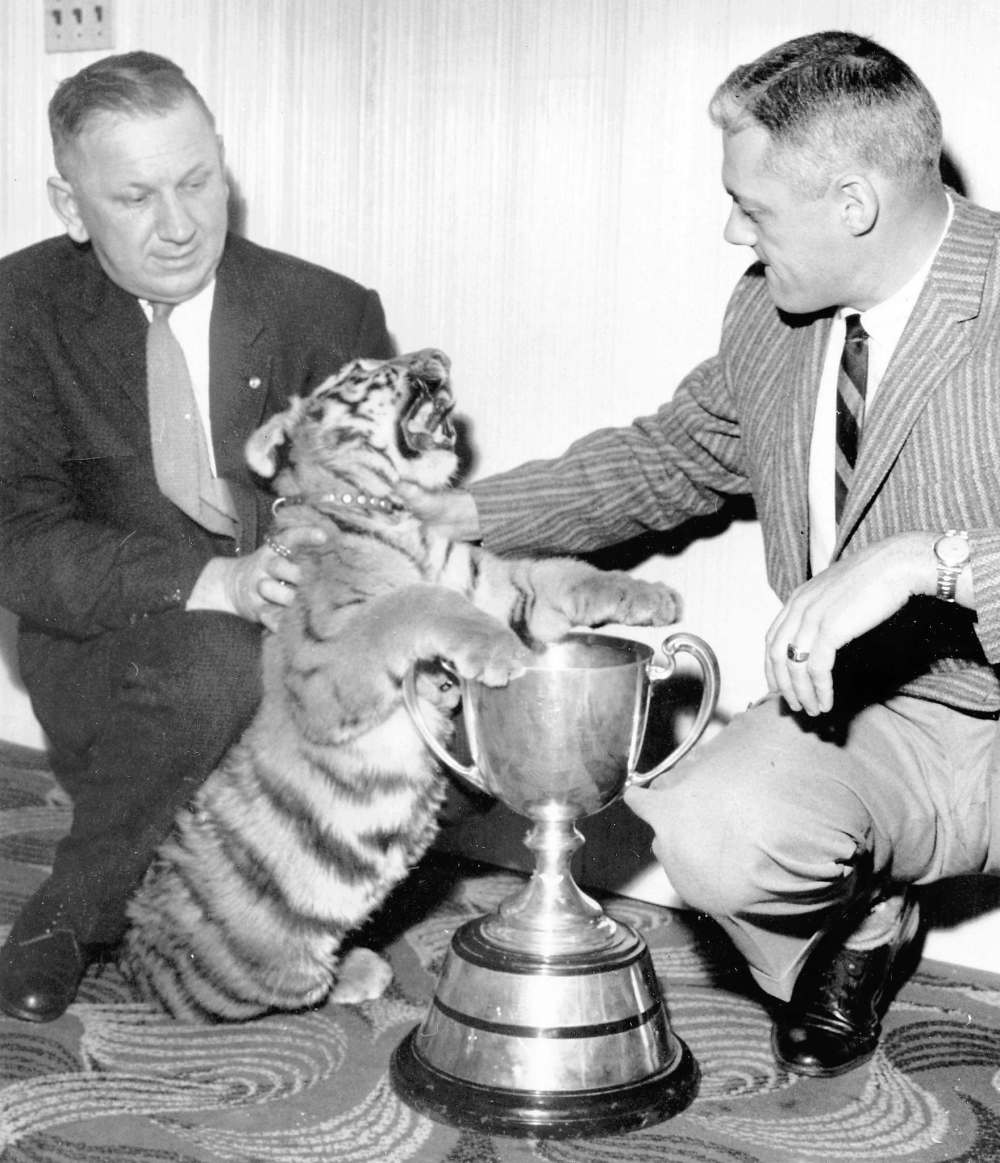
The Winnipeg Blue Bombers were also in action at Winnipeg Stadium in what was the inaugural CFL season. Fans wanting to catch the new league in action could see the Blue and Gold take on fellow Western Interprovincial Football Union foes in the Edmonton Eskimos on Aug. 14 and the B.C. Lions on Aug. 28.

The Bombers beat the Eskimos 15-8 and slaughtered the Lions 31-1, history shows. The Bombers went on to win the Grey Cup that November, 35-28 over the Hamilton Tiger-Cats.
There was also stock car racing to catch at the Brooklands Speedway, and annual flower shows, golf tournaments, and agricultural fairs to attend. The King and I graced Rainbow Stage, which was four years into its tenure offering live plays.
The “sight-seeing tips” section — festooned with photographs of some of Winnipeg’s most iconic and historic locales — suggested a bevy of spots to visit, some of which visitors can still enjoy today, and some of which are long gone. Still existing attractions include the Winnipeg Art Gallery, Lower Fort Garry, and the Legislative Building, which offered public tours even back them. (“Classic beauty of Manitoba’s legislature makes it the city’s outstanding building,” the guide reads. “Atop the dome is the famed Golden Boy — gilded 14-foot symbol of enterprise.”
Some bygone attractions include the original “gingerbread” city hall that was razed for the current building in 1964, and the St. Boniface Cathedral, a decade before the raging fire that left only the façade standing (“superb architecture — worth seeing,” the guide reads, understatedly.)
Perhaps the oddest entry in the section was simply “Railway Yards,” which suggested tourists look at “the world’s largest privately-owned railway yards” from “atop the Arlington or Salter Street bridges.”
The guide also waxed poetic about Assiniboine Park.
“The site was chosen for its natural beauty when the city bought it in 1910, but it has been added to in many ways,” it reads. “The half-timbered pavilion with its tall tower is a landmark, as well as a place for refreshments. The Conservatory and Palm House… is a favourite point all year round… the Zoo has both native and imported animals and birds, including a pair of lions and a band of buffalo, the latter the faunal emblem of the Province of Manitoba.”
Lodging
While there were hotels by the airport — such as the aptly-named Airport Hotel with its Constellation Room — and downtown — such as the St. Regis — many visitors stayed outside the city limits in the Rural Municipality of Fort Garry.
Out of town, back then, meant something quite different — many motels were clustered in the area where today Pembina and Bishop Grandin meet. The latter route wasn’t built until 1978, and the city in 1958 basically ended after Chevrier Boulevard. Waverley Heights, Fort Richmond, and Richmond West didn’t exist yet.
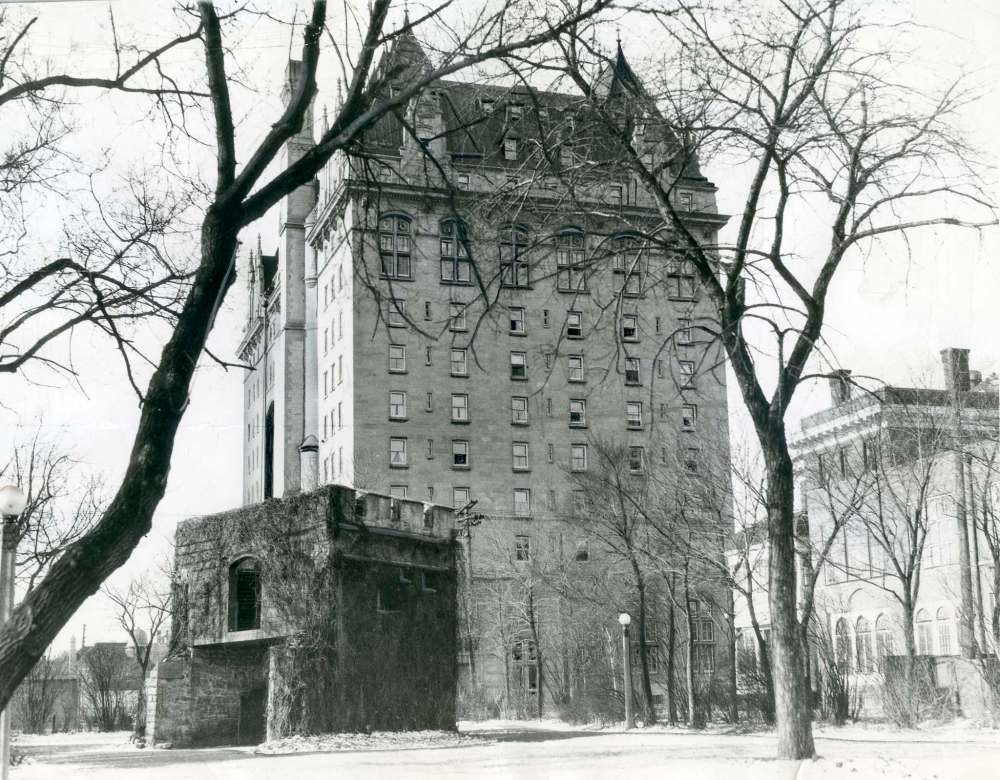
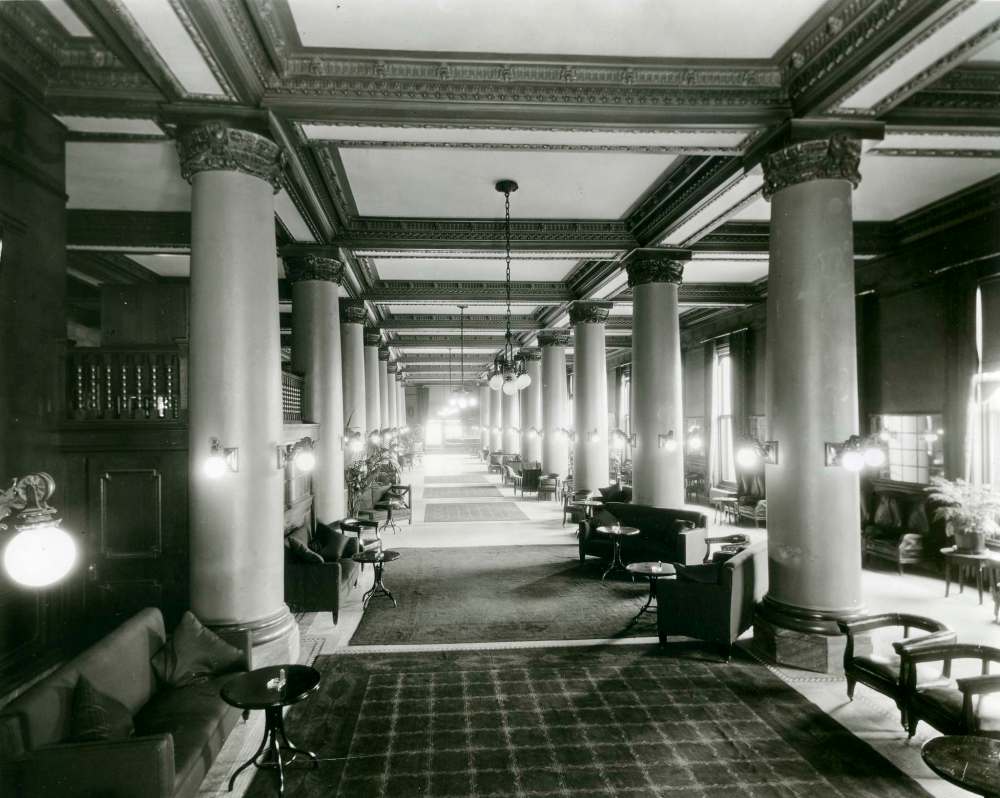
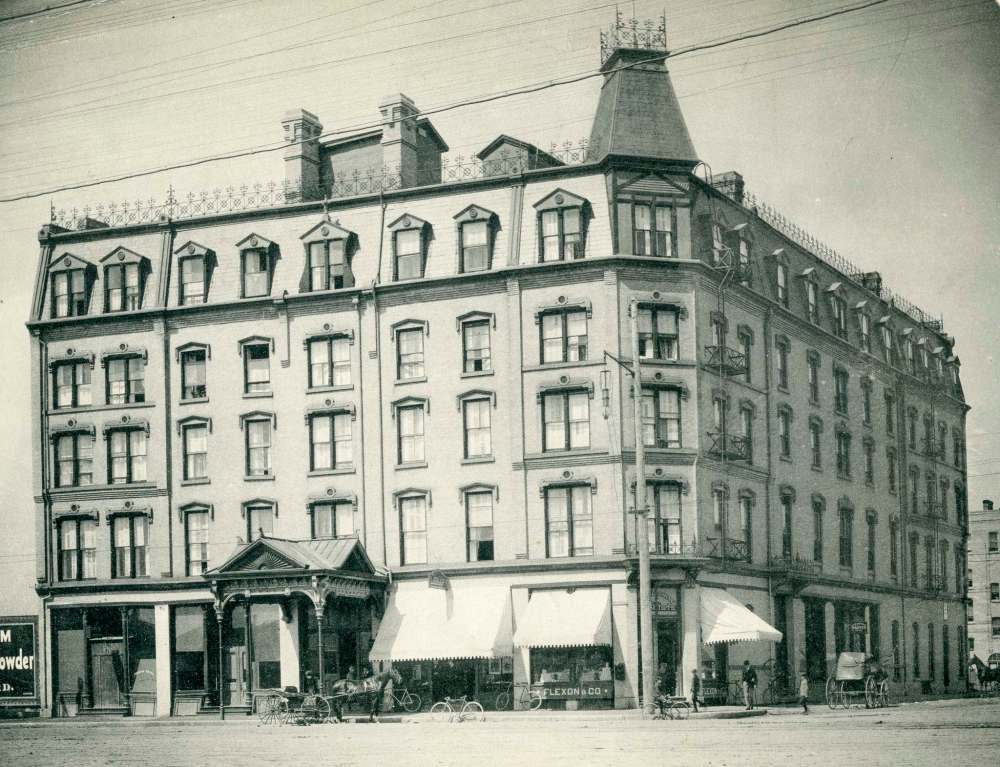
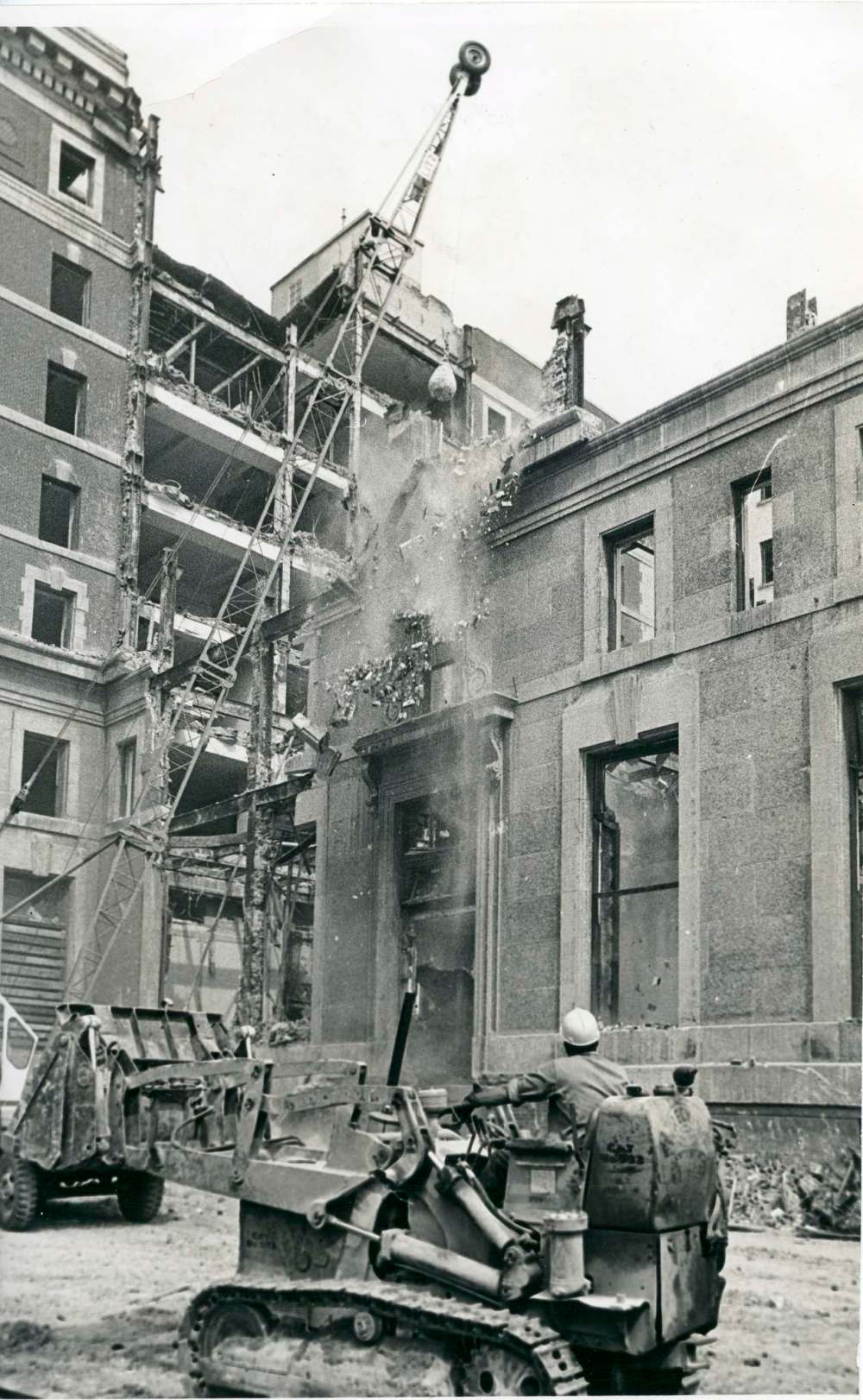
The city’s most prominent hotels at the time — the Royal Alexandra, the Empire, the Criterion — barely got a mention. The Royal Alex was located next to the CP Station on Higgins Avenue, and was built in the grand railway hotel tradition that was in full swing when it opened in 1906. By the time it closed in 1967, its best days were behind it, and four years later, it was demolished.
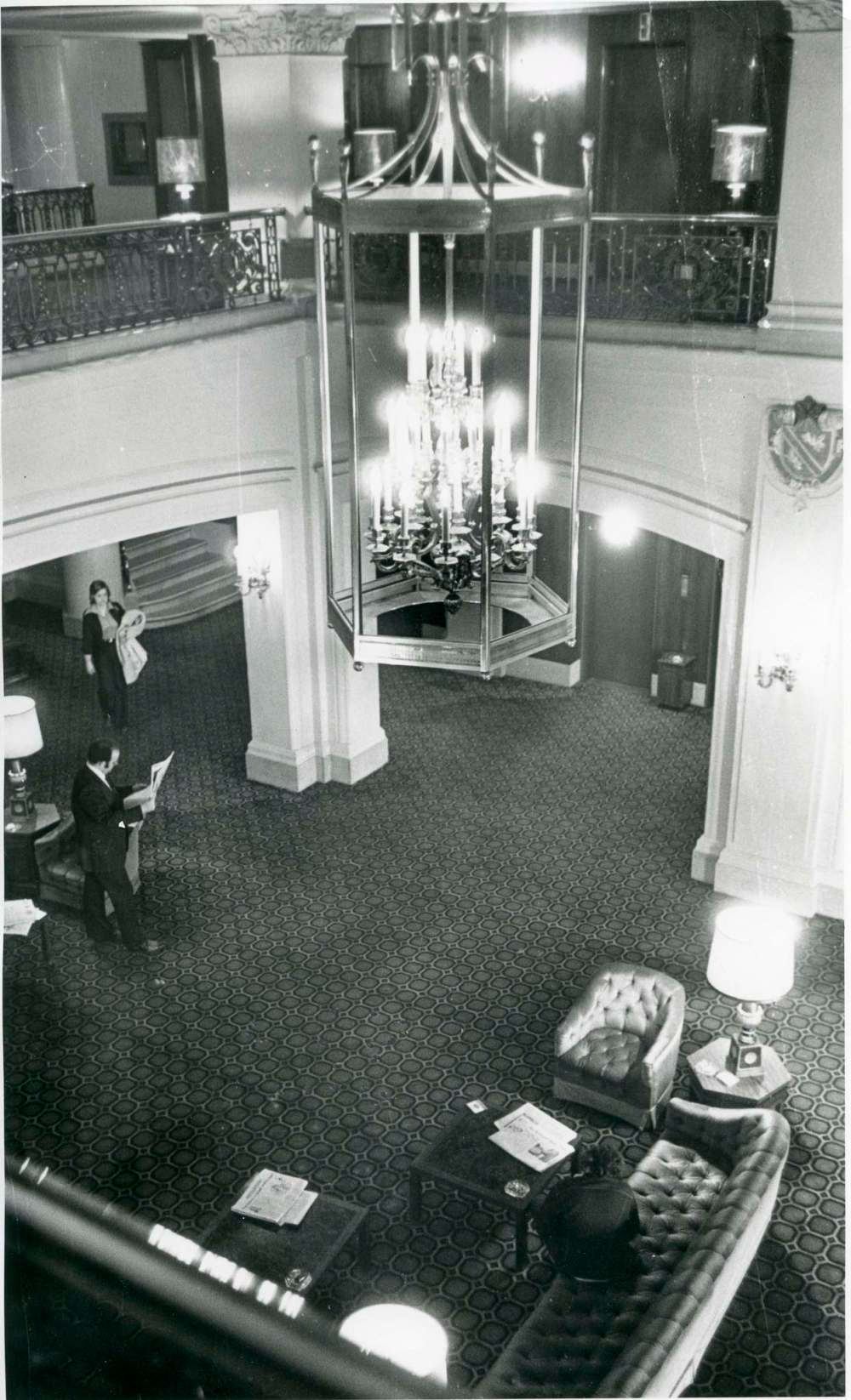
All of those old hotels are now concrete, appliances or whatever else their demolished remains may have been recycled into. Still standing proud on Broadway, however, is the Fort Garry Hotel, then called the Hotel Fort Garry. It opened in 1913 steps away from CN Rail’s Union Station and remains one of the city’s top-tier hotels, alleged ghost and all.
It was built steps away from the original, and still-standing, gate for Upper Fort Garry, the trading post built in 1822 and often seen as the birthplace of Manitoba.


History
Updated on Sunday, August 29, 2021 4:11 PM CDT: Fixes typo.